
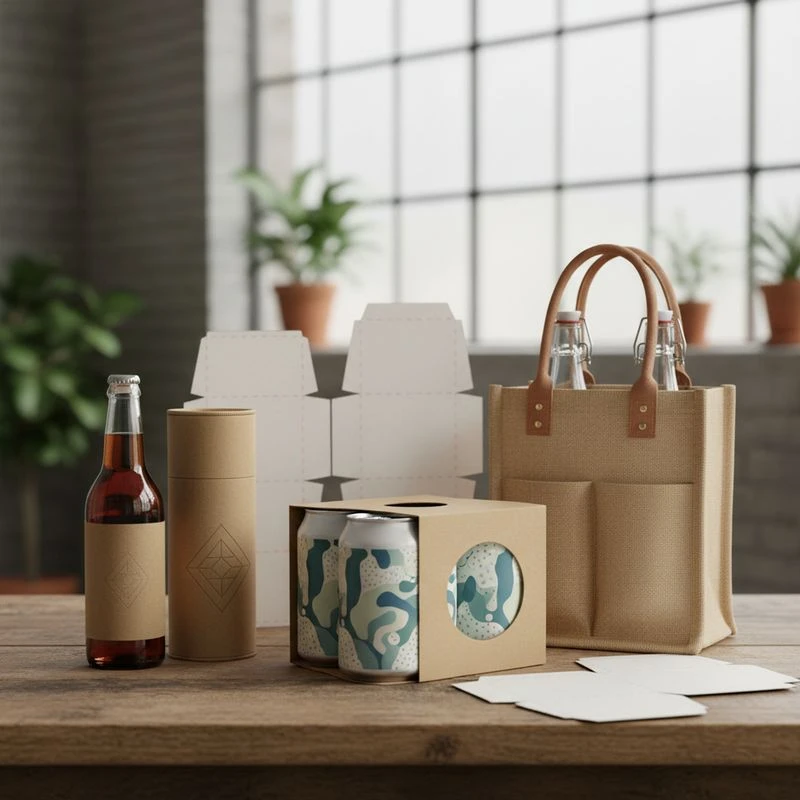
Beverage Packaging
| Packaging Format | Material Options | Typical UK Beverage Use Cases | Advantages for Custom Packaging for Beverage Cans and Bottles |
|---|---|---|---|
| Aluminium Cans | Recycled Aluminium, Virgin Aluminium | Craft Beer, Soft Drinks, RTD Cocktails, Energy Drinks | Lightweight, highly recyclable, 360-degree branding surface, cost-effective for large volumes. |
| Glass Bottles | Flint (clear), Amber, Green Glass, Recycled Glass | Spirits, Wine, Premium Soft Drinks, Juices, Water | Premium perception, excellent product visibility, infinitely recyclable, diverse shapes and sizes. |
| PET Bottles | Virgin PET, rPET (recycled PET) | Water, Juices, Sports Drinks, Milk Alternatives | Shatterproof, lightweight, cost-effective, good for bulk/on-the-go, increasingly sustainable options. |
| Cartons (Tetra Pak, etc.) | Paperboard, Polyethylene, Aluminium | Juices, Milk, Plant-based Drinks, Smoothies | Extended shelf life, good for ambient storage, strong eco-credentials (if certified), effective branding panels. |
Custom Labels
B2B Manufacturing
Selecting the right B2B manufacturing partner for your custom packaging for beverage cans and bottles is perhaps the most critical decision a brand will make in its journey to market success in the UK. The fundamental takeaway here is that your manufacturer is not just a supplier; they are an extension of your brand, a partner whose capabilities directly impact your product’s quality, consistency, and timely delivery. In the fast-paced UK beverage industry, where consumer trends can shift rapidly and retail demands are stringent, a reliable manufacturing relationship ensures agility, scalability, and adherence to the highest production standards. Compromising on manufacturing expertise can lead to significant delays, quality control issues, and ultimately, damage to your brand reputation and bottom line. The reasoning behind this emphasis on a strong B2B manufacturing partnership is rooted in the complexities of beverage production and distribution within the UK. From managing minimum order quantities (MOQs) for custom designs to ensuring consistent colour matching across different print runs, a skilled manufacturer brings invaluable expertise. Practical examples of their importance include their ability to advise on material selection for optimal durability and cost-effectiveness, or their logistical prowess in coordinating deliveries to your bottling facility or distribution centres across the UK. A good manufacturer will offer transparent communication regarding lead times, potential supply chain disruptions, and quality assurance processes, proactively working with you to mitigate risks. Consider a situation where a new product launch is tied to a major seasonal event; an efficient and communicative manufacturer is indispensable in ensuring your custom packaged beverages are ready precisely when needed. To establish a successful manufacturing partnership, brands must undertake several actionable steps. Begin by thoroughly vetting potential suppliers, looking beyond initial quotes to assess their track record, certifications (e.g., ISO, BRCGS for packaging), and their experience specifically with custom packaging for beverage cans and bottles in the UK market. Requesting samples of previous work is non-negotiable, allowing you to evaluate print quality, material finish, and overall craftsmanship. Discuss their quality control procedures in detail, understanding how they ensure consistency from batch to batch. A common pitfall can be choosing a manufacturer based solely on the lowest price, only to encounter hidden costs, production delays, or substandard quality. The solution involves a comprehensive evaluation that prioritises reliability, communication, and a shared understanding of your brand’s vision and timeline. Ensure clear contracts that outline delivery schedules, quality benchmarks, and contingency plans. Regular communication and factory visits (where feasible) can also foster a stronger relationship, ensuring your B2B manufacturing partner remains aligned with your goals and continues to deliver custom packaging that perfectly encapsulates your beverage brand for the discerning UK consumer.| Parameter | Description | Key Considerations for UK Market | Potential Pitfalls & Solutions |
|---|---|---|---|
| Minimum Order Quantity (MOQ) | Lowest quantity of units a manufacturer will produce for a custom run. | Varies by format; impacts cost-efficiency for small brands vs. large enterprises. | Pitfall: MOQs too high for startups. Solution: Find flexible manufacturers or group orders. |
| Lead Times | Time from order confirmation to final delivery of custom packaging. | Critical for seasonal launches, promotional events, and maintaining supply chain. | Pitfall: Unexpected delays. Solution: Clear contracts, buffer time, proactive communication. |
| Quality Control (QC) | Processes to ensure packaging meets specified standards and defect rates. | Compliance with UK food safety (FSA) and packaging regulations. | Pitfall: Inconsistent quality. Solution: Detailed specs, regular audits, sample checks. |
| Logistics & Delivery | Management of transport, warehousing, and delivery within the UK. | Proximity to bottling plants, efficiency of UK distribution networks. | Pitfall: High shipping costs, damaged goods. Solution: Local partners, robust packaging for transit. |
Design
Design is the beating heart of custom packaging for beverage cans and bottles, serving as the visual and tactile language through which your brand communicates its personality, values, and product promise to the discerning UK consumer. The overarching takeaway is that effective design transcends mere aesthetics; it is a strategic tool that must resonate with your target audience, stand out in a crowded marketplace, and ultimately drive purchasing decisions. In the UK, where design trends are often influenced by global movements but also retain a unique sense of heritage and understated elegance, a thoughtful design strategy is paramount. It’s about creating an emotional connection, making your product not just seen, but felt and remembered, transforming a functional container into a cherished object. The reasoning behind investing heavily in design for custom packaging is clear: it’s your first and often last chance to make an impression. A well-executed design can convey premium quality for a craft spirit, playful energy for a soft drink, or natural purity for a spring water, all without uttering a single word. Practical examples of impactful design include innovative structural packaging, such as uniquely shaped bottles or multi-pack carriers that enhance the consumer experience, or the clever use of typography and colour palettes that evoke specific moods or heritage. Consider how some high-end coffee brands use minimalist, elegant designs with debossed labels to convey sophistication, while popular energy drinks often employ bold, aggressive graphics and vibrant colours to signal energy and excitement. The UK market appreciates both tradition and innovation, making it crucial to understand which design language best suits your brand’s niche. Design also encompasses the practicalities of consumption, ensuring ease of opening, comfortable handling, and effective product protection. To create compelling custom packaging designs, beverage brands must follow a structured and iterative process. Start with in-depth market research to understand current trends, competitor offerings, and most importantly, your target consumer’s preferences and buying psychology. What colours appeal to them? What visual cues indicate quality or value? Collaborate closely with experienced graphic and structural designers who understand the nuances of beverage packaging and the specific requirements for the UK market, including legibility, iconography, and brand consistency. Develop multiple design concepts and use digital mock-ups or even 3D printing for tactile evaluation before committing to production. A potential pitfall is falling victim to fleeting trends that quickly date your packaging or creating a design that is too generic and fails to stand out. The solution lies in designing with longevity in mind, incorporating timeless elements alongside contemporary touches, and always testing your designs with focus groups to gauge initial reactions. Remember, your custom design for beverage cans and bottles should not just look good; it should tell your brand’s story, invite interaction, and ultimately, sell your product to the discerning UK consumer.Recyclable
In the contemporary UK beverage market, embracing recyclable custom packaging for beverage cans and bottles is no longer a niche preference; it is a fundamental expectation from consumers and an increasingly stringent requirement from regulators. The critical takeaway for any beverage brand is that sustainability is non-negotiable. Your commitment to environmentally responsible packaging, particularly recyclability, significantly impacts brand perception, consumer loyalty, and market access. UK consumers are exceptionally conscious of their environmental footprint, actively seeking out brands that demonstrate genuine efforts towards sustainability. Packaging that clearly communicates its recyclability, or even better, incorporates recycled content, can be a powerful differentiator and a testament to your brand’s ethical standing. The reasoning behind this imperative is multifaceted. Firstly, robust Extended Producer Responsibility (EPR) regulations in the UK are pushing brands to take greater accountability for the end-of-life of their packaging, incentivising the use of recyclable materials and recycled content. Non-compliance or a lack of focus on sustainability can lead to increased costs and potential penalties. Secondly, consumer demand for sustainable options is at an all-time high. Practical examples include the strong preference for aluminium cans, which are infinitely recyclable, or glass bottles that prominently feature “made from recycled glass” messaging. Brands are also exploring mono-material designs, making packaging easier to sort and recycle, or investing in lightweighting initiatives to reduce material use and transport emissions. The UK’s robust recycling infrastructure, particularly for glass and aluminium, provides a clear pathway for these materials to be reprocessed, closing the loop on consumption and production. Communicating these efforts clearly on your custom packaging enhances consumer trust and brand reputation. To effectively implement recyclable custom packaging for your beverage cans and bottles, brands must adopt several actionable strategies. Begin by partnering with packaging suppliers who offer certified sustainable materials and can provide clear documentation regarding recycled content and recyclability. Prioritise materials like aluminium and glass, which have excellent recyclability rates in the UK. For plastics, opt for rPET (recycled PET) where feasible and ensure your chosen plastic packaging is widely accepted in kerbside recycling schemes. Design your packaging to be ‘mono-material’ wherever possible, avoiding the combination of different materials that complicate the recycling process, such as plastic labels on glass bottles without easily removable adhesive. A significant pitfall is ‘greenwashing’ – making unsubstantiated or misleading claims about sustainability, which can severely damage brand credibility. The solution is transparency: clearly state what parts of your packaging are recyclable and how, using recognised symbols like the Mobius loop or the ‘On-Pack Recycling Label’ (OPRL) scheme prevalent in the UK. Investing in genuinely recyclable custom packaging not only aligns with consumer values and regulatory pressures but also positions your beverage brand as a responsible and forward-thinking player in the competitive UK market, contributing positively to a circular economy.| Material Type | Recyclability in UK | Advantages for Custom Packaging for Beverage Cans and Bottles | Key Considerations & Best Practices |
|---|---|---|---|
| Aluminium | Highly recyclable, widely collected kerbside. | Infinitely recyclable without loss of quality, lightweight, excellent barrier properties. | Ensure inks/coatings don’t hinder recycling process; promote ‘recycle me’ messaging. |
| Glass | Infinitely recyclable, widely collected kerbside. | Premium feel, excellent product visibility, preserves taste, high consumer trust. | Use clear or easily removable labels; ensure bottle shape fits recycling streams. |
| rPET (Recycled PET) | Widely recyclable where collected, contains recycled content. | Reduces reliance on virgin plastic, lightweight, shatterproof, versatile. | Maximise rPET content; design for mono-materiality; clear labelling for recycling. |
| Cartons (FSC-certified) | Recyclable in some areas, collection varies by council. | Renewable resource (paperboard), good for ambient storage, low carbon footprint. | Check local council collection for multi-layer cartons; promote responsible sourcing. |
Beverage Packaging
Navigating the complex and highly competitive beverage market in the United Kingdom requires more than just a great product; it demands exceptional presentation. Custom packaging for beverage cans and bottles is the ultimate differentiator, enabling brands to carve out a unique identity and connect deeply with their target audience. The initial takeaway for any beverage producer in the UK should be this: your packaging is your silent salesperson, working tirelessly to communicate your brand’s essence long before the first sip. In a market saturated with choices, from artisanal craft beers to sparkling botanical waters and premium spirits, generic packaging simply won’t suffice. Consumers are increasingly sophisticated, seeking products that offer an immersive experience, starting with the visual and tactile appeal of the container itself. The reasoning behind this heightened importance stems from several factors unique to the UK market. Firstly, retail environments are fiercely competitive, with supermarkets and independent stores alike vying for consumer attention. Your packaging needs to possess immediate shelf appeal, drawing the eye and inviting closer inspection within a matter of seconds. Secondly, UK consumers are becoming more discerning, valuing authenticity, sustainability, and quality. Custom designs allow you to tell your brand’s story effectively, whether it’s highlighting your heritage, ethical sourcing, or innovative production methods. Practical examples abound: consider the rise of unique can designs in the craft beer scene, with intricate artwork and matte finishes, or the elegant, minimalist labels on high-end gin bottles that convey sophistication and exclusivity. These aren’t just containers; they are canvases for brand expression. To effectively leverage custom packaging, beverage brands must take actionable steps rooted in market understanding. Begin by thoroughly researching your target demographic in the UK. Are they young, urban trend-setters who respond to bold, contemporary designs, or are they traditionalists who prefer classic, understated aesthetics? Understanding their preferences will inform your material choices, colour palettes, and graphic design. Consider various packaging formats beyond the standard; perhaps a unique bottle shape for a premium cider, or a multi-pack carton that enhances the unboxing experience for a range of soft drinks. Engage with packaging designers who have experience in the UK market to ensure your designs resonate locally while adhering to regulatory requirements. A common pitfall can be underestimating the impact of subtle design elements or failing to differentiate sufficiently from competitors. The solution lies in a collaborative design process, leveraging mock-ups and consumer feedback to refine your custom packaging before committing to production. Investing in high-quality design and materials for your beverage cans and bottles is not an expense, but an investment in your brand’s future in the competitive UK landscape.| Packaging Format | Material Options | Typical UK Beverage Use Cases | Advantages for Custom Packaging for Beverage Cans and Bottles |
|---|---|---|---|
| Aluminium Cans | Recycled Aluminium, Virgin Aluminium | Craft Beer, Soft Drinks, RTD Cocktails, Energy Drinks | Lightweight, highly recyclable, 360-degree branding surface, cost-effective for large volumes. |
| Glass Bottles | Flint (clear), Amber, Green Glass, Recycled Glass | Spirits, Wine, Premium Soft Drinks, Juices, Water | Premium perception, excellent product visibility, infinitely recyclable, diverse shapes and sizes. |
| PET Bottles | Virgin PET, rPET (recycled PET) | Water, Juices, Sports Drinks, Milk Alternatives | Shatterproof, lightweight, cost-effective, good for bulk/on-the-go, increasingly sustainable options. |
| Cartons (Tetra Pak, etc.) | Paperboard, Polyethylene, Aluminium | Juices, Milk, Plant-based Drinks, Smoothies | Extended shelf life, good for ambient storage, strong eco-credentials (if certified), effective branding panels. |
Custom Labels
Custom labels are arguably the most critical component of custom packaging for beverage cans and bottles, serving as your brand’s primary storyteller and legal compliance vehicle within the UK market. The immediate takeaway here is that a well-designed custom label is not just decorative; it’s an intricate blend of art, information, and regulatory necessity. It’s the element that directly engages the consumer, communicating flavour profiles, brand ethos, and vital consumption details. In the diverse UK beverage landscape, where consumers are increasingly health-conscious and socially aware, the label’s ability to clearly convey allergens, nutritional information, and ethical sourcing practices is paramount. Beyond compliance, it’s an opportunity to create an emotional connection, turning a casual glance into a purchasing decision. The reasoning behind the label’s significance is multi-faceted. From a regulatory perspective, UK and EU regulations (even post-Brexit, many aligned standards persist for market access) demand precise and legible information, especially concerning allergens, alcohol content, and geographical indications. Misinformation or non-compliance can lead to costly recalls and reputational damage. From a marketing standpoint, custom labels provide an almost infinite canvas for creativity. Practical examples include QR codes that link to sustainability stories or cocktail recipes, embossed textures that add a premium tactile feel, or vibrant, high-definition graphics that pop against the backdrop of the can or bottle. Craft breweries, for instance, often use their labels as miniature art pieces, reflecting the creativity of their brews. For spirits, a minimalist label with intricate foiling can convey luxury and exclusivity, setting it apart on a high-end bar shelf. To ensure your custom labels are effective, brands must follow a meticulous, actionable approach. First, collaborate closely with a designer experienced in UK beverage packaging regulations to ensure all legal requirements are met, from font sizes for key information to the correct placement of recycling symbols. Secondly, select label materials that are durable and appropriate for your product’s lifecycle – waterproof and oil-resistant labels are essential for beverages to withstand refrigeration and condensation. Consider finishes like matte, gloss, or even a soft-touch laminate to enhance aesthetic appeal. Requesting physical samples of different label stocks and finishes is a crucial step to avoid potential pitfalls such as poor adhesion, colour distortion, or labels peeling off in transit or refrigeration. A common issue is labels that don’t stand up to condensation, leading to unsightly smudging or peeling. The solution lies in thorough testing and selecting high-quality, purpose-specific adhesives and materials. By investing in the design and material integrity of your custom labels, you ensure that your beverage’s message remains clear and appealing from the shelf to the consumer’s hand, reinforcing your brand identity and building trust in the competitive UK market.B2B Manufacturing
Selecting the right B2B manufacturing partner for your custom packaging for beverage cans and bottles is perhaps the most critical decision a brand will make in its journey to market success in the UK. The fundamental takeaway here is that your manufacturer is not just a supplier; they are an extension of your brand, a partner whose capabilities directly impact your product’s quality, consistency, and timely delivery. In the fast-paced UK beverage industry, where consumer trends can shift rapidly and retail demands are stringent, a reliable manufacturing relationship ensures agility, scalability, and adherence to the highest production standards. Compromising on manufacturing expertise can lead to significant delays, quality control issues, and ultimately, damage to your brand reputation and bottom line. The reasoning behind this emphasis on a strong B2B manufacturing partnership is rooted in the complexities of beverage production and distribution within the UK. From managing minimum order quantities (MOQs) for custom designs to ensuring consistent colour matching across different print runs, a skilled manufacturer brings invaluable expertise. Practical examples of their importance include their ability to advise on material selection for optimal durability and cost-effectiveness, or their logistical prowess in coordinating deliveries to your bottling facility or distribution centres across the UK. A good manufacturer will offer transparent communication regarding lead times, potential supply chain disruptions, and quality assurance processes, proactively working with you to mitigate risks. Consider a situation where a new product launch is tied to a major seasonal event; an efficient and communicative manufacturer is indispensable in ensuring your custom packaged beverages are ready precisely when needed. To establish a successful manufacturing partnership, brands must undertake several actionable steps. Begin by thoroughly vetting potential suppliers, looking beyond initial quotes to assess their track record, certifications (e.g., ISO, BRCGS for packaging), and their experience specifically with custom packaging for beverage cans and bottles in the UK market. Requesting samples of previous work is non-negotiable, allowing you to evaluate print quality, material finish, and overall craftsmanship. Discuss their quality control procedures in detail, understanding how they ensure consistency from batch to batch. A common pitfall can be choosing a manufacturer based solely on the lowest price, only to encounter hidden costs, production delays, or substandard quality. The solution involves a comprehensive evaluation that prioritises reliability, communication, and a shared understanding of your brand’s vision and timeline. Ensure clear contracts that outline delivery schedules, quality benchmarks, and contingency plans. Regular communication and factory visits (where feasible) can also foster a stronger relationship, ensuring your B2B manufacturing partner remains aligned with your goals and continues to deliver custom packaging that perfectly encapsulates your beverage brand for the discerning UK consumer.| Parameter | Description | Key Considerations for UK Market | Potential Pitfalls & Solutions |
|---|---|---|---|
| Minimum Order Quantity (MOQ) | Lowest quantity of units a manufacturer will produce for a custom run. | Varies by format; impacts cost-efficiency for small brands vs. large enterprises. | Pitfall: MOQs too high for startups. Solution: Find flexible manufacturers or group orders. |
| Lead Times | Time from order confirmation to final delivery of custom packaging. | Critical for seasonal launches, promotional events, and maintaining supply chain. | Pitfall: Unexpected delays. Solution: Clear contracts, buffer time, proactive communication. |
| Quality Control (QC) | Processes to ensure packaging meets specified standards and defect rates. | Compliance with UK food safety (FSA) and packaging regulations. | Pitfall: Inconsistent quality. Solution: Detailed specs, regular audits, sample checks. |
| Logistics & Delivery | Management of transport, warehousing, and delivery within the UK. | Proximity to bottling plants, efficiency of UK distribution networks. | Pitfall: High shipping costs, damaged goods. Solution: Local partners, robust packaging for transit. |
Design
Design is the beating heart of custom packaging for beverage cans and bottles, serving as the visual and tactile language through which your brand communicates its personality, values, and product promise to the discerning UK consumer. The overarching takeaway is that effective design transcends mere aesthetics; it is a strategic tool that must resonate with your target audience, stand out in a crowded marketplace, and ultimately drive purchasing decisions. In the UK, where design trends are often influenced by global movements but also retain a unique sense of heritage and understated elegance, a thoughtful design strategy is paramount. It’s about creating an emotional connection, making your product not just seen, but felt and remembered, transforming a functional container into a cherished object. The reasoning behind investing heavily in design for custom packaging is clear: it’s your first and often last chance to make an impression. A well-executed design can convey premium quality for a craft spirit, playful energy for a soft drink, or natural purity for a spring water, all without uttering a single word. Practical examples of impactful design include innovative structural packaging, such as uniquely shaped bottles or multi-pack carriers that enhance the consumer experience, or the clever use of typography and colour palettes that evoke specific moods or heritage. Consider how some high-end coffee brands use minimalist, elegant designs with debossed labels to convey sophistication, while popular energy drinks often employ bold, aggressive graphics and vibrant colours to signal energy and excitement. The UK market appreciates both tradition and innovation, making it crucial to understand which design language best suits your brand’s niche. Design also encompasses the practicalities of consumption, ensuring ease of opening, comfortable handling, and effective product protection. To create compelling custom packaging designs, beverage brands must follow a structured and iterative process. Start with in-depth market research to understand current trends, competitor offerings, and most importantly, your target consumer’s preferences and buying psychology. What colours appeal to them? What visual cues indicate quality or value? Collaborate closely with experienced graphic and structural designers who understand the nuances of beverage packaging and the specific requirements for the UK market, including legibility, iconography, and brand consistency. Develop multiple design concepts and use digital mock-ups or even 3D printing for tactile evaluation before committing to production. A potential pitfall is falling victim to fleeting trends that quickly date your packaging or creating a design that is too generic and fails to stand out. The solution lies in designing with longevity in mind, incorporating timeless elements alongside contemporary touches, and always testing your designs with focus groups to gauge initial reactions. Remember, your custom design for beverage cans and bottles should not just look good; it should tell your brand’s story, invite interaction, and ultimately, sell your product to the discerning UK consumer.Recyclable
In the contemporary UK beverage market, embracing recyclable custom packaging for beverage cans and bottles is no longer a niche preference; it is a fundamental expectation from consumers and an increasingly stringent requirement from regulators. The critical takeaway for any beverage brand is that sustainability is non-negotiable. Your commitment to environmentally responsible packaging, particularly recyclability, significantly impacts brand perception, consumer loyalty, and market access. UK consumers are exceptionally conscious of their environmental footprint, actively seeking out brands that demonstrate genuine efforts towards sustainability. Packaging that clearly communicates its recyclability, or even better, incorporates recycled content, can be a powerful differentiator and a testament to your brand’s ethical standing. The reasoning behind this imperative is multifaceted. Firstly, robust Extended Producer Responsibility (EPR) regulations in the UK are pushing brands to take greater accountability for the end-of-life of their packaging, incentivising the use of recyclable materials and recycled content. Non-compliance or a lack of focus on sustainability can lead to increased costs and potential penalties. Secondly, consumer demand for sustainable options is at an all-time high. Practical examples include the strong preference for aluminium cans, which are infinitely recyclable, or glass bottles that prominently feature “made from recycled glass” messaging. Brands are also exploring mono-material designs, making packaging easier to sort and recycle, or investing in lightweighting initiatives to reduce material use and transport emissions. The UK’s robust recycling infrastructure, particularly for glass and aluminium, provides a clear pathway for these materials to be reprocessed, closing the loop on consumption and production. Communicating these efforts clearly on your custom packaging enhances consumer trust and brand reputation. To effectively implement recyclable custom packaging for your beverage cans and bottles, brands must adopt several actionable strategies. Begin by partnering with packaging suppliers who offer certified sustainable materials and can provide clear documentation regarding recycled content and recyclability. Prioritise materials like aluminium and glass, which have excellent recyclability rates in the UK. For plastics, opt for rPET (recycled PET) where feasible and ensure your chosen plastic packaging is widely accepted in kerbside recycling schemes. Design your packaging to be ‘mono-material’ wherever possible, avoiding the combination of different materials that complicate the recycling process, such as plastic labels on glass bottles without easily removable adhesive. A significant pitfall is ‘greenwashing’ – making unsubstantiated or misleading claims about sustainability, which can severely damage brand credibility. The solution is transparency: clearly state what parts of your packaging are recyclable and how, using recognised symbols like the Mobius loop or the ‘On-Pack Recycling Label’ (OPRL) scheme prevalent in the UK. Investing in genuinely recyclable custom packaging not only aligns with consumer values and regulatory pressures but also positions your beverage brand as a responsible and forward-thinking player in the competitive UK market, contributing positively to a circular economy.| Material Type | Recyclability in UK | Advantages for Custom Packaging for Beverage Cans and Bottles | Key Considerations & Best Practices |
|---|---|---|---|
| Aluminium | Highly recyclable, widely collected kerbside. | Infinitely recyclable without loss of quality, lightweight, excellent barrier properties. | Ensure inks/coatings don’t hinder recycling process; promote ‘recycle me’ messaging. |
| Glass | Infinitely recyclable, widely collected kerbside. | Premium feel, excellent product visibility, preserves taste, high consumer trust. | Use clear or easily removable labels; ensure bottle shape fits recycling streams. |
| rPET (Recycled PET) | Widely recyclable where collected, contains recycled content. | Reduces reliance on virgin plastic, lightweight, shatterproof, versatile. | Maximise rPET content; design for mono-materiality; clear labelling for recycling. |
| Cartons (FSC-certified) | Recyclable in some areas, collection varies by council. | Renewable resource (paperboard), good for ambient storage, low carbon footprint. | Check local council collection for multi-layer cartons; promote responsible sourcing. |
