
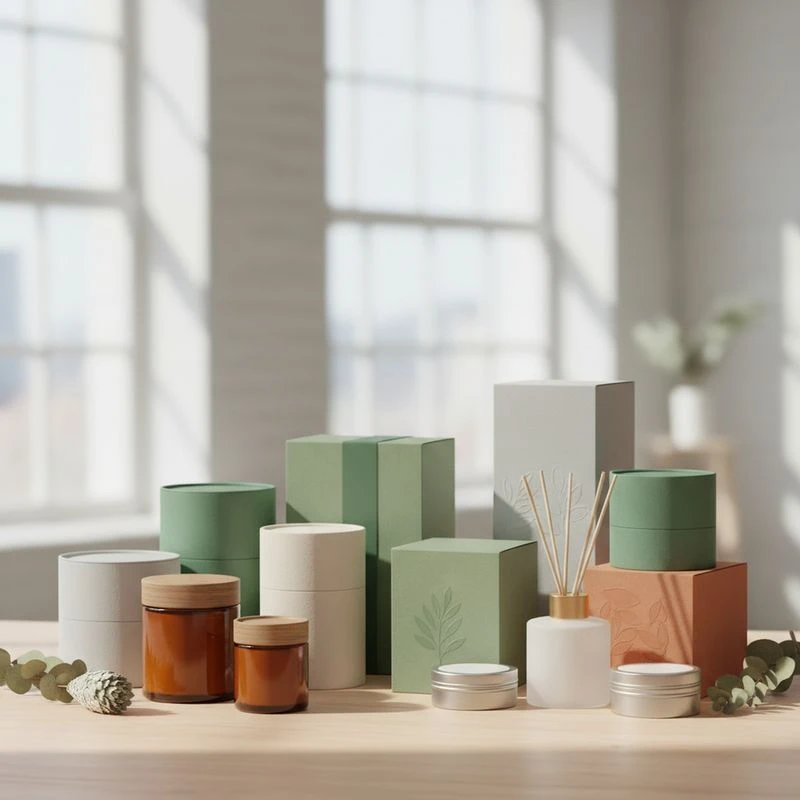
In the vibrant and competitive United Kingdom market, where the aroma of premium candles and sophisticated home fragrances fills countless homes and businesses, your product’s journey begins long before its scent is ever released. It starts with the visual and tactile experience of its packaging. For brands aiming to not just survive but thrive, custom packaging is not merely an expense; it is an indispensable investment. It’s the silent ambassador of your brand, communicating quality, values, and allure even before the first wick is lit or the first reed diffuser is unveiled. This deep dive explores how thoughtfully designed custom packaging can transform your candles and home fragrance products into irresistible offerings, setting you apart in a discerning market and forging a lasting connection with your customers.
Candle Packaging
Your candle packaging serves as the initial physical touchpoint between your brand and the customer, making its design paramount for both protection and persuasion. In the bustling UK market, where consumers are increasingly conscious of product origins, quality, and environmental impact, generic packaging simply won’t suffice. Custom candle packaging allows you to communicate your unique brand story, highlight the quality of your ingredients, and set the right tone for the sensory experience that awaits. Beyond aesthetics, it plays a critical role in protecting your delicate products from the rigours of transit and retail handling, ensuring they arrive in pristine condition.
To craft effective custom packaging for your candles, begin by thoroughly understanding your product’s specific needs. Consider the size, weight, and fragility of your candle vessels, whether they are delicate glass jars, ceramic pots, or sturdy tins. This dictates the structural integrity required from your packaging materials. Materials such as high-quality recycled cardboard, elegant kraft paper, or premium rigid boxes offer varying levels of protection and aesthetic appeal. For eco-conscious brands, selecting sustainable and recyclable materials is a powerful statement that resonates deeply with the UK’s environmentally aware consumer base. The structural design should securely cradle the candle, preventing movement and potential breakage. This might involve custom die-cut inserts, snug sleeves, or full enclosure boxes that offer comprehensive protection.
Beyond structural considerations, the branding elements on your custom packaging are vital. Clear and prominent placement of your logo, coupled with elegant typography for scent descriptions, burn times, and essential safety warnings (which are legally mandated in the UK), ensures a professional and trustworthy presentation. Think about how a small independent UK brand might opt for minimalist kraft paper boxes with a single, elegant foil-stamped logo, conveying an understated, eco-friendly luxury. Conversely, a premium brand might select a sturdy, coated card box with a precisely cut window, allowing a tantalising glimpse of the candle wax or decorative vessel within. A common pitfall for brands is overlooking the need for rigorous testing of packaging prototypes, which can lead to insufficient protection and product breakage during shipping. Always conduct drop tests and simulated transit scenarios to identify and rectify weaknesses. Another challenge is ensuring all UK regulatory information, such as CLP warnings and hazard symbols, is clearly and correctly integrated without cluttering the design. Collaborating with a packaging partner who understands these requirements can provide invaluable guidance, ensuring compliance while maintaining design integrity. Developing a consistent packaging guideline across all your candle lines also prevents inconsistent branding, which can confuse customers and dilute your brand identity.
Here’s a comparison of common custom candle packaging materials:
| Material Type | Key Benefits | Potential Drawbacks | Eco-Friendliness |
|---|---|---|---|
| Recycled Cardboard (Folding Carton) | Lightweight, cost-effective, easily printed, versatile for shapes and sizes. Excellent for custom packaging. | Less rigid than other options, may require inserts for heavy items, can show wear easily if not coated. | High (often made from recycled content, widely recyclable in the UK). |
| Kraft Paper | Natural aesthetic, durable, strong tear resistance, good for rustic or eco-friendly branding. | Limited colour options for base material, less refined appearance for high-luxury products. | High (biodegradable, often from sustainable sources). |
| Rigid Board (Set-up Box) | Premium feel, exceptional durability, offers superior protection, ideal for luxury candles. | Higher cost, heavier, less flexible for intricate shapes, typically less eco-friendly if not made from recycled content. | Moderate (often uses recycled paperboard, but coatings/adhesives can complicate recycling). |
This table illustrates the diverse characteristics of materials available for custom candle packaging, helping brands make informed decisions based on their budget, desired aesthetic, and sustainability goals. For instance, a brand prioritising cost-effectiveness and recyclability might lean towards recycled cardboard, while a luxury brand would likely opt for rigid board to convey premium quality and offer robust protection. Each choice significantly impacts both the brand perception and the functional performance of the packaging.
Luxury Boxes
For high-end candle and home fragrance brands, a luxury box transcends mere packaging; it becomes an essential component of the product itself, designed to enhance the unboxing experience and affirm a higher price point. In the discerning UK market, where consumers appreciate craftsmanship and exclusivity, a premium box communicates a commitment to quality and attention to detail that elevates the perceived value of your offerings. It’s about creating an unforgettable ritual from the moment the customer receives the package, reinforcing brand prestige and making the purchase feel truly special.
The essence of a luxury box lies in its meticulous execution and the judicious selection of materials. High-grade rigid board forms the robust foundation, often clad in specialty papers such as textured, embossed, or soft-touch laminates that invite tactile engagement. The construction itself is a key differentiator: magnetic closures offer a satisfying ‘click’, lift-off lids reveal the product slowly and elegantly, and drawer-style boxes introduce an element of surprise and delight. Internal fitments are equally crucial, typically custom-cut foam, dense card, or even velvet linings, all precisely engineered to cradle the product securely and present it immaculately. These details ensure that the product is not only protected but also presented as a precious item, enhancing the sensory experience long before the scent is enjoyed.
Consider a high-end UK diffuser brand that uses a two-piece rigid box, featuring a subtly debossed logo and a silk ribbon pull. This combination speaks volumes about the brand’s commitment to sophisticated aesthetics and user experience. Similarly, a luxury candle brand might choose a magnetic flap box with a custom-fitted foam insert, designed to perfectly secure and showcase a delicate ceramic vessel. One common pitfall is to over-design, resulting in a box that feels ostentatious rather than genuinely luxurious. The solution often lies in understated elegance, focusing on the quality of materials, the precision of the construction, and the subtlety of the branding. Another challenge is the higher cost associated with luxury custom packaging, which can potentially erode profit margins. To mitigate this, brands might strategically employ luxury boxes only for flagship products, special editions, or exclusive gift sets, using more cost-effective yet still premium solutions for their broader range. This approach allows brands to maintain a high-end image where it matters most, while managing overall production costs. The goal is to create an experience that justifies the premium price, turning a simple purchase into a memorable indulgence.
Below are common types of luxury box constructions for custom packaging:
| Construction Type | Key Features | Perceived Value | Ideal Use Case for Candles/Home Fragrance |
|---|---|---|---|
| Two-Piece (Lid & Base) | Separate lid lifts off completely, showcasing product. Highly versatile. | Classic, elegant, straightforward luxury. | Standard premium candle jars, small diffuser sets. |
| Magnetic Flap Closure | Hinged lid with hidden magnets for a secure, satisfying ‘snap’ closure. | Modern, sophisticated, interactive unboxing. | High-end, single luxury candles, premium room sprays. |
| Drawer (Slide) Box | Inner tray slides out from an outer sleeve, revealing contents gradually. | Intriguing, engaging, adds an element of surprise. | Exclusive gift sets, limited edition candles, multi-item fragrance collections. |
This table outlines various luxury box constructions, each offering a distinct unboxing experience and perceived value. Choosing the right construction for your custom packaging depends on the desired impact on the customer, the type of product it contains, and the overall brand aesthetic. The tactile interaction with a well-designed luxury box significantly contributes to the overall premium feel, making it a crucial aspect of high-end branding in the competitive UK market.
B2B Branding
When your candles and home fragrances are destined for retail shelves, corporate gifting programmes, or wholesale distribution within the UK, your custom packaging needs to excel not only in brand representation but also in practical functionality for your business partners. B2B custom packaging must be retail-ready, efficient for stocking, and visually compelling to appeal to both the retailer and the end customer on their behalf. It’s about demonstrating your professionalism and commitment to a seamless partnership, ensuring your products are as easy to sell as they are delightful to use.
The first step in effective B2B custom packaging is designing for the retail environment. Consider how your product will sit on a shelf alongside competitors. Is it stackable? Does it present a clear and attractive front face? Crucially, is there designated, visible space for a barcode (EAN for the UK and Europe) that is easy for retailers to scan? Information clarity is paramount. All essential product details, such as scent, size, and brand name, must be immediately visible and legible for both store staff and potential customers. This streamlines inventory management and assists purchasing decisions. Furthermore, while individual product custom packaging is vital, brands must also think about the robustness and clarity of their bulk or outer packaging used for shipping to retailers. These cartons should be durable, clearly labelled with product information and handling instructions, and ideally, made from sustainable materials to align with growing retailer demands for eco-friendly supply chains.
For instance, a UK home fragrance brand designing its packaging with a clean front panel for maximum product visibility and a standard EAN barcode thoughtfully placed on the back makes it effortless for independent boutiques and larger retailers to integrate their products. For corporate gifting opportunities, the packaging might be designed with flexibility in mind, perhaps allowing for a subtle co-branded sleeve or sticker that can incorporate a client’s logo alongside your own, without requiring a complete repackaging. A significant pitfall in B2B packaging is creating designs that are either too fragile for a retail environment or difficult for staff to display effectively, leading to damaged stock or poor shelf presentation. The solution involves designing for durability and ease of merchandising, potentially incorporating hang tabs for peg display or ensuring boxes are robust enough to withstand frequent handling. Another common oversight is neglecting the sustainability of B2B packaging. Increasingly, UK retailers are prioritising suppliers who use recyclable or recycled materials for both their primary product packaging and the secondary bulk packaging used for shipment. Demonstrating this commitment can be a strong selling point for securing new retail partnerships and enhancing your brand’s reputation.
Here’s a checklist for effective B2B custom packaging requirements:
| Requirement | Description | Benefit for Retailer/Partner |
|---|---|---|
| Clear Product Identification | Scent, size, product type clearly visible on front/top of custom packaging. | Easy stocking, quick customer identification, reduced errors. |
| Barcode (EAN) Placement | Standardised barcode prominently placed, easy to scan, not obscured by design. | Efficient POS (Point of Sale) operations, accurate inventory management. |
| Retail Display Optimisation | Stackable design, attractive shelf presence, suitable for standard shelving. | Maximises shelf space, enhances visual merchandising, drives impulse buys. |
| Durability & Protection | Robust materials to withstand handling, shipping, and retail environment. | Minimises product damage, reduces returns, protects brand reputation. |
| Sustainable Materials | Use of recycled, recyclable, or sustainably sourced custom packaging. | Aligns with retailer and consumer environmental policies, enhances brand image. |
This checklist highlights the multifaceted considerations for B2B custom packaging, ensuring that your products are not only appealing to the end-consumer but also highly functional for your retail and corporate partners. Meeting these requirements demonstrates a professional approach and facilitates smoother operations, fostering stronger, more productive business relationships within the UK market. The meticulous attention to these details can significantly impact your brand’s growth and reach.
Design Finishing
The selection of design finishes is where custom packaging truly transcends functionality to become a tactile and visual masterpiece, transforming a good package into an exceptional one. In the discerning UK market, where consumers are drawn to products that offer a sensory experience, the right finishes add layers of sophistication, luxury, and brand identity that profoundly influence perception and purchase decisions. These subtle yet powerful details communicate craftsmanship and attention to detail, helping your candles and home fragrances stand out in a crowded marketplace.
Exploring the myriad of design finishing options is an exciting part of the custom packaging journey. Options like gloss, matte, or soft-touch laminations provide distinct tactile and visual effects. Gloss laminates offer a vibrant, reflective sheen that makes colours pop, while matte laminates provide a sophisticated, non-reflective surface. Soft-touch laminates, in particular, create a velvety texture that invites touch, immediately elevating the perceived value. Beyond laminations, spot UV varnish adds a raised, glossy texture to specific areas, creating a captivating contrast against a matte background. Hot foil stamping, available in metallics like gold, silver, copper, or even holographic effects, can make logos or key text shimmer with luxurious appeal. Embossing (raising a design) and debossing (indenting a design) add a three-dimensional quality, creating elegant textural patterns or highlighting brand elements without relying on ink.
The strategic application of these finishes is crucial. The goal is not to overuse them but to apply them judiciously to key elements—your brand logo, a unique pattern, or the product name—to draw the eye and create focal points. Consider a small UK candle maker who uses a matte laminate on their box for a sophisticated, understated feel, then applies a subtle spot UV varnish over a botanical pattern, creating an intriguing textural contrast that catches the light. Another brand might opt for striking gold foil stamping on their logo, instantly conveying a sense of luxury and premium quality. A common pitfall is overdoing the finishes, which can make the custom packaging appear cluttered or even cheap, detracting from the intended high-end aesthetic. The solution lies in a “less is more” approach, focusing on strategic application that enhances rather than overwhelms the design. Another challenge is ensuring the chosen finishes are compatible with the base packaging material and the overall brand aesthetic, as certain combinations might not yield the desired effect or might exceed budget constraints. Always request physical samples of different finishes on your chosen materials before committing to a full production run. This allows you to experience the tactile and visual impact firsthand, ensuring the final product perfectly aligns with your brand vision and budget.
Here’s a comparison of popular custom packaging design finishes:
| Finish Type | Visual Effect | Tactile Effect | Common Application on Custom Packaging |
|---|---|---|---|
| Matte Lamination | Non-reflective, muted colours, sophisticated. | Smooth, soft, often described as velvety. | Overall box coating for premium, understated feel; contrasts well with spot UV. |
| Gloss Lamination | Highly reflective, vibrant colours, bright. | Slick, smooth. | Overall box coating for high-impact, protective finish; useful for showcasing product images. |
| Soft-Touch Lamination | Deep, rich colours, non-reflective, premium. | Velvety, luxurious, pleasant to touch. | Overall box coating for high-end, tactile brand experience. |
| Hot Foil Stamping | Metallic sheen (gold, silver, copper, holographic), vibrant colours. | Slightly raised or flat, depending on pressure. | Logos, brand names, decorative elements for luxury and emphasis. |
| Spot UV Varnish | High-gloss, clear, localised sheen. | Smooth, slightly raised texture where applied. | Highlighting specific design elements (e.g., patterns, text) over a matte base. |
| Embossing/Debossing | Raised (emboss) or recessed (deboss) 3D effect. | Textured, dimensional. | Creating tactile logos, patterns, or brand details without ink. |
This table details various design finishes available for custom packaging, each offering a unique way to enhance both the visual and tactile appeal of your candles and home fragrances. The careful selection and strategic application of these finishes can dramatically influence customer perception, elevating your brand’s presence and desirability in the competitive UK market by adding a layer of perceived luxury and craftsmanship.
Gift Appeal
A significant portion of candle and home fragrance purchases in the UK are made with gifting in mind, making strong gift appeal in your custom packaging a crucial factor for boosting sales and establishing your brand as a go-to choice for presents. When packaging is designed with gifting in mind, it not only elevates the product but also offers immense value to the buyer, often eliminating the need for additional wrapping or presentation efforts. This thoughtfulness transforms a simple purchase into a complete, ready-to-give experience, making your brand more attractive to those seeking perfect gifts for loved ones or corporate clients.
To maximise your product’s gift appeal, consider integrating gifting elements directly into your custom packaging design. This could involve elegant, pre-attached ribbons that serve as both a decorative flourish and a secure closure, or tastefully designed swing tags that provide space for a personal message from the gift giver. The unboxing experience itself should be a joyful ritual; think about magnetic closures that offer a satisfying opening, custom-printed tissue paper that gently encases the product, or premium crinkle fill that adds a luxurious cushioning. Beyond individual items, creating beautifully curated gift sets with custom packaging that thoughtfully bundles multiple products (e.g., a candle, a room spray, and a wick trimmer) instantly increases perceived value and provides an attractive, ready-made present. Additionally, consider occasion-specific designs, such as limited-edition sleeves with festive motifs for Christmas, or special bands for Valentine’s Day, allowing you to tap into seasonal gifting trends and holiday demand with targeted offerings.
For example, a UK brand might offer a luxurious, reusable fabric bag with each candle, transforming the initial unboxing into a lasting part of the gift experience, while simultaneously promoting sustainability. During festive seasons, they could introduce limited-edition custom packaging sleeves featuring intricate winter patterns over their standard boxes, creating a sense of exclusivity and festive cheer. A common pitfall is treating gift packaging as an afterthought, resulting in designs that feel generic, or worse, add excessive cost without significantly enhancing value. The solution is to integrate gift appeal from the earliest design stages, focusing on cost-effective yet impactful elements like a beautifully branded gift tag or an elegantly designed belly band that cinches around your standard box, instantly transforming it. Another challenge is overlooking the growing segment of eco-conscious gift givers. Offering sustainable gift packaging options, clearly highlighting their environmental benefits (e.g., made from recycled materials, fully recyclable, reusable), can be a strong selling point. Brands that align with these values resonate more deeply with contemporary UK consumers, securing their loyalty and extending their market reach. Making your custom packaging intrinsically gift-ready removes friction for the customer and positions your brand as a thoughtful, premium choice in the UK home fragrance market.
