
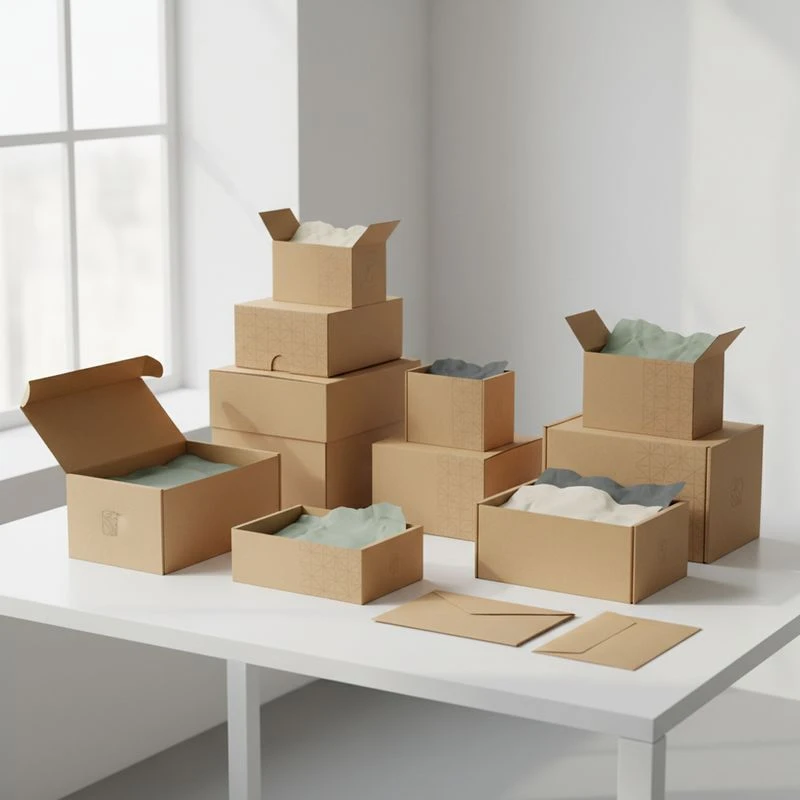
In the dynamic and highly competitive United Kingdom e-commerce market, the choice of packaging extends far beyond mere protection; it is a critical component of brand identity, operational efficiency, and ultimately, customer satisfaction. Forward-thinking e-commerce businesses are increasingly recognising that generic, off-the-shelf packaging no longer suffices to differentiate themselves or meet the evolving expectations of the modern UK consumer. The true differentiator lies in strategic custom packaging for e commerce fulfillment, a bespoke approach that addresses everything from product safety during transit to creating a memorable unboxing experience. Embracing custom packaging allows brands to control their narrative from the moment an order is placed until the product is physically in the customer’s hands, transforming a transactional interaction into a relationship-building opportunity. This strategic shift is not just about aesthetics; it’s about optimising logistics, reducing waste, and building a sustainable and resilient fulfillment operation that stands out in a crowded digital marketplace.
Ecommerce Packaging
For any e-commerce business operating within the UK, understanding that packaging is your brand’s first physical touchpoint with a customer is paramount. Generic, ill-fitting, or uninspiring packaging can inadvertently communicate a lack of care or attention to detail, potentially undermining the quality of the product within. The ultimate takeaway here is that investing in thoughtful custom ecommerce packaging is not an expense but a strategic investment that significantly impacts customer perception, product safety, and operational efficiency in the competitive UK market. In a landscape where countless brands vie for consumer attention, the unboxing experience has become a viral phenomenon, shared across social media platforms, making packaging an integral part of your marketing funnel. Standard packaging often falls short because it’s designed for universal applicability, not for the unique dimensions, fragility, or branding of your specific products. This can lead to excessive void fill, increased shipping costs due to dimensional weight, or, worse, damaged goods and frustrating returns, which are particularly costly in the fast-paced UK fulfillment environment.
To truly elevate your e-commerce operation, begin by assessing your product range and identifying the specific packaging requirements for each item. This involves considering the product’s fragility, weight, dimensions, and any specific environmental sensitivities. For instance, delicate items might require custom foam inserts or multi-layered corrugated solutions, while apparel could benefit from branded poly mailers that offer water resistance and reduce bulk. Furthermore, the sustainability aspect is increasingly important to UK consumers. Opting for recyclable, biodegradable, or recycled content materials in your custom packaging not only aligns with consumer values but can also contribute to your brand’s eco-friendly credentials. Work closely with packaging suppliers to explore material options like FSC-certified cardboards, compostable mailers, or plant-based void fills. Providing actionable steps, consider consolidating product types to streamline packaging SKUs where possible, but don’t shy away from bespoke sizes that eliminate excess space, thereby reducing material usage and shipping costs. Always test prototypes with actual products and simulate transit conditions to identify any vulnerabilities before committing to large orders. A common pitfall is over-packaging, which can be seen as wasteful by customers and unnecessarily increases costs; conversely, under-packaging leads to damage and returns, eroding trust. The solution lies in finding the optimal balance, ensuring maximum protection with minimal material, all while reflecting your brand’s aesthetic. This tailored approach to custom packaging for e commerce fulfillment ensures your products arrive safely and your brand makes a lasting positive impression.
Shipping Boxes
The humble shipping box, often overlooked, is in fact a pivotal element in the success of any e-commerce fulfillment strategy, particularly within the UK. The key takeaway is that selecting the right shipping box is a strategic decision that directly influences protection, shipping costs, and customer perception, forming a critical part of your custom packaging for e commerce fulfillment. Generic boxes often lead to inefficient use of space, requiring excessive void fill, which adds to both material costs and dimensional weight charges imposed by couriers like Royal Mail, DPD, or Evri. These dimensional weight calculations, common across the UK’s leading parcel carriers, penalise businesses for sending bulky, lightweight items, making optimised box sizing a non-negotiable aspect of cost control. Moreover, the structural integrity of the box is paramount; a flimsy box signals a lack of care and increases the risk of product damage during the often-rigorous transit process through sorting hubs and delivery vehicles. A damaged product on arrival not only leads to immediate customer dissatisfaction but also incurs additional costs for returns, replacements, and potential reputational harm.
To make informed decisions, businesses should first meticulously measure their products, including any internal packaging or void fill, to determine the precise internal dimensions required. This allows for the selection of boxes that are snug enough to prevent movement but not so tight that they risk product damage. Different types of corrugated cardboard offer varying levels of strength: single-wall for lighter, less fragile items; double-wall for heavier or more delicate goods; and triple-wall for exceptionally heavy or high-value items requiring maximum protection. For UK e-commerce, flat-pack mailer boxes are often an excellent choice for smaller items, as they offer branding opportunities, are easy to assemble, and provide a secure unboxing experience. When considering custom packaging for e commerce fulfillment, explore bespoke box sizes that perfectly match your product range, significantly reducing the need for void fill and cutting down on dimensional weight charges. This also helps in reducing your carbon footprint by optimising space within delivery vehicles. A practical step involves engaging with packaging suppliers who can provide guidance on board grades (e.g., B-flute, C-flute, E-flute) and their suitability for different product weights and fragility levels. Periodically review your packaging choices against your product return rates to identify if packaging is a contributing factor to damage. A common pitfall is opting for the cheapest box without considering its impact on product safety and overall shipping costs. The solution lies in a holistic evaluation, understanding that a slightly more expensive, well-fitting custom box can often lead to significant savings in the long run by reducing damages and optimising shipping fees.
| Box Type | Corrugation Grade | Best Use Case (UK Market) | Cost Implication (Relative) | Suitability for Custom Printing |
|---|---|---|---|---|
| Single-Wall Corrugated | B-Flute, C-Flute | Lightweight, less fragile items (e.g., apparel, small electronics, books). Common for smaller mailer boxes. | Low | Good for basic flexographic printing. |
| Double-Wall Corrugated | BC-Flute, EB-Flute | Medium to heavy, fragile items (e.g., ceramics, larger electronics, multiple items). Standard for general shipping. | Medium | Good for basic flexographic printing. |
| Triple-Wall Corrugated | ACA-Flute | Very heavy, highly fragile, or high-value items (e.g., industrial parts, large machinery components, art). | High | Limited, generally not chosen for aesthetic custom packaging. |
| Mailer Box (Custom Packaging) | E-Flute, B-Flute | E-commerce specific for an enhanced unboxing experience; small to medium items, gifts. | Medium-High (due to design/print) | Excellent for high-quality digital or lithographic custom printing. |
This table illustrates the common types of shipping boxes available and their general suitability for different e-commerce products within the UK market. Understanding these distinctions is crucial for selecting the appropriate custom packaging for e-commerce fulfillment, balancing protection with cost-effectiveness. For instance, while triple-wall offers maximum protection, it’s often overkill and costly for most consumer goods, whereas a custom-sized double-wall box might be perfect.
Custom Printing
Custom printing on packaging transcends its functional role, transforming it into a potent marketing and branding asset that can significantly elevate an e-commerce business in the UK. The core takeaway here is that custom printing allows your packaging to tell your brand’s story, create a memorable unboxing experience, and serve as a silent, yet powerful, salesperson long after the purchase. In a digital-first world, the physical arrival of a package is often the first tangible interaction a customer has with your brand. Unbranded, generic boxes miss a tremendous opportunity to reinforce identity and build an emotional connection. Studies show that consumers are more likely to remember and repurchase from brands that offer a positive and distinctive unboxing experience, a phenomenon amplified by social media where aesthetically pleasing custom packaging designs are frequently shared, generating organic reach and virality. This directly contributes to brand recall and customer loyalty, especially vital in the UK’s crowded online retail space where competition is fierce.
To effectively leverage custom printing for your custom packaging for e commerce fulfillment, begin by defining your brand’s visual identity clearly – this includes your logo, brand colours, fonts, and any specific messaging you wish to convey. Consider the entire unboxing journey: will your logo be prominently displayed on the outside of the shipping box? Will there be an interior print, perhaps a pattern or a thank you message, visible upon opening? For actionable steps, evaluate different printing methods based on your budget, desired quality, and order volume. Flexographic printing is cost-effective for large runs and provides good quality for simple designs, making it suitable for outer shipping boxes. Digital printing, on the other hand, offers unparalleled flexibility for smaller batches, vibrant colours, and complex designs, ideal for custom mailer boxes or inserts, often allowing for variable data printing (e.g., personalised messages). Lithographic printing delivers photographic-quality results but typically comes with higher setup costs and larger minimum order quantities (MOQs). A crucial step is to work with your packaging supplier to ensure colour accuracy and resolution, providing them with high-quality vector files of your artwork. Consider incorporating a QR code on your packaging that links to product care instructions, your social media channels, or an exclusive offer for their next purchase, turning a static element into an interactive touchpoint. A common pitfall is underestimating design costs or MOQs, leading to budget overruns or an inability to achieve desired customisation levels. The solution involves thorough planning, getting multiple quotes, and potentially starting with simpler customisation before scaling up to more elaborate designs, always keeping the UK customer’s desire for quality and brand authenticity in mind.
| Printing Method | Best For (Packaging Type) | Quality & Colour Fidelity | Typical MOQ | Cost Per Unit (Relative) |
|---|---|---|---|---|
| Flexographic Printing | Corrugated shipping boxes, large runs of mailers (Custom Packaging) | Good for solid colours and simple graphics. Can achieve pantone colours. | Medium to High (5000+ units) | Low |
| Digital Printing | Mailer boxes, product boxes, inserts, short runs (Custom Packaging) | Excellent for complex designs, gradients, photographic images. High fidelity. | Low (100+ units) | Medium-High |
| Lithographic (Offset) Printing | Premium product boxes, rigid boxes, high-end mailers (Custom Packaging) | Superior quality, photographic resolution, precise colour matching. | High (2500+ units, often with lamination) | High |
| Screen Printing | Speciality items, specific areas, fabric bags, simpler designs | Vibrant, thick ink laydown. Limited colour palette per pass. | Medium (250+ units) | Medium |
This table outlines the primary custom printing options available for e-commerce packaging, providing insight into their suitability for different needs and budget levels within the UK market. Selecting the right method for your custom packaging for e commerce fulfillment is crucial for achieving the desired brand aesthetic and marketing impact. For many growing UK e-commerce businesses, a combination of flexo for outer shipping boxes and digital for inner product packaging offers a balanced approach.
B2B Logistics
Efficient B2B logistics for custom packaging materials is an often-underestimated cornerstone of a smooth and responsive e-commerce fulfillment operation in the UK. The undeniable takeaway is that a robust and reliable supply chain for your custom packaging ensures uninterrupted order processing, prevents costly delays, and maintains customer satisfaction, directly impacting your bottom line. Without a strategic approach to sourcing and delivering packaging, even the most efficient warehouse can grind to a halt due simply to a lack of shipping boxes or branded mailers. In the UK, where consumer expectations for swift delivery are high, any hiccup in your packaging supply chain can have a cascading negative effect, leading to missed delivery windows, disgruntled customers, and a scramble to find emergency solutions that often come at a premium. Furthermore, effective B2B logistics for custom packaging for e commerce fulfillment extends beyond just having enough stock; it encompasses considerations like lead times, minimum order quantities (MOQs), storage space, and the environmental impact of transportation.
To establish a resilient packaging supply chain, begin by meticulously vetting potential packaging suppliers. Don’t just focus on price; evaluate their reliability, production capacity, lead times for custom orders, and their ability to consistently meet your quality standards. Request samples and references from other UK e-commerce businesses. Negotiate clear terms for delivery schedules, payment, and quality assurance. For actionable steps, establish clear reorder points based on your average sales volume and your supplier’s lead times, factoring in a buffer for unexpected demand spikes or potential supply chain disruptions (e.g., during peak seasons like Black Friday or Christmas in the UK). Consider keeping a small safety stock of your most critical custom packaging items. Explore options for just-in-time (JIT) delivery if your supplier is local and reliable enough, which can significantly reduce your need for large, expensive warehousing space for bulky packaging materials. Partnering with local UK packaging manufacturers can offer advantages such as shorter lead times, lower transportation costs, and a reduced carbon footprint, aligning with growing consumer demand for sustainable practices. A potential pitfall is relying on a single supplier without backup options, leaving your operation vulnerable to their production issues or price increases. A solution is to diversify your supplier base, having at least two vetted suppliers for your most crucial custom packaging components, even if the secondary supplier is only used for contingency. Regularly review your packaging inventory and supplier performance to proactively identify and address any emerging issues before they impact your e-commerce fulfillment operations.
Brand Experience
In the fiercely competitive UK e-commerce landscape, custom packaging is far more than just a protective layer; it is a meticulously crafted cornerstone of an exceptional brand experience, designed to foster deep customer loyalty and generate invaluable positive word-of-mouth. The ultimate takeaway is that every element of your custom packaging, from the outer box to the inner tissue paper, contributes to a cohesive narrative that reinforces your brand identity and transforms a simple purchase into a memorable event. In an age where consumers are bombarded with choices, the ‘unboxing moment’ has become a critical touchpoint, often shared enthusiastically across social media. Generic packaging squanders this golden opportunity to connect with customers on an emotional level, leaving them with a utilitarian rather than an inspiring interaction. Conversely, thoughtful custom packaging for e commerce fulfillment creates anticipation, delights the senses, and makes customers feel valued, thereby setting your brand apart from competitors who rely solely on price or product features.
To cultivate an unparalleled brand experience through your custom packaging, begin by designing a holistic unboxing journey. This involves considering how the customer interacts with each layer of packaging, from the moment they receive the parcel. For actionable steps, ensure your outer shipping box carries your brand’s logo or a distinctive design, subtly building anticipation. Inside, consider custom-printed tissue paper, branded void fill (such as shredded paper or wood wool instead of generic packing peanuts), or even a custom sticker sealing the product. A personalised touch, like a handwritten thank-you note or a small, branded gift, can create a powerful emotional connection. Incorporate elements that tell your brand’s story – perhaps a quote, a mission statement, or information about your sustainable practices if that’s a core value. Think about the sensory experience: the feel of quality cardstock, the subtle scent of a product, or the visual appeal of harmonising colours. Ensure consistency across all your packaging elements so that the brand message is clear and unified. A significant pitfall is inconsistency in branding, where different packaging elements appear disparate or low-quality, undermining the premium feel you’re trying to convey. Another is a disconnect between the packaging’s perceived value and the product itself. The solution involves a meticulous design process, where all custom packaging components are integrated into a single brand narrative, ensuring that the packaging genuinely reflects the quality and values of the product it contains. Regularly solicit customer feedback on their unboxing experience to continuously refine and improve your custom packaging for e commerce fulfillment, making it an evolving asset in your brand-building strategy.
