
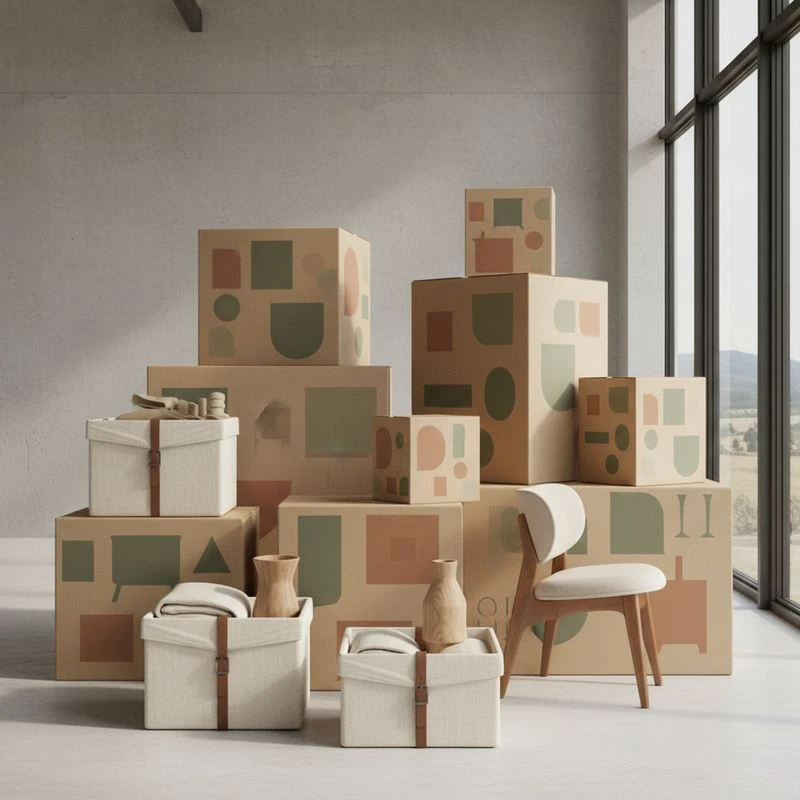
In the vibrant and competitive United Kingdom market, the journey of a furniture or home decor item from manufacturer to customer is fraught with potential challenges. Yet, for forward-thinking brands, this journey represents a golden opportunity to solidify reputation, ensure product integrity, and enhance customer delight. The key to unlocking this potential lies in embracing bespoke solutions, moving beyond generic options to truly understand and implement custom packaging. This isn’t merely about putting a box around an item; it’s a strategic decision that impacts everything from logistics and damage rates to brand perception and customer loyalty. For the discerning UK consumer, the unboxing experience of a new sofa, a delicate vase, or a stylish lamp often sets the tone for their entire interaction with your brand, making every aspect of the packaging critical. From the materials chosen to the innovative design features, custom packaging acts as a silent ambassador, speaking volumes about the quality and care invested in your products.
Furniture Packaging
When it comes to transporting furniture, the notion that one-size-fits-all packaging is sufficient is a costly misconception. The inherent diversity in furniture items – from a robust oak dining table to a delicate upholstered armchair, or a complex flat-pack wardrobe – demands a nuanced approach to custom packaging. Each piece presents its own set of vulnerabilities and structural requirements, meaning that an effective packaging strategy must be as unique as the products themselves. The primary takeaway here is that investing in custom-designed solutions for furniture is not an expense, but an essential investment in product integrity and customer satisfaction, significantly reducing the likelihood of damage during transit across the UK’s varied logistics networks.
The reasoning behind this imperative is multi-faceted. Furniture often possesses awkward shapes, significant weight, and varying degrees of fragility. Standard cardboard boxes rarely offer adequate protection for corners, edges, and vulnerable surfaces that are prone to scuffs, dents, or tears. Furthermore, the UK’s dense urban environments and rural delivery routes mean packages endure multiple touchpoints, sorting facilities, and potential rough handling. Without custom inserts, specialised cushioning, and robust outer shells, even minor impacts can lead to irreparable damage, resulting in costly returns, negative reviews, and a tarnished brand image. Consider a large, upholstered sofa: its fabric can easily snag, its legs can break, and its frame can twist if not properly braced. A custom solution would involve heavy-duty corrugated board, specifically moulded foam corners, protective wrapping for the upholstery, and perhaps even a custom skid or pallet base to facilitate safe handling by forklifts and delivery personnel. For a high-gloss coffee table, the packaging would need scratch-resistant films, ample cushioning to prevent surface abrasions, and a sturdy structure to absorb impacts, ensuring its pristine condition upon arrival.
To implement truly effective custom packaging for furniture, businesses should embark on a systematic process. Begin with a thorough assessment of each product’s specific vulnerabilities and dimensions. This involves identifying areas most susceptible to impact, vibration, and compression. Next, collaborate closely with a custom packaging provider who can offer expertise in material science and structural design. They can recommend appropriate material choices, such as multi-wall corrugated cardboard for heavy items, specialised foam or recycled paper pulp inserts for void fill and shock absorption, and even wooden crates for exceptionally fragile or high-value pieces. Step-by-step, this involves prototyping different designs, conducting transit tests (like drop tests and vibration tests) to simulate real-world conditions, and refining the design based on performance. For flat-pack furniture, the focus shifts to internal organisation, ensuring all components are securely nested, hardware is safely contained, and assembly instructions are protected, all within a robust outer box that can withstand stacking and handling. A potential pitfall is over-packaging, which can lead to unnecessary material costs and increased shipping weights, impacting both profitability and environmental credentials. The solution lies in striking a balance: maximum protection with optimal material usage, often achieved through clever design that uses less material more effectively, such as die-cut inserts that precisely cradle the product. Engaging in this thoughtful design process ensures that every piece of furniture arrives as intended, delighting customers and reinforcing the brand’s commitment to quality.
Large Boxes
The challenges associated with packaging large items, particularly in the furniture and home decor sector, extend far beyond simply finding a bigger box. The fundamental takeaway for businesses operating in the UK market is that large-item custom packaging demands a highly engineered approach, focusing on structural integrity, handling efficiency, and cost optimisation. Neglecting these aspects can lead to exorbitant shipping fees, significant product damage, and operational inefficiencies that erode profitability and customer trust. A properly designed large box not only protects its contents but also streamlines the entire logistics chain, from the warehouse to the customer’s doorstep.
The reasoning behind this specialised requirement is rooted in the physics and practicalities of logistics. Large boxes, by their very nature, face greater stresses during transit. They are more susceptible to crushing, tearing, and puncture wounds due to their size and the forces they encounter in distribution centres and delivery vehicles. A heavy, oversized item packaged in a standard, flimsy box is a recipe for disaster, as the box’s structural integrity will quickly compromise under its own weight, let alone external pressures. Moreover, large dimensions often translate to increased shipping volumetric weight, which can dramatically inflate transportation costs, especially in the UK where delivery networks are optimised for standard parcel sizes. An inadequate large box can also hinder handling, requiring specialised equipment or more personnel, further adding to operational expenses. Imagine trying to maneuver a large, poorly constructed box containing a wardrobe through tight stairwells or doorways; the risk of damage to both the product and the property is immense. This is where engineered custom solutions shine, incorporating features like reinforced corners, multi-wall corrugated materials, and internal bracing systems to distribute weight and absorb shocks effectively.
Implementing effective large-item custom packaging requires a strategic approach. Firstly, collaborate closely with logistics partners to understand their handling capabilities and size restrictions. This insight is crucial for designing boxes that are not only protective but also compatible with their sorting and transport systems. Secondly, focus on material selection: often, triple-wall corrugated board is preferred for exceptionally heavy items, while double-wall can suffice for lighter, bulky pieces. Incorporate internal fitments such as foam blocks, corrugated inserts, or engineered wood frames to secure the product and prevent shifting within the box. Consider the use of hand-holes or designated lifting points to facilitate safer manual handling. For items that are extremely large or heavy, integrated pallet bases can be crucial, allowing for forklift handling and minimizing manual strain. A common pitfall is underestimating the leverage points and stress concentrations on a large box, leading to collapses or tears at critical junctures. The solution often involves strategic reinforcement with extra layers of material or plastic banding. Furthermore, designing custom packaging that allows for easy stacking and palletization can significantly reduce shipping costs and warehouse space requirements, providing a tangible return on investment. Below is a comparison of common materials used in custom packaging for large items.
| Material Type | Typical Use in Custom Packaging | Pros | Cons | Primary Keyword Integration |
|---|---|---|---|---|
| Single Wall Corrugated | Lightweight, smaller home decor items (e.g., lamps, cushions) | Cost-effective, lightweight, easy to print | Limited protection for heavy/fragile items | Economical option for certain Custom Packaging needs |
| Double Wall Corrugated | Medium to heavy furniture (e.g., flat-pack desks, chairs, small tables) | Good balance of strength, protection, and cost | Can be bulky, less crush-resistant than triple wall | Popular choice for durable Custom Packaging of furniture |
| Triple Wall Corrugated | Very heavy or large furniture (e.g., large cabinets, sofas, appliances) | Superior crush resistance, high strength, excellent protection | Heavier, more expensive, less flexible for intricate designs | Ultimate protection in heavy-duty Custom Packaging solutions |
| Wood Crates/Pallets | Extremely heavy, high-value, or delicate items (e.g., marble tables, antique furniture) | Maximum protection, stackable, durable | High cost, heavy, requires specific handling equipment, not eco-friendly (unless reusable) | Specialised and robust Custom Packaging for ultimate security |
This table highlights the diverse material options available for creating robust custom packaging solutions, each suited to different product weights and fragility levels. Choosing the right material is paramount to ensuring products reach their destination safely while managing costs effectively. For businesses in the UK, understanding these material properties allows for a more informed decision-making process when designing custom packaging for their furniture and home decor items.
B2B Design
Designing custom packaging for the Business-to-Business (B2B) sector, especially within the UK furniture and home decor market, requires a fundamentally different approach compared to direct-to-consumer (B2C) packaging. The crucial takeaway for brands is that B2B custom packaging must prioritise efficiency, durability, and practical logistics over elaborate aesthetics, without entirely sacrificing brand identity. Its primary function is to facilitate the safe, cost-effective, and streamlined movement of goods through supply chains to retailers, distributors, or other commercial clients, thereby supporting their operational needs and ultimately impacting their ability to sell to the end-consumer.
The reasoning behind this distinct focus is clear. B2B shipments typically involve larger volumes, multiple handling points, and longer storage periods within warehouses and distribution centres before reaching the final retail environment. While B2C packaging aims to create an exciting unboxing experience for the individual consumer, B2B packaging needs to be optimised for bulk handling, palletization, and efficient warehousing. Retailers and distributors are not impressed by excessive void fill or decorative elements if it means damaged goods, difficult inventory management, or increased waste. Their priority is receiving products in pristine condition, easily identifiable, and ready for display or onward sale. This often means sturdy, stackable boxes with clear labelling for product identification and barcode scanning, facilitating quick inventory processing. Moreover, returns and damage are even more impactful in a B2B context, as a single damaged pallet can represent a significant financial loss and disrupt a retailer’s stock flow, leading to strained relationships and potentially lost accounts. Therefore, the protective qualities of custom packaging are paramount, ensuring that products withstand the rigours of commercial logistics.
To successfully implement B2B custom packaging, brands should adopt several key strategies. First, engage in dialogue with your B2B clients to understand their specific receiving and handling processes; this can reveal invaluable insights into optimal box sizes, pallet configurations, and labelling requirements. Second, focus on robust, industrial-grade materials that can withstand repeated handling and stacking, such as high-strength double or triple-wall corrugated board, often with water-resistant coatings for warehouse environments. Third, standardise box dimensions where possible to maximise pallet utilisation and minimise shipping costs. This involves careful planning to fit multiple product SKUs efficiently onto standard UK pallet sizes. Clear, durable labels are essential, including product codes, quantities, and handling instructions (e.g., “This Way Up,” “Fragile”). While overt branding might be minimal compared to B2C, subtle branding elements, such as a company logo on the carton, reinforce brand presence without impeding functionality. A common pitfall is failing to account for pallet overhang or inadequate stacking strength, which can lead to collapsed boxes and damaged goods during transit or storage. The solution lies in engineering boxes that are precisely sized for pallets and designed with sufficient top-to-bottom compression strength. Furthermore, consider the ease of “unboxing” for retail staff: can the packaging be opened quickly without special tools, and can products be accessed and merchandised efficiently? Thoughtful B2B custom packaging streamlines operations for your partners, making your products easier and more appealing to stock.
| Feature | B2B Custom Packaging Priority | B2C Custom Packaging Priority | Impact on Brand & Logistics | Primary Keyword Link |
|---|---|---|---|---|
| Aesthetics | Functional, subtle branding | High-impact, visually appealing, unboxing experience | B2B: Efficiency, consistent brand image. B2C: Customer delight, social sharing. | Differentiation in Custom Packaging approaches |
| Durability | Extreme, multi-touchpoint protection | Sufficient for last-mile delivery | B2B: Reduced damage, smooth supply chain. B2C: Product arrives intact. | Core requirement for all Custom Packaging |
| Handling | Optimised for pallets, forklifts, warehouse staff | Easy for individual consumer to open and dispose | B2B: Operational efficiency, cost savings. B2C: Positive customer interaction. | Ergonomics in Custom Packaging design |
| Information | SKUs, barcodes, weight, handling instructions | Product features, brand story, instructions | B2B: Inventory management, compliance. B2C: Engagement, product use. | Clarity in Custom Packaging communication |
| Cost Drivers | Material strength, bulk ordering, logistics efficiency | Design complexity, premium finishes, individual unit cost | B2B: ROI through reduced damages/logistics. B2C: Perceived value. | Value proposition of Custom Packaging investments |
This comparison table clearly outlines the divergent priorities that govern B2B versus B2C custom packaging design. For UK businesses, understanding these differences is crucial for developing packaging that not only protects the product but also strategically supports their specific sales channels and customer needs. Optimising packaging for B2B channels means focusing on resilience and logistical efficiency, which ultimately reinforces your reliability as a supplier.
Protection
At the core of any successful custom packaging strategy for furniture and home decor in the UK is an unwavering commitment to protection. The singular takeaway here is that uncompromised product protection is not merely a feature, but the foundational pillar upon which customer satisfaction, brand reputation, and commercial viability are built. Given the often high value, intricate design, and inherent fragility of these items, any compromise on protective measures can lead to significant financial losses, irreparable brand damage, and a cascade of negative customer experiences, making robust custom packaging an indispensable safeguard.
The reasoning behind this absolute necessity is compelling. Furniture and home decor items are not just inert objects; they are often investments, heirlooms, or pieces chosen to transform a living space. Their journey from manufacture to a UK customer’s home can involve multiple stages: warehousing, loading onto trucks, transit over potentially bumpy roads, transfers between delivery depots, and the final ‘last mile’ delivery. Each stage introduces risks of impact, vibration, compression, and even environmental damage (e.g., moisture, extreme temperatures). A delicate ceramic vase, a polished wooden dining table, or a mirrored cabinet all have specific vulnerabilities that generic packaging simply cannot address. A small chip, a scratch on a finished surface, or a broken leg can render a product unsellable or result in an immediate return, incurring not only the cost of the item itself but also reverse logistics, replacement, and customer service expenses. Beyond the tangible costs, the damage to a brand’s reputation from delivering faulty goods is immeasurable, as customers are quick to share negative experiences online, impacting future sales. Effective custom packaging meticulously considers every potential threat, engineering a solution that acts as a fortress around the product, absorbing shocks, preventing movement, and shielding against external elements.
To ensure superior protection through custom packaging, a systematic approach is vital. Start by conducting a thorough fragility assessment of each product, identifying its weak points, surface sensitivities, and weight distribution. This insight will guide material selection and design. Next, implement a layered protection strategy. This typically involves an outer protective layer (e.g., heavy-duty corrugated box), an inner cushioning layer (e.g., foam inserts, air cushions, paper void fill) to absorb shocks and prevent movement, and often a primary wrap or bag (e.g., protective film, dust cover) for surface protection against scratches and moisture. For items with sharp corners or edges, specialised corner protectors are indispensable. Glass or mirrored surfaces require particular attention, often necessitating self-adhesive protective films, thick foam encapsulation, and clear ‘Fragile’ markings. Step-by-step, this involves: selecting appropriate cushioning materials (e.g., polyethylene foam for heavy shock absorption, recycled paper for void fill and light cushioning), designing custom inserts that precisely cradle the product, and conducting rigorous drop testing and vibration testing to simulate real-world transit conditions. A common pitfall is assuming that more material automatically equates to better protection; often, inefficiently used material simply adds weight and cost without genuine benefit. The solution lies in smart design that strategically places protection where it’s most needed, using minimal yet effective materials. This could involve innovative suspension packaging that floats the item within the carton, or multi-part custom packaging for complex items that allows different components to be protected individually before final assembly. Ultimately, the goal is to create custom packaging that ensures every furniture and home decor item arrives in the UK customer’s hands in the exact pristine condition it left the factory.
Branding
In the highly visual and experience-driven UK market, custom packaging for furniture and home decor transcends its primary function of protection to become an incredibly powerful branding tool. The crucial takeaway here is that packaging offers the very first physical interaction a customer has with your brand, making it an unparalleled opportunity to communicate your identity, reinforce your values, and create a memorable, positive impression. Far from being an afterthought, thoughtful custom packaging is an integral component of your marketing strategy, building anticipation, enhancing perceived value, and fostering customer loyalty long before the product itself is fully revealed.
The reasoning behind packaging’s branding power is deeply rooted in consumer psychology and market dynamics. In a crowded marketplace, where many products might share similar functionalities or aesthetic qualities, it’s the brand experience that often differentiates and converts. When a UK customer receives a beautifully packaged item, it immediately elevates their perception of its quality and the brand’s attention to detail. This isn’t just about a logo; it’s about the texture of the material, the chosen colour palette, the elegance of the typeface, the thoughtful placement of product information, and even the ease with which the package is opened. A luxury furniture brand, for instance, might opt for minimalist design, premium matte finishes, and subtle debossed logos, conveying sophistication and exclusivity. A sustainable home decor brand, conversely, might leverage recycled materials, natural tones, and clear messaging about their eco-conscious practices, reinforcing their values. This initial “unboxing experience” has become particularly influential in the age of social media, where customers often share their purchases, inadvertently providing free, authentic marketing for brands that get their packaging right. Conversely, generic, poorly designed, or damaged packaging can instantly diminish the perceived value of even the highest quality product, leading to disappointment and a negative brand association.
To effectively leverage custom packaging for branding, businesses should follow a strategic, step-by-step approach. First, clearly define your brand identity: what are your core values, your target audience, and the desired emotion you want to evoke? This foundation will guide all packaging design decisions. Second, collaborate with designers who understand both your brand vision and the technical aspects of packaging production. This ensures that the aesthetic elements are not only striking but also practical and cost-effective to implement. Consider incorporating your logo prominently yet tastefully, using brand colours consistently, and selecting finishes (e.g., matte, gloss, soft-touch) that align with your brand’s luxury or earthy feel. Beyond the visual, think about the unboxing journey: can you include a branded thank-you note, assembly instructions presented elegantly, or perhaps a small, branded accessory? For furniture, clear, concise, and branded installation guides within the custom packaging can significantly improve the customer experience. A potential pitfall is over-designing, leading to packaging that is expensive, environmentally wasteful, or difficult for the customer to open. The solution lies in balancing aesthetics with functionality and sustainability, choosing materials that reflect your brand’s ethos (e.g., recycled content for eco-friendly brands) and designing for ease of opening and disposal. Furthermore, consistency is key; ensure that all packaging, from large furniture boxes to small decor item cartons, maintains a cohesive brand identity. By treating custom packaging as an extension of your product and an integral part of the customer journey, UK furniture and home decor brands can transform a logistical necessity into a powerful marketing asset that resonates deeply with their audience and fosters lasting relationships.
