
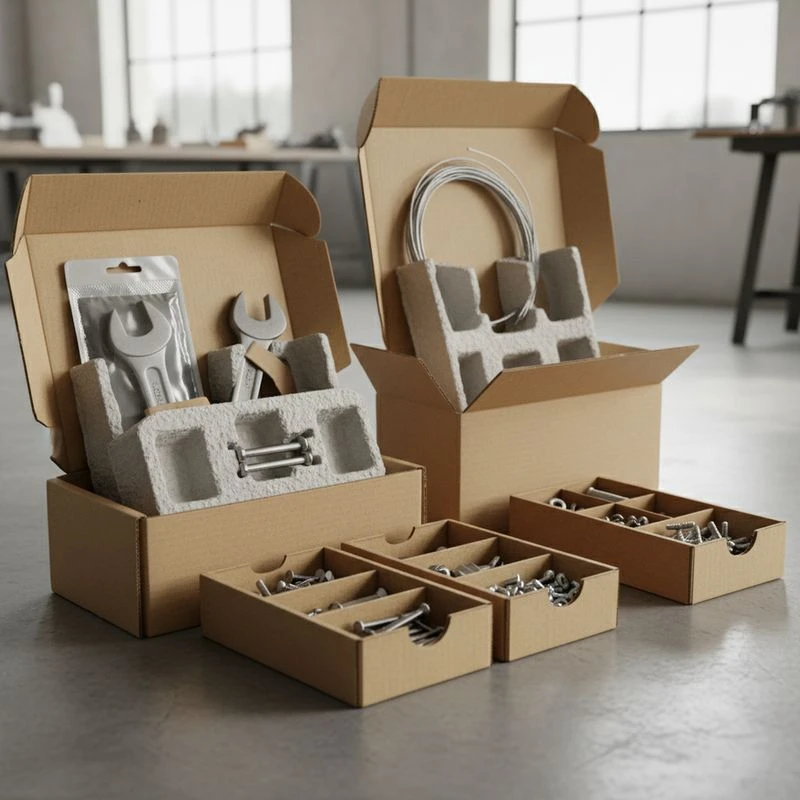
In the demanding landscape of the United Kingdom’s industrial sector, the safe and efficient transit of tools and hardware is paramount. Generic packaging simply doesn’t cut it when dealing with heavy, oddly shaped, or highly sensitive equipment. The key takeaway for businesses is clear: investing in custom packaging for industrial tools and hardware isn’t an expense, but a strategic investment that safeguards your products, enhances your brand reputation, and streamlines your logistics. Tailored solutions minimise damage, reduce shipping costs, and improve customer satisfaction, providing a competitive edge in a fast-paced market.
The reasoning behind this shift towards bespoke solutions is multifaceted. Industrial tools often possess unique dimensions, sharp edges, delicate components, or significant weight, making them particularly vulnerable to damage during handling and transport. Standard boxes or wraps offer insufficient protection, leading to costly returns, replacements, and potential operational downtime for the end-user. Furthermore, the UK market, with its stringent health and safety regulations, requires that goods arrive not only intact but also in a condition that poses no risk during unpacking or immediate use. Actionable steps involve a thorough assessment of product characteristics, transport methods, and destination requirements to design packaging that offers optimal protection while remaining cost-effective.
A common pitfall is underestimating the true cost of inadequate packaging, which extends far beyond the direct cost of damaged goods. It includes the administrative burden of claims, the environmental impact of waste, and the irreparable damage to brand perception. Imagine a scenario where a critical component for a manufacturing line arrives damaged, causing production delays. The financial ramifications for the customer, and consequently for your business relationship, can be severe. A robust, custom-designed packaging solution prevents these headaches by anticipating and mitigating potential risks throughout the supply chain, ensuring that your tools and hardware reach their destination in pristine condition, ready for immediate deployment.
Industrial Packaging
Effective industrial packaging for the UK market goes far beyond simply containing a product; it’s a strategic shield designed to protect valuable assets from the rigours of transit, storage, and handling. When dealing with everything from heavy-duty machinery parts to delicate electronic components used in industrial settings, generic packaging solutions are a recipe for disaster. The fundamental takeaway here is that bespoke custom packaging for industrial tools and hardware significantly reduces the risk of damage, ensuring product integrity and enhancing operational efficiency for both the sender and receiver. This tailored approach considers the unique characteristics of each item, creating a protective environment specifically designed for its journey.
The reasoning behind this specialised approach lies in the diverse nature of industrial goods. Unlike consumer products, industrial tools and hardware often possess irregular shapes, sharp protrusions, significant weight, or require specific environmental conditions. Without packaging engineered to address these challenges, items are susceptible to dents, scratches, corrosion, and even complete breakage. Furthermore, the UK’s logistical network, which includes road, rail, and sea freight, introduces various impact points, vibrations, and temperature fluctuations. Custom industrial packaging factors in these variables, utilising materials and designs that can withstand extreme conditions, ensuring that a precisely calibrated measuring device or a heavy-duty wrench arrives exactly as intended, without compromise.
Implementing an effective industrial packaging strategy involves several actionable steps. Firstly, conduct a detailed audit of your product range, categorising items by weight, fragility, dimensions, and material composition. Secondly, engage with packaging specialists who understand the UK’s industrial supply chain nuances and can offer expertise in material selection, structural design, and testing protocols. For instance, a specialist might recommend anti-corrosion films for metallic parts prone to rust in humid conditions or foam inserts for delicate instruments that require precise cushioning against shocks. Thirdly, consider the entire lifecycle of the packaging – from ease of packing and unpacking to potential for reuse or recycling, aligning with sustainability goals which are increasingly important for UK businesses. Avoiding the pitfall of ‘one-size-fits-all’ solutions prevents costly damages and streamlines your supply chain.
Consider the benefits of material choice in industrial packaging:
| Packaging Material | Key Benefits for Industrial Tools & Hardware | Typical Applications (UK Market) |
|---|---|---|
| Heavy-Duty Corrugated Cardboard | Cost-effective, customisable, good for lighter to medium tools, recyclable, readily available. | Hardware kits, smaller hand tools, fasteners, components for flat-pack machinery. |
| Wood (Plywood/Timber) Crates | High strength, excellent stacking capabilities, ideal for heavy/bulky items, export-ready (ISPM 15). | Machine parts, large motors, precision instruments, delicate heavy equipment. |
| Polypropylene (PP) Cases | Durable, weather-resistant, reusable, chemical-resistant, often with custom foam inserts. | Specialist diagnostic tools, electronic equipment, high-value calibration instruments. |
| Foam Inserts (PE/PU) | Superior shock absorption, custom fit, vibration dampening, protects delicate surfaces. | Cutting tools, optical equipment, aerospace components, medical devices. |
This table illustrates how different packaging materials offer distinct advantages, crucial for protecting the diverse range of industrial tools and hardware. Selecting the right material based on the item’s properties and transport conditions is a foundational step in creating effective custom packaging solutions. Understanding these options empowers businesses to make informed decisions that safeguard their valuable products throughout their journey.
Protective Cases
In the UK’s industrial sectors, where precision, reliability, and robust performance are non-negotiable, the integrity of tools and hardware from factory floor to end-user is paramount. The clear takeaway is that high-quality, customised protective cases are not just an accessory; they are an essential component of the supply chain, providing unparalleled safeguarding for valuable and sensitive equipment. These cases extend beyond mere containment, offering advanced defence against impacts, environmental factors, and improper handling, ensuring that every item arrives in pristine, ready-to-use condition. This commitment to superior protection reflects directly on a company’s dedication to quality and customer satisfaction.
The reasoning behind the widespread adoption of bespoke protective cases stems from the inherent vulnerabilities of industrial tools. Many items, such as diagnostic equipment, calibration instruments, or specialist cutting tools, contain delicate internal mechanisms or finely machined surfaces that are easily compromised by shock, vibration, dust, or moisture. Standard cardboard boxes, even with some internal padding, cannot offer the same level of robust defence. Protective cases, often constructed from durable plastics like high-density polyethylene (HDPE) or composites, are designed to absorb energy from impacts, create sealed environments to prevent ingress of contaminants, and withstand extreme temperatures that might be encountered during transit across the UK or further afield. The tailored foam inserts within these cases precisely cradle each item, eliminating movement and further mitigating potential damage.
To implement an effective strategy for protective cases, businesses should take several actionable steps. Firstly, thoroughly assess the specific protection needs of each tool or piece of hardware, considering its fragility, weight, and the environments it will encounter. This involves evaluating factors like drop height resistance, waterproof ratings (IP ratings), and chemical resistance. Secondly, collaborate with a specialist provider of custom packaging for industrial tools and hardware who can design and manufacture cases with bespoke foam inserts. These inserts are often CNC-machined to perfectly fit the contours of the item, ensuring maximum stability and shock absorption. Finally, consider reusability and longevity; a durable protective case, while a higher initial investment, can often be reused multiple times, leading to long-term cost savings and reduced environmental impact compared to single-use alternatives. Avoiding generic solutions that provide insufficient protection is critical to prevent costly damages and maintain trust.
Imagine a scenario where a UK-based field engineer needs to transport a £10,000 piece of diagnostic equipment to a remote site. A custom-designed protective case, featuring a robust outer shell, high-density foam inserts, and a waterproof seal, ensures the equipment withstands bumpy roads, adverse weather, and potential accidental drops. This not only protects the financial investment but also prevents costly delays for the client who relies on the tool’s functionality. The peace of mind this level of protection offers is invaluable, strengthening the supply chain’s reliability and showcasing a commitment to excellence.
B2B Shipping
Navigating the complexities of business-to-business (B2B) shipping within the United Kingdom demands more than just moving goods from point A to point B; it requires a strategic approach to packaging that prioritises efficiency, safety, and compliance. The key takeaway for businesses is that optimising custom packaging for industrial tools and hardware specifically for B2B logistics can significantly reduce transit risks, streamline operations, and enhance customer satisfaction in a highly competitive market. Unlike consumer shipments, B2B consignments often involve bulk quantities, higher weights, more complex handling procedures, and direct delivery to industrial sites where damage can lead to substantial operational downtime for the recipient.
The reasoning behind this specialised focus on B2B packaging is rooted in the unique demands of the industrial supply chain. Industrial tools and hardware are frequently shipped on pallets, in containers, or as part of larger consolidated freight loads, enduring multiple transfers and diverse handling environments. Generic packaging is simply not designed to withstand the compressive forces, vibrations, and potential impacts inherent in commercial freight. Furthermore, B2B shipping often involves strict delivery schedules and just-in-time inventory systems, meaning that any damage or delay due directly to inadequate packaging can have cascading negative effects on the recipient’s production or project timelines. Custom solutions address these vulnerabilities by reinforcing structural integrity, optimising palletisation, and ensuring items are securely braced to prevent movement during transit, thus safeguarding both the product and the delivery schedule.
To excel in B2B shipping with industrial tools and hardware, businesses should take several actionable steps. Firstly, collaborate closely with your logistics partners to understand their handling procedures, equipment, and typical transit challenges. This insight is crucial for designing packaging that is compatible with their systems, for example, ensuring forklift accessibility or appropriate stacking strength. Secondly, invest in packaging materials and designs that are robust enough to endure the entire B2B journey, considering not just protection but also ease of loading, unloading, and inspection. This might include using strong, multi-wall corrugated boxes, custom wooden crates, or durable plastic containers with integrated securing mechanisms. Finally, clearly label all packages with essential information such as weight, handling instructions, and destination details to facilitate smooth processing and minimise mis-shipments. A critical pitfall to avoid is failing to test your packaging under realistic shipping conditions, as laboratory simulations may not fully replicate real-world B2B transit stresses.
| B2B Shipping Consideration | Impact on Custom Packaging for Industrial Tools & Hardware | Best Practice Example (UK) |
|---|---|---|
| Freight Consolidation | Requires packaging to withstand stacking pressure and multi-modal transfers. | Reinforced corrugated boxes or stackable wooden crates with consistent footprints for palletisation. |
| Warehouse Handling (Forklifts, etc.) | Needs packaging designed for mechanical handling, minimal protrusion, and clear labels. | Robust bases, integrated pallet runners, clear weight and ‘this side up’ markings. |
| Recipient’s Unpacking Process | Packaging should be easy and safe to open, minimising waste and effort for the customer. | Perforated tear strips, clearly marked opening points, minimal excess material. |
| Compliance & Regulations | Must adhere to UK transport laws, e.g., for hazardous materials or specific item types. | UN-certified packaging for dangerous goods, ISPM 15 timber for international shipments. |
This table highlights essential B2B shipping considerations and their direct influence on the design of effective custom packaging for industrial tools and hardware. By addressing these factors proactively, businesses can ensure their packaging performs optimally throughout the complex B2B supply chain, leading to fewer damages and improved logistical flow. Understanding these nuances allows for the creation of packaging that is not just protective but also functionally integrated with the broader shipping ecosystem.
Heavy Duty
When it comes to shipping industrial tools and hardware, particularly those with substantial weight or large dimensions, “heavy duty” is not merely a descriptor; it’s a fundamental requirement for successful transit in the UK market. The core takeaway here is that investing in truly heavy-duty custom packaging for industrial tools and hardware is non-negotiable for safeguarding significant investments and ensuring optimal operational readiness upon arrival. Generic, lightweight packaging solutions are entirely inadequate for items that can weigh hundreds of kilograms, leading inevitably to structural failures, product damage, and substantial logistical complications. Proper heavy-duty packaging is engineered to withstand immense stress, providing unparalleled protection.
The reasoning behind this absolute need for heavy-duty solutions lies in the physical characteristics of industrial equipment and the harsh realities of commercial freight. Items such as large engine components, heavy-duty machinery parts, or specialised construction tools exert considerable force on their packaging. Without materials and construction techniques designed to manage these forces, packaging can buckle, tear, or completely collapse, exposing the valuable contents to impact, abrasion, and environmental hazards. Furthermore, the UK’s freight networks involve considerable vibrations, acceleration, and deceleration, all of which put immense strain on packaging. Heavy-duty solutions utilise reinforced materials like thick-gauge wood, multi-wall corrugated board, or industrial-grade plastics, often combined with internal bracing and strapping, to distribute weight evenly and absorb shock effectively. This robust construction is vital for preventing costly damage that could halt a client’s operations.
To implement an effective heavy-duty packaging strategy, businesses must undertake several actionable steps. Firstly, precisely calculate the weight and critical dimensions of the item, along with its centre of gravity, to inform the structural design of the packaging. Secondly, engage with specialist packaging manufacturers who possess expertise in heavy-duty applications and can recommend the most appropriate materials and structural reinforcements. For example, a specialist might suggest a wooden crate constructed with ISPM 15-compliant timber for international shipments, or a custom-designed corrugated solution with internal honeycomb inserts for enhanced compressive strength. Thirdly, consider the handling requirements; heavy-duty packaging often needs specific features like integrated pallet bases, lifting points, or reinforced handles to ensure safe and efficient manipulation by forklifts and cranes. A common pitfall is to over-engineer without considering the entire handling process, making the package cumbersome or difficult for freight handlers, potentially leading to increased risk of damage despite its robustness.
For instance, imagine a company shipping a 500kg industrial pump to a new factory in Scotland. A heavy-duty wooden crate, reinforced with steel strapping and featuring a custom-fit internal foam liner, would be essential. This design ensures that the pump is securely immobilised, protected from external impacts, and the packaging itself can withstand the rigours of transit, including potential stacking and multiple transfers. This level of protection prevents catastrophic failure and guarantees the pump arrives ready for installation, avoiding costly delays and demonstrating a commitment to quality from the supplier.
Durable
In the dynamic and often demanding UK industrial market, the concept of durable packaging transcends mere protection; it embodies a commitment to sustainability, efficiency, and long-term value. The overarching takeaway for businesses is that choosing durable custom packaging for industrial tools and hardware not only ensures product integrity through multiple uses or challenging conditions but also contributes significantly to environmental responsibility and cost savings over time. Unlike single-use solutions, durable packaging, often designed for repeated cycles, helps to reduce waste, lower procurement costs, and project a professional, environmentally conscious brand image to clients and partners.
The reasoning behind prioritising durability is multifaceted. Industrial tools and hardware are frequently part of a circular economy or require storage over extended periods. For example, field service kits, calibration instruments, or specialty tools might be transported repeatedly between job sites, or returned to a central depot for maintenance. Fragile, single-use packaging would quickly degrade, necessitating constant replacement and generating unnecessary waste. Durable packaging, constructed from high-quality plastics, robust composites, or treated woods, is engineered to withstand wear and tear, repeated handling, and varying environmental conditions such as moisture, dust, and temperature fluctuations. This resilience ensures that the packaging remains structurally sound and protective throughout its intended lifespan, maintaining its protective capabilities and aesthetic appeal.
Implementing a strategy focused on durable packaging involves several actionable steps. Firstly, identify which of your industrial tools or hardware items are candidates for reusable, durable packaging based on their value, frequency of transport, and expected lifespan. High-value items, or those used in a service loop, are prime candidates. Secondly, collaborate with packaging design specialists to select materials and designs that offer exceptional longevity and resistance to degradation. This might include robust plastic cases with reinforced hinges and latches, or custom-moulded composite trays designed for stacking and nesting. Consider features like tamper-evident seals for security, or integrated RFID tags for inventory management, further enhancing the functionality of durable solutions. Finally, establish a clear return and re-conditioning process for your durable packaging to maximise its lifecycle. A potential pitfall is to overlook the total cost of ownership; while durable packaging might have a higher initial outlay, its long-term cost-effectiveness, reduced waste disposal fees, and enhanced brand image often provide a superior return on investment compared to disposable alternatives.
| Durable Packaging Feature | Benefit for Industrial Tools & Hardware (UK) | Example Use Case |
|---|---|---|
| High-Impact Resistance | Protects against accidental drops and rough handling over many uses. | Field service kit for engineers, containing sensitive diagnostic equipment. |
| Weatherproof/Waterproof Seals | Safeguards contents from rain, humidity, dust, and grime in outdoor environments. | Electronic components stored or transported to construction sites. |
| Chemical Resistance | Prevents degradation from exposure to oils, solvents, or corrosive agents. | Transport of maintenance tools for chemical processing plants. |
| Stackable/Nestable Design | Optimises storage space and efficient transportation, especially for reusable containers. | Returnable packaging for parts between UK manufacturing sites. |
| Ergonomic Handles/Latches | Ensures safe and easy handling for personnel, reducing injury risk over repeated use. | Heavy toolboxes for on-site repairs, carried by technicians. |
This table illustrates key features that define durable packaging and the tangible benefits they offer for industrial tools and hardware in the UK market. By integrating these characteristics into custom packaging solutions, businesses can achieve superior product protection and operational efficiency. Focusing on durability ensures that packaging stands the test of time, reducing both environmental impact and long-term operational costs.
