
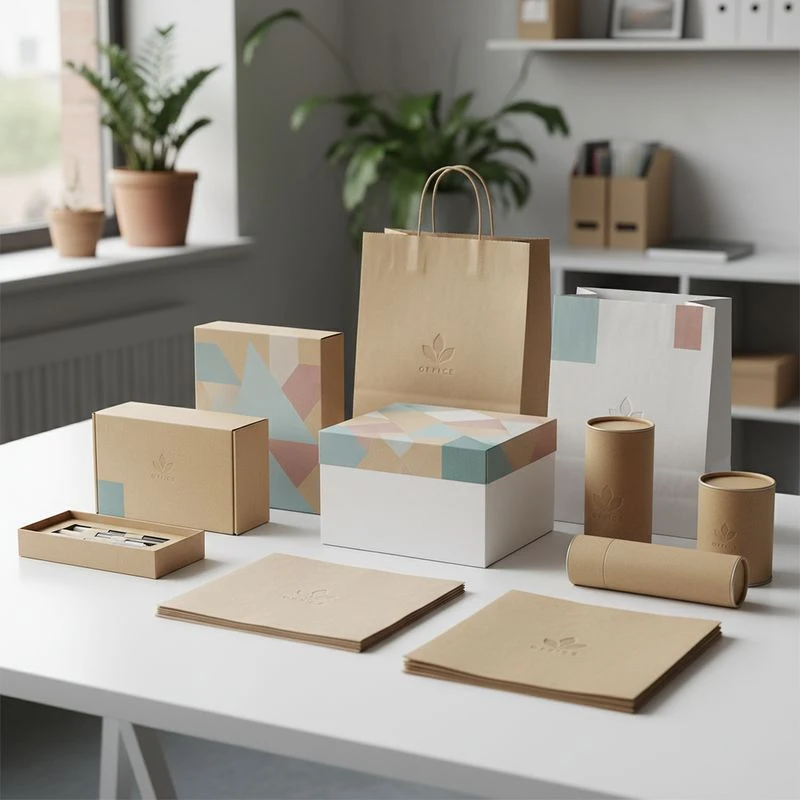
Stationery Packaging
In the vibrant and competitive United Kingdom market, elevating your office and stationery brand beyond the ordinary is not just an aspiration; it’s a strategic imperative. The most impactful way to achieve this distinction is through thoughtfully designed custom packaging. Far from being a mere protective layer, bespoke packaging transforms your products from simple utilities into desirable experiences, fostering a deeper connection with your customers and significantly enhancing brand perception. Generic, off-the-shelf packaging signals a lack of attention to detail and can make even the highest quality stationery feel unremarkable. In contrast, custom solutions communicate your brand’s values, whether that’s an unwavering commitment to sustainability, an air of luxury, or a minimalist aesthetic, long before the product itself is even seen.
Consider the unboxing experience – a critical moment in today’s e-commerce driven landscape. For a UK customer, receiving a beautifully packaged fountain pen, a set of artist-grade pencils, or an artisanal journal can turn a simple transaction into a memorable event. This experience not only justifies the price point but also encourages repeat purchases and word-of-mouth recommendations, acting as a powerful, organic marketing tool. Custom packaging provides the perfect canvas for brand storytelling. Imagine an eco-conscious stationery brand using recycled Kraft paper with a subtly embossed logo and natural twine, instantly conveying their commitment to the environment. Or a luxury pen brand encasing their exquisite writing instruments in a rigid, velvet-lined box, hinting at the premium quality within. These details resonate deeply with consumers who increasingly seek brands aligned with their personal values.
To embark on this journey, start by considering your material choices. Recycled cardstock, premium matte paper, or even innovative plant-based materials can differentiate your brand. Explore various printing techniques such as sophisticated foil stamping for a touch of elegance, spot UV for tactile contrast, or intricate embossing/debossing to add a sensory dimension. Structural design also plays a crucial role; think beyond simple boxes to sleeves, custom inserts, or elegant drawer boxes that enhance the reveal. The goal is to create packaging that protects your product effectively while simultaneously engaging the customer on an emotional level. A potential pitfall here is overspending on purely aesthetic elements while neglecting functional protection. The solution lies in balancing visual appeal with the practical necessities of safeguarding your products during transit and handling, especially given the various shipping conditions across the UK. By focusing on both form and function, your custom packaging becomes a powerful ambassador for your office and stationery brand, standing out in a crowded market and fostering enduring customer loyalty.
Box Design
The strategic design of your custom packaging box is a cornerstone of brand success for office and stationery products, particularly within the discerning UK market. It transcends mere aesthetics, serving as a critical blend of visual appeal and practical functionality. An effectively designed box ensures that your products are not only presented beautifully but also remain protected throughout their journey, from your warehouse to the end-user’s desk. Beyond safeguarding contents, design significantly impacts logistics, storage efficiency, and ultimately, customer satisfaction. A poorly designed box can lead to product damage, increase shipping costs due to inefficient sizing, or frustrate customers with cumbersome opening mechanisms, all of which detract from your brand’s perceived value.
When approaching box design, the first step involves selecting the appropriate structural style based on your product’s fragility, weight, and intended shipping method. For lighter items like notepads or pens, a simple tuck-end or mailer box might suffice, offering ease of assembly and a streamlined look. For more delicate or luxury items, a rigid box with custom inserts provides superior protection and an enhanced unboxing experience. Consider how the box will be handled during transit; will it be stacked, dropped, or exposed to varying temperatures? Precise measurements are paramount. Inaccurate dimensions are a common pitfall, leading to either wasted material and space or, worse, inadequate protection that results in damaged goods. Prototyping and testing different designs are invaluable steps to ensure a perfect fit and robust construction. For instance, a subscription box for stationery might feature an intricate die-cut design that reveals a monthly theme, while a set of premium pencils could be housed in a drawer box that slides open with a satisfying motion.
Graphic design elements are equally vital. Your brand’s colours, logo, typography, and any unique patterns should be consistently applied to reinforce brand identity. Clear product information, usage instructions, and any relevant certifications (e.g., FSC for sustainable paper products) must be legible and strategically placed. The goal is to create a design that grabs attention on a retail shelf or delights upon arrival at a customer’s door. Furthermore, think about the unboxing experience. Can the box be easily opened without tools? Are there hidden messages or subtle branding details inside? These small touches can transform a functional package into a memorable interaction. A significant consideration for UK brands is compliance with packaging waste regulations and the growing consumer demand for sustainable solutions. Incorporating recycled materials or designing for easy recyclability is not just good for the environment but also enhances your brand’s appeal. By meticulously planning both the structural and graphic aspects, your custom packaging box becomes a silent salesperson, conveying quality, care, and professionalism for your office and stationery brand.
B2B Printing
For office and stationery brands operating within the demanding UK market, establishing a robust partnership with a reliable B2B printing specialist is absolutely critical for achieving high-quality, consistent, and cost-effective custom packaging solutions. Printing is not merely the final stage of design; it’s a specialised craft that demands expertise in materials, sophisticated print techniques, meticulous colour management, and the capacity to scale for varying order volumes. A competent B2B printer ensures that your brand’s visual identity, from the precise shade of your logo to the crispness of your typography, remains consistent across every single piece of custom packaging you produce. This consistency is paramount for building brand recognition and trust, whether your products are destined for corporate clients, educational institutions, or retail shelves.
The process begins with vendor selection. When choosing a B2B printing partner, particularly in the UK, look for a company with a proven track record in custom packaging. Review their portfolio for examples of similar work and assess their technical capabilities. Proximity can be a benefit; a UK-based printer often offers advantages in terms of communication, shorter lead times, and ease of conducting press checks. Crucially, inquire about certifications such as ISO (for quality management) or FSC (for responsible forestry), which demonstrate a commitment to both quality and sustainability. Once a partner is chosen, understanding the pre-press process is vital. This involves preparing your design files correctly, understanding colour profiles (CMYK vs. Pantone), and approving digital or physical proofs. A good printer will guide you through this, flagging potential issues like colour shifts or resolution problems before they impact the final product.
Different print technologies offer distinct advantages depending on your needs. For large volume orders typical of established stationery lines or corporate branding projects, offset printing provides superior colour accuracy and cost-efficiency per unit. For smaller runs, bespoke projects, or those requiring variable data printing (e.g., personalised items), digital printing offers flexibility and speed. Flexographic printing is excellent for high-volume jobs on diverse substrates like labels and flexible packaging. Engaging with your printer to understand these options will help you make informed decisions that balance quality, cost, and lead time. A common pitfall can be inconsistent colour reproduction across different batches or materials. To mitigate this, insist on using the Pantone Matching System (PMS) for critical brand colours and, whenever feasible, conduct press checks to approve the print run in person. Clear, proactive communication with your B2B printing partner is the ultimate solution to preventing delays and ensuring the final custom packaging product perfectly aligns with your brand’s vision and quality standards. This strategic partnership is an investment that pays dividends in brand reputation and market presence.
| Printing Technique | Best For | Advantages for Custom Packaging | Disadvantages for Custom Packaging | Typical Cost/Volume (UK Context) |
|---|---|---|---|---|
| **Offset Printing** | Large volume runs of `Custom Packaging`, high-quality brochures, catalogues. | Superior image quality, precise colour matching (Pantone), cost-effective for high quantities. | High setup costs, longer lead times for small runs, less flexible for variable data. | High initial cost, but low cost per unit for >1000 units. |
| **Digital Printing** | Small to medium runs of `Custom Packaging`, personalised items, rapid prototyping. | No setup costs, quick turnaround, ideal for variable data, excellent for short runs. | Higher cost per unit for large volumes, colour consistency can vary slightly across runs. | Cost-effective for <500 units, scales down poorly for very large quantities. |
| **Flexographic Printing** | High-volume runs on diverse materials (e.g., labels, corrugated board for `Custom Packaging`). | Very fast for large quantities, cost-effective for long runs, works on various substrates. | Higher setup costs (plates), lower image quality than offset, less ideal for intricate designs. | Most cost-effective for extremely high volumes (>5000 units), especially for simpler designs. |
| **Screen Printing** | Speciality finishes, vibrant colours on unique materials, thicker ink deposits for `Custom Packaging`. | Achieves vivid colours, durable prints, can print on textured or unusual surfaces. | Slow process, higher cost per unit, limited detail compared to offset/digital. | More expensive for most packaging, but ideal for specific embellishments like spot UV or metallic inks. |
This table illustrates the primary printing techniques available for creating custom packaging for office and stationery brands in the UK. Understanding these options is crucial for B2B printing decisions, as each method offers unique benefits and trade-offs concerning quality, cost, and volume. Selecting the right technique ensures your custom packaging aligns with both your brand’s aesthetic goals and budget constraints.
Display Ready
In the competitive retail landscape of the United Kingdom, particularly for office and stationery products, custom packaging designed to be “display-ready” is a game-changer. This approach goes beyond mere protection and branding; it transforms your packaging into an active sales tool, significantly enhancing product visibility and driving impulse purchases. When packaging is engineered to seamlessly integrate into retail environments, it minimizes the merchandising effort required from store staff, ensuring your products are always presented in the most attractive and accessible manner. For a brand, this means less reliance on retailers to correctly display your items and a greater guarantee that your product will catch the eye of a browsing customer.
The concept of display-ready packaging encompasses various elements, from point-of-sale (POS) integration to intuitive design that encourages engagement. Imagine a branded pen set packaged in a box that, once opened, transforms into a compact, eye-catching counter display. Or a range of colourful sticky notes housed in a sleeve designed with a hang tab, perfect for a pegboard display. These solutions are not just about convenience; they are about strategic placement and immediate impact. When a customer walks into a stationery shop or an office supply store, their attention is drawn to products that stand out, are clearly labelled, and look appealing. Display-ready custom packaging does precisely that, acting as an in-store advertisement that communicates your brand’s value proposition without needing additional signage or marketing collateral.
To implement display-ready packaging effectively, several actionable steps are crucial. Firstly, consider the typical retail formats your products will inhabit, from large supermarkets and national stationery chains to independent boutiques. Design your packaging to fit standard shelf dimensions, counter spaces, or hanging displays. Secondly, prioritize product visibility. Features like strategically placed window cut-outs or clear packaging elements can allow the product itself to be seen, building trust and showcasing quality. Thirdly, ensure that key brand messages, product benefits, and pricing are immediately visible and legible. Clutter-free design with a clear hierarchy of information is essential for quick comprehension. Lastly, ease of access is key, both for retail staff stocking shelves and for customers wishing to examine or purchase the product. Avoid overly complex designs that are difficult to open or re-seal. A potential pitfall is designing packaging that is too bulky or awkwardly shaped for typical retail shelves, leading to products being hidden away or poorly displayed. The solution involves collaborating closely with your packaging design partner to test various prototypes within real-world retail scenarios. By carefully considering these aspects, your custom packaging becomes a powerful asset that drives sales and strengthens your presence in the competitive UK office and stationery market.
Durability
Ensuring the unparalleled durability of custom packaging is not merely a desirable trait but an absolute necessity for office and stationery brands navigating the multifaceted supply chains and customer expectations within the United Kingdom. Durable packaging is the silent guardian of product integrity, meticulously protecting items from potential damage at every stage, from the moment they leave your manufacturing facility to their final arrival in the hands of the end-user. This protection extends beyond mere physical impacts; it encompasses resilience against environmental factors, handling stresses, and the rigours of transit. Moreover, robust packaging contributes significantly to a positive brand image; customers expect their purchases to arrive in perfect condition, and any damage reflects negatively on the brand, regardless of who was responsible for the shipping.
A proactive approach to durability also underpins sustainability efforts by reducing waste associated with damaged goods and subsequent returns or replacements. To achieve this, several key actionable steps must be taken. Firstly, material strength is paramount. Selecting the appropriate board grade is critical; for instance, corrugated cardboard offers superior protection for heavier items like reams of paper or bulk office supplies, while rigid board provides an unyielding structure ideal for luxury pen sets or delicate art materials. The grade of the material should be directly correlated with the product’s weight, fragility, and the expected transit conditions, including typical courier handling within the UK and potential international shipping. Secondly, structural integrity must be engineered into the design itself. This involves reinforcing stress points, employing secure closure mechanisms such as robust locking tabs, magnetic closures, or tamper-evident seals. These features prevent accidental opening and add a layer of security.
Furthermore, custom inserts and protective linings play a vital role. Custom-fit inserts made from materials like foam, moulded pulp, or precisely die-cut paperboard can secure products within the box, preventing shifting, rattling, and impact damage. For example, a subscription box for stationery sent via an online retailer in the UK would benefit immensely from internal dividers that keep notebooks, pens, and small accessories firmly in place. Finally, the application of various finishes significantly boosts durability. Coatings like laminations (matte or gloss), varnishes, or specialised aqueous coatings can add substantial resistance to moisture, abrasion, scuffs, and tearing. This is particularly important for packaging that might be handled frequently or exposed to varying atmospheric conditions during storage or transit. A common pitfall can be over-engineering, leading to unnecessary material costs and heavier packages. The solution involves rigorous testing, including drop tests and transit simulations, to strike the optimal balance between protection and cost-efficiency. Another challenge is ensuring protective elements are also eco-friendly. Exploring sustainable alternatives for inserts, such as recycled paper pulp or biodegradable foams, addresses both durability and environmental concerns. By meticulously planning and implementing these durability features, your custom packaging ensures product safety, enhances customer satisfaction, and reinforces your brand’s commitment to quality in the bustling UK market.
| Custom Packaging Durability Feature | Benefit for Office & Stationery Brands | UK Shipping & Handling Context | Material/Design Example |
|---|---|---|---|
| **Material Grade (e.g., Corrugated)** | High crush resistance, protects against external impacts for `Custom Packaging`. | Essential for multi-item shipments or heavier goods in standard courier networks. | E-flute or B-flute corrugated for mailer boxes containing multiple stationery items. |
| **Internal Inserts/Fitments** | Secures products, prevents movement, absorbs shock, protects delicate items. | Crucial for fragile items (e.g., fountain pens, ceramic holders) or sets during varied UK transit. | Die-cut paperboard inserts for pens, foam lining for luxury writing instruments. |
| **Protective Coatings/Laminations** | Adds resistance to moisture, abrasion, scuffs, and fingerprints; enhances print durability. | Important for products displayed in varied retail environments or subject to occasional spills. | Matte lamination on notebook boxes for a premium feel and scuff resistance. |
| **Secure Closure Mechanisms** | Prevents accidental opening, deters tampering, ensures product integrity upon arrival. | Reliable for e-commerce deliveries where packages might be handled multiple times. | Self-locking tabs for tuck-end boxes, magnetic closures for rigid gift boxes. |
| **Reinforced Edges/Corners** | Increases overall structural strength, especially at vulnerable points. | Mitigates damage from drops or stacking pressure in warehouses and during delivery. | Double-wall construction for outer shipping cartons of bulk stationery. |
This table highlights critical durability features for custom packaging, directly impacting the protection and longevity of office and stationery products in the UK market. Implementing these features ensures that your custom packaging not only looks premium but also performs exceptionally under real-world conditions, safeguarding your brand’s reputation and product quality.
