
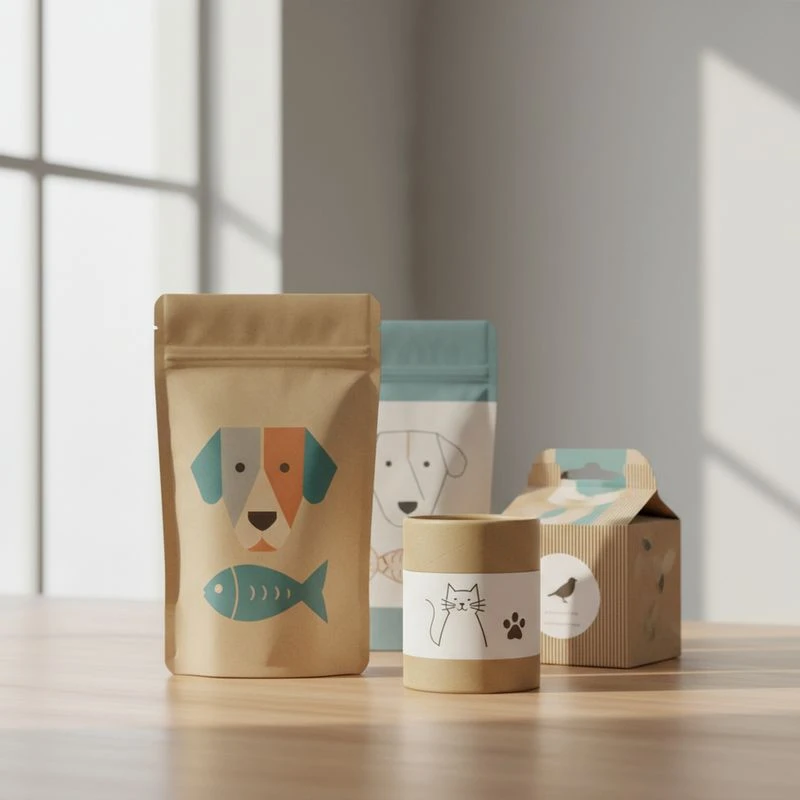
Pet Food Packaging
In the highly competitive UK pet food market, the initial impression your product makes is not just important—it’s everything. Investing in high-quality, custom pet food packaging is absolutely crucial for distinguishing your brand from a crowded shelf and fostering unwavering consumer trust. Think of your packaging as the silent salesperson, working tirelessly to communicate your brand’s values, product quality, and commitment to pet well-being before a single bite is taken. This first point of contact profoundly influences purchasing decisions, shapes brand perception, and, most importantly, protects the integrity of the valuable product inside. Beyond aesthetics, meeting stringent UK regulatory standards—such as those dictated by FSQS (Food Safety and Quality System) or BRC (British Retail Consortium) certifications for material safety and hygiene—is non-negotiable. Failing to comply not only risks legal repercussions but also erodes consumer confidence, which is notoriously difficult to regain.
Choosing the right materials is a foundational step in crafting effective custom packaging for pet food. For dry kibble, multi-layer films offering excellent oxygen and moisture barriers are essential to prevent spoilage and maintain freshness over long periods. Wet food, conversely, demands robust retort-ready pouches or trays that can withstand high temperatures during sterilization while ensuring a long shelf life. For pet treats, resealable pouches are a game-changer, providing convenience for pet owners and preserving the treats’ palatability after opening. Environmentally conscious consumers in the UK are increasingly looking for sustainable options, so considering recyclable, compostable, or PCR (post-consumer recycled) materials is not just a trend but a strategic imperative. Furthermore, clear and concise labelling, including ingredient lists, feeding guidelines, allergen information, and batch numbers, is mandated by law and builds transparency with your customer base. An attractive design, featuring engaging visuals and a cohesive brand narrative, is what ultimately grabs attention, inviting pet owners to learn more about what makes your product special.
To avoid common pitfalls, such as premature spoilage due to inadequate material choice, it’s vital to conduct thorough material compatibility testing with your specific pet food formulation. A generic or uninspired design will inevitably struggle to stand out, fading into the background of a busy pet store aisle. The solution lies in collaborating with experienced packaging designers and manufacturers who understand both the creative and technical aspects of custom packaging for pet food. They can guide you through material selection, ensuring optimal barrier properties for your product, and help translate your brand story into a visually compelling and compliant package. For instance, a premium dry kibble brand might opt for a matte finish pouch with a unique die-cut window, signalling quality and allowing consumers a glimpse of the product. An eco-conscious brand could highlight its commitment through vibrant greens and browns, coupled with clear messaging about the packaging’s recyclability. Remember, the goal is not just to contain your product but to elevate its perceived value and ensure it reaches the end-consumer exactly as intended – fresh, appealing, and trustworthy.
Bags and Pouches
For UK pet food manufacturers seeking to maximise versatility, enhance convenience, and amplify shelf appeal, flexible packaging, particularly in the form of stand-up pouches and flat-bottom bags, offers an unparalleled advantage. Compared to traditional rigid containers, these modern solutions present a compelling case, dramatically reducing material usage, lowering shipping costs due to their lighter weight and efficient stacking, and providing superior visibility on retail shelves. The inherent flexibility allows for innovative designs that truly capture consumer attention. Moreover, features like resealable zippers transform the consumer experience, ensuring product freshness after opening and reducing waste, while easy-pour spouts make daily feeding a breeze. Exploring different styles, such as the classic doypack (stand-up pouch), the stable quadro seal (flat-bottom) bag, or the economical three-side seal pouch, reveals a spectrum of options each tailored to specific product types and brand aesthetics. These formats address both the practical needs of product protection and the marketing imperatives of eye-catching design, making them a cornerstone of effective custom packaging for pet food.
The strategic choice of bag or pouch style should be meticulously aligned with several key factors: the product’s weight and volume, your desired shelf presence, and the anticipated consumer usage patterns. For instance, a large bag of dry kibble (5kg+) benefits immensely from a flat-bottom bag with sturdy side gussets and a convenient handle, offering both stability on the shelf and ease of transport for the customer. Smaller, single-serving portions of wet pet food or treats are perfectly suited to three-side seal pouches, which are cost-effective and can be packed efficiently. Stand-up pouches, with their broad face, provide excellent branding real estate, making them ideal for premium treats or specialty diets where visual impact is paramount. Beyond the basic form, integrating user-friendly features like precise tear notches ensures easy opening, while degassing valves are essential for products like certain fresh pet foods that might release gases, preventing ballooning and maintaining package integrity. Each element, from material thickness to zipper quality, contributes to the overall success and consumer acceptance of your custom packaging for pet food.
A common pitfall in flexible packaging is substandard seal integrity, which can lead to product spoilage, leaks, and a damaged brand reputation. The solution lies in partnering with a reputable manufacturer that employs robust material construction and conducts rigorous quality control, including seal strength testing, throughout the production process. Another challenge can be consumer frustration with packaging that is difficult to open or re-seal. To counteract this, always prioritise user-friendly closures and clear instructions. A good strategy involves user testing with actual pet owners to gather feedback on usability before committing to large-scale production. Consider also the implications of various laminates and barrier films, such as those incorporating EVOH for oxygen sensitivity or metallised layers for light protection, ensuring the chosen structure provides the optimal environment for your specific pet food product. By carefully considering these factors and leveraging the latest innovations in flexible packaging technology, UK pet food brands can deliver products that are not only well-protected but also highly appealing and convenient for their valued customers.
| Style | Best Use | Key Features | Advantages for UK Market |
|---|---|---|---|
| Stand-up Pouch (Doypack) | Pet treats, smaller kibble, specialty diets (0.1kg – 2kg) | Bottom gusset allows standing, prominent front panel, optional resealable zipper | High shelf impact, excellent branding visibility, consumer convenience (resealable), reduced material. |
| Flat-Bottom Bag (Quadro Seal) | Medium to large kibble, bulk treats (1kg – 15kg) | Flat base provides maximum stability, five panels for branding, often with side gussets and handle | Superior stability, robust appearance, ample branding space, easy handling for larger quantities. |
| Three-Side Seal Pouch | Single-serve wet food, small treats, sampling packs | Sealed on three sides, open on one for filling, economical, versatile | Cost-effective, efficient for high-volume production, ideal for small portions or promotional items. |
| Rollstock Film | Automated form-fill-seal operations for various products | Continuous film rolled onto a core, converted into pouches/bags on-site | Most cost-effective for high volumes, highly customisable in terms of size and shape, fast production. |
This table illustrates the primary flexible packaging styles commonly employed for custom packaging for pet food in the UK. Each option provides distinct benefits tailored to different product categories and marketing strategies. Selecting the appropriate style is paramount for optimising both product protection and consumer interaction.
Custom Printing
The power of high-quality custom printing cannot be overstated when it comes to establishing a formidable brand identity, effectively communicating product benefits, and ultimately capturing the fleeting attention of consumers on the intensely crowded shelves of UK supermarkets and pet stores. In a market where choice abounds, the visual appeal of your custom packaging for pet food is often the decisive factor that differentiates your brand from the competition. It’s not merely about putting a logo on a bag; it’s about harnessing colour psychology, ensuring clear information hierarchy, and weaving a compelling visual narrative that resonates deeply with pet owners. Different printing technologies, such as flexographic for large runs and vibrant solid colours, digital for short runs and intricate designs with variable data, or gravure for exceptionally high-quality photographic imagery, each offer unique advantages. Understanding their capabilities is key to matching your design vision with the optimal production method, ensuring that every hue and detail precisely reflects your brand’s commitment to quality. Moreover, stringent UK regulations demand absolute accuracy and clarity in all labelling, from detailed ingredient lists and precise feeding guidelines to comprehensive allergen information and batch traceability, making printing a critical compliance gateway.
To achieve the desired visual outcomes and ensure brand consistency across all custom packaging for pet food products, a collaborative approach with both design agencies and experienced packaging printers is essential. Begin by providing high-resolution artwork in correct file formats (e.g., AI, PDF, EPS) and clearly defined brand guidelines, including specific Pantone Matching System (PMS) colours where accuracy is paramount. Engaging in a meticulous proofing process – from digital proofs to physical press proofs – is a non-negotiable step to catch any discrepancies before mass production. This ensures that the final printed packaging perfectly aligns with your brand’s aesthetic and meets your quality expectations. Furthermore, consider the strategic application of special finishes; a matte varnish can convey a premium, tactile feel, while spot UV can highlight specific design elements like a brand logo or key product benefits, adding an extra layer of sophistication and visual interest that catches the light and the eye. Such thoughtful details in custom packaging can elevate a product from merely functional to genuinely desirable.
A significant pitfall is the use of low-resolution artwork, which inevitably results in blurry or pixelated printing, severely undermining your brand’s professional image. The solution is straightforward: always provide printers with the highest resolution files available and insist on seeing physical proofs. Another common issue is inconsistent colour matching across different print runs or even different packaging formats, leading to brand dilution. To combat this, establish clear brand guidelines that include precise colour specifications, work with printers who employ advanced colour management systems, and conduct regular quality checks. If you are launching a new product, or rebranding, conduct market research to understand what visual cues resonate most with your target demographic in the UK. For example, brands targeting owners of working dogs might opt for a rugged, earthy aesthetic with bold fonts, while those for pampered lap dogs might prefer softer pastels and elegant typography. By paying meticulous attention to these printing details, your custom packaging for pet food will not only look exceptional but also effectively communicate your brand’s unique message, compelling pet owners to choose your product with confidence.
B2B Supply
For any pet food manufacturer operating within the dynamic UK market, establishing a reliable and highly efficient B2B supply chain for custom packaging is not just an operational necessity; it is a strategic imperative. A robust supply network ensures consistent production, facilitates effective cost management, and, crucially, enables your business to consistently meet fluctuating market demand without disruption. The intricacies of sourcing packaging materials are multifaceted, encompassing considerations such as lead times, minimum order quantities (MOQs), and robust inventory management strategies. In this environment, fostering long-term, collaborative relationships with your packaging suppliers is invaluable. These partnerships, built on mutual trust and transparent communication, extend beyond transactional exchanges to encompass shared goals for quality control, innovation, and responsive customer service. Such a dependable B2B supply chain for custom packaging for pet food acts as the backbone of your operations, allowing you to focus on product development and market expansion rather than being bogged down by supply uncertainties.
When selecting packaging suppliers, a rigorous evaluation process is essential. Look beyond mere pricing and delve into their certifications, such as BRC (British Retail Consortium) for packaging materials, ISO standards for quality management, or specific food-grade compliance relevant to the UK. Assess their production capacity to ensure they can scale with your business growth and critically evaluate their typical lead times and flexibility regarding MOQs. For smaller brands or those introducing new products, a supplier willing to offer lower MOQs can be a significant advantage. Communication protocols should be clear and proactive, ensuring that any potential issues or delays are flagged and addressed swiftly. Ethical sourcing and sustainability practices are also increasingly important to UK consumers and retailers, so inquire about your supplier’s commitment in these areas. Furthermore, accurate demand forecasting is paramount; by collaborating closely with your sales and marketing teams, you can provide your packaging supplier with realistic projections, allowing them to plan their production schedules effectively and negotiate more favourable terms for your custom packaging for pet food orders.
One of the most significant pitfalls in B2B supply is unexpected supply chain disruptions, which can halt production, delay product launches, and lead to significant financial losses. To mitigate this, it’s prudent to have backup suppliers or contingency plans in place, particularly for critical custom packaging components. Another common challenge is inflated costs due to poor negotiation or a lack of understanding of pricing models. This can be addressed by fostering transparent pricing discussions, seeking quotes from multiple reputable suppliers, and exploring the benefits of long-term contracts which often come with volume discounts and stable pricing. For instance, a large pet food manufacturer might require a supplier with a vast production capability to handle consistent, high-volume orders across multiple product lines, demanding excellent logistics and just-in-time delivery. Conversely, a startup launching a unique organic pet treat might prioritise a supplier offering flexible MOQs and expert guidance on sustainable packaging materials. By strategically managing your B2B supply chain for custom packaging for pet food, businesses can ensure continuity, control costs, and maintain a competitive edge in the bustling UK market.
| Aspect | Importance | Actionable Step for UK Businesses |
|---|---|---|
| Certifications (e.g., BRC, ISO) | Ensures compliance with food safety and quality standards, builds trust. | Request copies of all relevant certifications and verify their validity. |
| Lead Times & MOQs | Crucial for production planning, inventory management, and flexibility. | Discuss realistic lead times, inquire about MOQ flexibility, and align with your production schedule. |
| Quality Control & Testing | Guarantees consistent product protection and brand representation. | Ask about their QC processes, material testing, and defect rates. Request samples for evaluation. |
| Sustainability Practices | Aligns with consumer values and growing regulatory demands in the UK. | Inquire about recyclable, compostable, or PCR options and their environmental policies. |
| Communication & Support | Facilitates smooth operations, quick problem resolution, and long-term partnership. | Assess their responsiveness, dedicated account management, and transparency in communication. |
This table outlines critical factors for UK businesses when evaluating potential B2B suppliers for custom packaging for pet food. Each consideration plays a vital role in ensuring a robust, reliable, and cost-effective packaging supply chain, directly impacting product quality and market performance. Prioritising these aspects will lead to stronger partnerships and better outcomes.
Durability
The durability of custom packaging for pet food is not merely an optional feature; it is an absolute non-negotiable requirement for safeguarding product integrity, preserving freshness, and drastically reducing waste across the entire supply chain and, crucially, within consumers’ homes. Imagine the disappointment and potential brand damage caused by a torn bag of kibble or a leaking pouch of wet food before it even reaches the pet. Durability encompasses a multitude of factors, including the inherent strength of the packaging material, its barrier properties against moisture, oxygen, and light, the integrity of its seals, and its overall resistance to physical damage encountered during transit, storage, and handling. Any failure in packaging can lead to product spoilage, a compromised brand reputation, and an erosion of the vital consumer trust you’ve worked so hard to build. In the UK market, where consumers expect both quality and convenience, robust packaging is a fundamental expectation that directly influences repurchase decisions and brand loyalty.
To ensure your custom packaging for pet food meets the highest standards of durability, a meticulous approach to material selection and testing is essential. For products highly sensitive to oxygen, such as certain fortified pet foods, multi-layer films incorporating EVOH (Ethylene Vinyl Alcohol) provide an excellent oxygen barrier. For light-sensitive ingredients, metallised layers or opaque films are indispensable. For heavy bags of kibble or large sacks of animal feed, the material gauge (thickness) and the strength of the seams are critical to prevent tearing and punctures. It is paramount to conduct rigorous testing throughout the packaging development process. This includes drop tests to simulate handling impacts, seal strength tests to verify integrity, and accelerated shelf-life studies to validate that the packaging maintains product freshness for its intended duration. Furthermore, consider integrating user-friendly resealable features, such as robust zippers or easy-glide sliders, which significantly extend product freshness after opening, adding tangible value for the consumer and reinforcing the perception of quality and thoughtfulness in your custom packaging design.
A common pitfall is underestimating the stresses packaging undergoes during shipping and retail handling, leading to tears or damage. The proactive solution is to select a thicker gauge material or incorporate specific reinforcement at stress points, such as gusset seams or handle areas, especially for heavier items. Another challenge is product staling or degradation due to inadequate barrier properties, where even microscopic ingress of oxygen or moisture can compromise freshness. This is addressed by working with packaging experts to implement high-barrier films tailored to your product’s specific sensitivities. A lesser-considered issue, particularly for pet treats, might be unwanted access by pets themselves before the package is opened. While not always necessary, exploring options like more robust materials or even child-resistant features could be relevant for certain high-value or specific formulations. By committing to comprehensive material selection, rigorous testing, and thoughtful design, your custom packaging for pet food will not only withstand the rigors of the supply chain but also deliver a premium, fresh product to happy pets and their owners across the United Kingdom.
