
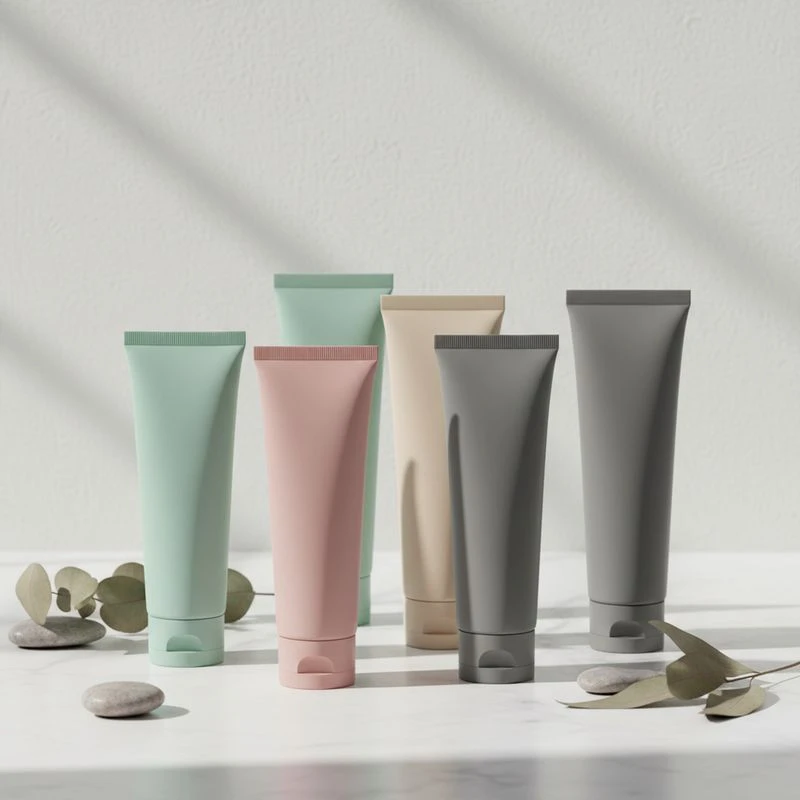
Tube Packaging
Custom tube packaging stands as an indispensable asset for any skincare and cosmetics brand aiming for unequivocal market success in the United Kingdom, offering unparalleled product protection, enhanced user convenience, and superior brand visibility. The inherent design of tubes ensures product integrity by limiting exposure to air and contaminants, thereby extending shelf life and maintaining efficacy – a crucial factor for modern cosmetic formulations. Furthermore, tubes offer a hygienic dispensing method, appealing directly to the discerning UK consumer who prioritises both product safety and ease of use in their daily routines. The portability and durability of tubes make them an ideal choice for a diverse range of products, from everyday moisturisers and cleansers to targeted serums and sunscreens, accommodating the active lifestyles prevalent across the UK. For brands, this translates into a practical and versatile packaging solution that can adapt to various product viscosities and applications, ensuring a consistent user experience.
Choosing the right material for your custom tube packaging is the foundational step in this process. Polyethylene (PE) tubes are a popular and cost-effective choice, offering excellent flexibility and suitability for a wide array of creams, lotions, and gels. For products containing sensitive ingredients that require robust barrier protection against oxygen and moisture, Aluminum Barrier Laminate (ABL) or Plastic Barrier Laminate (PBL) tubes are superior, preventing degradation and preserving potency. Understanding the specific needs of your product formulation is paramount; for instance, a high-viscosity product like a thick body butter might benefit from a wider orifice or a softer tube material to facilitate easier dispensing, whereas a delicate eye cream might require a precise nozzle applicator. A common pitfall here is misjudging the material compatibility with the product’s chemical composition, which can lead to leaks, discolouration, or material degradation. To circumvent this, always engage in rigorous testing with your chosen packaging supplier, ensuring that the tube material, cap, and product formulation are entirely compatible before committing to full-scale production. Consider also the range of cap types available, from the ubiquitous flip-top caps that offer convenient single-handed access to screw-on caps that provide a more secure seal, or even pump applicators for controlled, precise dosing, each impacting the end-user experience significantly. The thoughtful selection of these components ensures that your custom tube packaging is not just a container, but an integral part of the product’s performance and appeal.
For brands operating in the UK market, the aesthetic and tactile qualities of the tube are just as important as its functional benefits. Custom tube packaging allows for a vast array of design possibilities that can significantly elevate a brand’s shelf presence. From vibrant full-colour printing to sophisticated matte finishes and tactile embossing, the tube becomes a canvas for your brand’s narrative. Imagine a luxurious facial cleanser housed in a soft-touch matte tube, exuding an air of premium quality, or a playful children’s sun cream in a brightly coloured tube with a fun, easy-to-open flip cap. These details collectively contribute to the unboxing experience and brand recall. Furthermore, advancements in printing technology mean that even smaller brands can achieve high-quality, custom designs without prohibitive costs. Early engagement with a packaging expert can provide invaluable guidance on material selection, design possibilities, and structural integrity, ensuring that the final product not only looks exceptional but also performs flawlessly throughout its lifecycle. This proactive approach minimises the risk of costly rework and ensures your custom tube packaging perfectly embodies your brand’s promise.
| Feature/Material | Polyethylene (PE) | Aluminum Barrier Laminate (ABL) | Polypropylene (PP) | Post-Consumer Recycled (PCR) PE |
|---|---|---|---|---|
| Barrier Properties | Good (moisture) | Excellent (oxygen, moisture, light) | Good (chemical resistance) | Good (variable depending on PCR quality) |
| Recyclability (UK) | Yes (HDPE/LDPE streams) | Limited (multi-layer complexity) | Yes (PP stream) | Yes (inherently recycled) |
| Cost | Moderate | High | Moderate | Moderate to High |
| Flexibility | High | Moderate | Moderate | High |
| Applications | Lotions, creams, gels, cleansers | Serums, active ingredients, sensitive formulas | Toothpastes, thick creams, body scrubs | Eco-friendly lotions, gels, sustainable ranges |
| Print Finish | Excellent | Excellent (metallic sheen possible) | Excellent | Good (slight colour variations possible) |
This table provides a quick reference for brands in the UK to select the optimal material for their custom tube packaging, balancing crucial factors like barrier needs, sustainability goals, and budget considerations. Choosing the right material ensures product integrity and aligns with consumer expectations for both quality and environmental responsibility. It also helps navigate the complexities of recycling infrastructure within the UK.
Beauty Industry
In the fiercely competitive UK beauty industry, custom tube packaging serves as a critical differentiator, enabling brands to communicate their unique story, core values, and product efficacy directly to consumers before the product is even opened. The initial visual and tactile interaction a consumer has with your product is intrinsically linked to their perception of its quality and value. A well-designed custom tube can evoke feelings of luxury, natural purity, or clinical efficacy, directly influencing purchasing decisions on crowded retail shelves or in the vast digital marketplace. For a start-up or an established brand looking to refresh its image, investing in custom tube packaging is not merely an expense; it is a strategic marketing investment that enhances brand recognition and fosters deeper consumer loyalty. Consider the distinct brand identities in the UK market, from heritage luxury brands to innovative indie labels – each leverages packaging to speak volumes about their ethos and target audience.
The UK consumer base is increasingly sophisticated and values authenticity, innovation, and ethical practices. Your custom tube packaging acts as a silent salesperson, conveying these brand attributes without a single word. For example, a brand committed to natural ingredients might opt for a minimalist design with earthy tones and a smooth, matte finish, subtly suggesting purity and a connection to nature. Conversely, a high-performance cosmeceutical brand might choose a sleek, metallic finish with bold typography to project scientific advancement and potent results. A significant pitfall in this area is failing to align the packaging design with the brand’s overall messaging and target demographic, leading to confusion or a misinterpretation of brand values. To avoid this, conduct thorough market research to understand your ideal customer’s aesthetic preferences and emotional triggers. Develop a comprehensive brand style guide that outlines every aspect of your visual identity, from colour palettes and typography to imagery and tactile finishes, ensuring consistency across all custom tube packaging and marketing materials. This meticulous approach guarantees that every touchpoint reinforces your brand’s unique proposition, building a cohesive and memorable presence in the UK beauty landscape.
Furthermore, custom tube packaging offers an unparalleled opportunity for innovation and creative expression that can capture attention in a saturated market. Think about incorporating unique closure mechanisms, such as an ergonomic pump for a foundation or a precision tip for a spot treatment, that not only improve functionality but also contribute to a premium feel. Tactile finishes, like soft-touch coatings or subtle debossing of your logo, can elevate the perceived luxury of a product, inviting consumers to physically interact with the packaging. These sensory experiences are powerful tools for creating memorable brand moments. Practical examples include limited-edition product launches where custom tubes can feature seasonal designs or collaborations with artists, generating excitement and a sense of exclusivity. For brands looking to make a splash, consider using thermochromic inks that change colour with temperature, adding an element of surprise and engagement. The key is to leverage the flexibility of custom tube packaging to not just contain your product, but to enhance its story and create a compelling narrative that resonates deeply with UK consumers. By continuously innovating and thoughtfully designing your custom tube packaging, you can transform a simple container into a powerful extension of your brand’s identity and a catalyst for consumer engagement and loyalty.
B2B Supply
Navigating the B2B supply chain for custom tube packaging in the UK demands strategic partnerships, robust quality control, and a crystal-clear understanding of lead times and minimum order quantities (MOQs) to ensure seamless production and timely market entry. For any skincare or cosmetics brand, the reliability of their packaging supplier is as crucial as the quality of their formulations. A disruption in the supply chain or a compromise in packaging quality can lead to costly production delays, damaged brand reputation, and missed sales opportunities. Therefore, the process of selecting and managing suppliers for custom tube packaging is a pivotal business decision that requires meticulous planning and due diligence. UK brands must prioritize suppliers who not only offer competitive pricing but also demonstrate a commitment to consistency, compliance with relevant industry standards, and excellent communication throughout the entire project lifecycle. Establishing a strong relationship built on trust and transparency from the outset is fundamental to long-term success in this competitive market.
The first actionable step in securing your B2B supply is to thoroughly vet potential custom tube packaging suppliers. Begin by clearly defining your specific requirements, including tube material, dimensions, cap type, decoration, and sustainability targets. Request samples of their previous work and evaluate them for print quality, material integrity, and overall finish. Crucially, verify their certifications; look for ISO 9001 for quality management, ISO 14001 for environmental management, and potentially BRC Global Standard for Packaging Materials, which signifies adherence to strict hygiene and quality standards – particularly important for cosmetic products. Engage in detailed discussions regarding their MOQs and lead times, as these factors significantly impact your inventory management and product launch schedules. A common pitfall here is underestimating lead times, especially for bespoke designs or specialty materials, which can result in significant delays. To mitigate this, always build a buffer into your project timeline and seek firm commitments on delivery dates from your supplier. Don’t hesitate to request a factory audit, if feasible, to gain first-hand insight into their manufacturing processes and quality control procedures. A well-prepared audit checklist can cover aspects from raw material sourcing to final product inspection, ensuring every stage meets your exacting standards for custom tube packaging.
Effective communication and ongoing quality control are paramount once a supplier has been selected. Establish clear communication protocols, including regular check-ins and designated points of contact on both sides, to address any issues promptly. During the production phase, implement stringent quality checks at various stages. This should include approving pre-production samples, conducting in-process inspections, and performing final checks on delivered batches. Ensure that your supplier provides detailed quality assurance reports for each order. A potential pitfall is accepting minor quality inconsistencies early on, which can escalate into significant problems across larger batches, leading to product recalls or customer complaints. To prevent this, define clear quality acceptance criteria in your supplier contract and be prepared to reject shipments that do not meet these standards. Furthermore, consider the financial stability of your supplier and their payment terms, ensuring they align with your business’s cash flow. Develop a contingency plan for unexpected supply chain disruptions, such as having a backup supplier or maintaining a safety stock of critical custom tube packaging components. By proactively managing these B2B supply aspects, UK brands can ensure a consistent flow of high-quality packaging, safeguarding their operations and strengthening their market position.
| Consideration | Description | Importance Level (1-5) | Potential Pitfall | Solution/Guidance |
|---|---|---|---|---|
| Certifications | ISO 9001, BRC Global Standard for Packaging Materials, GMP | 5 (Critical) | Non-compliance, product contamination, market access issues | Request up-to-date certificates; conduct independent audits and verify scope. |
| Material Sourcing | Traceability, ethical sourcing, PCR/mono-material availability, origin | 4 (High) | Unreliable supply, unsustainable practices, greenwashing claims | Inquire about supply chain transparency, sustainability reports, and material certifications. |
| MOQ & Lead Times | Minimum Order Quantity, production and delivery timelines to UK | 4 (High) | High inventory costs, missed launch dates, cash flow strain | Discuss MOQs upfront; get firm lead time commitments, buffer time for customs/logistics. |
| Quality Control | In-house QC processes, defect rates, sample approval stages, post-delivery checks | 5 (Critical) | Product defects, brand damage, costly rework or recalls | Review QC protocols, request samples for approval at each stage; define clear acceptance criteria. |
| Communication | Responsiveness, clarity, dedicated account manager, language proficiency | 3 (Moderate) | Misunderstandings, delays, lack of problem-solving support | Assess communication style during initial interactions; request dedicated contact person for UK accounts. |
| Cost & Payment Terms | Unit cost, tooling costs, payment schedule, currency considerations | 4 (High) | Budget overruns, unexpected charges, unfavourable payment conditions | Get detailed, all-inclusive quotes; understand all costs; negotiate fair payment terms. |
Selecting the right B2B supplier for custom tube packaging is a pivotal decision for any UK beauty brand. This table outlines critical areas to evaluate, helping brands mitigate risks and forge strong, reliable partnerships that support long-term growth and product integrity in a competitive market. A thorough vetting process ensures alignment with quality standards, sustainability goals, and overall business objectives.
Printing
The choice of printing technique for custom tube packaging in the UK is paramount for achieving the desired aesthetic appeal, ensuring brand consistency, and guaranteeing durability, all of which directly impact consumer perception and shelf presence. Your custom tube packaging is often the first, and sometimes only, chance to make a compelling visual statement to a potential customer. The quality and sophistication of the print directly reflect on the perceived quality of the product inside. In the vibrant and diverse UK market, where brands constantly vie for attention, impeccable printing can differentiate a product and communicate its value proposition instantaneously. Whether it’s the crispness of fine text, the vibrancy of a brand colour, or the subtle texture of a finish, every detail matters in conveying your brand’s story and enticing consumers.
Several primary printing methods are available, each with distinct advantages suited to different design requirements and production volumes. Offset printing, for example, is renowned for its high-quality image reproduction and consistent colour matching, making it ideal for complex designs with fine details and gradients. Screen printing, conversely, excels in delivering vibrant, opaque colours, especially beneficial for bold graphics and tactile finishes, though it can be less precise for intricate details. Flexographic printing is a cost-effective option for large runs and simpler designs, offering good print quality at high speeds. Digital printing, while generally more expensive per unit for very large quantities, offers unparalleled flexibility for small batches, customisation, and quick turnaround times, making it perfect for limited editions or personalised custom tube packaging. A common pitfall is choosing a printing method that doesn’t align with the complexity of your artwork or your desired aesthetic, leading to compromised visual quality. To circumvent this, always provide your packaging supplier with high-resolution artwork files in vector format (AI, EPS, PDF) and specify Pantone Matching System (PMS) colours to ensure accurate colour reproduction. Requesting physical print samples or digital mock-ups before full production is a crucial step in verifying the print quality and colour accuracy, allowing for adjustments if necessary.
Beyond the core printing technique, a myriad of special finishes can elevate your custom tube packaging, adding a touch of luxury and enhancing its tactile appeal. Hot stamping, which applies metallic or pigmented foil to the tube surface, creates a premium, reflective effect that immediately catches the eye. Spot UV coating adds a high-gloss, raised texture to specific areas of the design, creating a striking contrast with a matte background and drawing attention to key branding elements. Embossing (raising a design) and debossing (indenting a design) provide a sophisticated, tactile dimension without relying on colour, offering an elegant feel that resonates with discerning consumers. For a natural or minimalist aesthetic, a soft-touch matte varnish can impart a velvety feel, suggesting a premium, understated quality. The key is to select finishes that complement your brand’s identity and product attributes without overwhelming the design or increasing costs unnecessarily. A potential pitfall is over-designing with too many competing finishes, which can make the custom tube packaging appear cluttered or inconsistent. Instead, choose one or two impactful finishes that enhance your message. Work closely with your packaging design team and supplier to explore these options, consider their impact on cost and production time, and ensure that the chosen combination creates a cohesive and compelling visual and tactile experience for the UK consumer. By focusing on precision and strategic embellishment, your custom tube packaging will not only stand out but also effectively communicate the quality and ethos of your skincare and cosmetics brand.
Recyclable
Embracing recyclable custom tube packaging is no longer merely an option but a strategic imperative for skincare and cosmetics brands operating in the UK, driven by stringent environmental regulations, heightened consumer demand for sustainability, and a fundamental commitment to environmental stewardship. The UK government’s focus on a circular economy, including initiatives like the Plastic Packaging Tax (PPT) which penalises packaging with less than 30% recycled content, makes sustainable choices a financial necessity in addition to an ethical one. Furthermore, UK consumers are increasingly informed and conscious about the environmental impact of their purchases, actively seeking out brands that demonstrate genuine commitment to sustainability through their packaging. Brands that fail to adapt risk not only regulatory penalties but also alienating a significant segment of their target market, potentially leading to a loss of sales and brand loyalty. Therefore, designing custom tube packaging with recyclability in mind from the outset is a critical component of any brand’s long-term success strategy in the UK.
To identify genuinely recyclable custom tube packaging materials, it’s crucial to understand the nuances of the UK’s recycling infrastructure. Mono-material tubes, typically made entirely from Polyethylene (PE) or Polypropylene (PP), are generally the most widely accepted and easiest to recycle across UK local authority collections. These materials are easier for recycling facilities to sort and reprocess compared to multi-layer or composite tubes, which often combine different plastics or metals, making separation difficult. Incorporating Post-Consumer Recycled (PCR) content into your custom tube packaging is another powerful step towards sustainability, as it reduces the reliance on virgin plastic and supports the circular economy. For example, opting for a PE tube with 30-50% PCR content helps your brand comply with the Plastic Packaging Tax and significantly lowers its environmental footprint. A common pitfall here is “greenwashing,” where brands make misleading or unsubstantiated claims about their packaging’s recyclability. To avoid this, be transparent and use internationally recognized certifications or industry guidelines like the On-Pack Recycling Label (OPRL) scheme, which provides clear, standardised recycling instructions for UK consumers. This not only builds trust but also empowers consumers to recycle correctly, maximising your packaging’s actual environmental benefit.
Actionable steps for integrating recyclability into your custom tube packaging strategy involve several key considerations. Firstly, collaborate closely with your packaging supplier to transition from complex multi-layer tubes to mono-material alternatives where possible, ensuring they still meet your product’s barrier requirements. Secondly, pay attention to the cap or closure; ideally, it should be made from the same mono-material as the tube (e.g., a PE cap on a PE tube) or a widely recycled plastic, and designed to remain attached to the tube during recycling, preventing small parts from being lost in the sorting process. Thirdly, specify wash-off labels or direct printing methods that do not hinder the recycling process. Inks and adhesives can contaminate the recycling stream if not compatible. Lastly, and crucially, educate your consumers. Use clear, concise on-pack messaging, adhering to OPRL guidelines where appropriate, to instruct them on how to correctly dispose of and recycle your custom tube packaging. This might include advising them to empty the tube as much as possible before placing it in the recycling bin. By taking these comprehensive steps, skincare and cosmetics brands in the UK can ensure their custom tube packaging not only meets the highest standards of product protection and brand aesthetics but also makes a meaningful contribution to a more sustainable future, resonating deeply with the environmentally conscious UK market.
| Feature | Description | Best Practice for UK Market | Potential Issue | Mitigation Strategy |
|---|---|---|---|---|
| Material Type | Single-polymer plastics (e.g., PE, PP) are easiest to sort and recycle. | Prioritize mono-material PE or PP tubes (HDPE/LDPE are widely accepted). | Mixed materials (e.g., ABL tubes) are hard for UK facilities to process. | Explore innovative mono-material barrier solutions; verify local recycling capabilities. |
| Post-Consumer Recycled (PCR) Content | Incorporating recycled plastic reduces virgin material use and tax liability. | Aim for 30%+ PCR content (minimum for PPT) where technically feasible for product stability. | Supply chain for high-quality PCR can be limited or inconsistent. | Work with certified suppliers, plan orders in advance, conduct material compatibility tests. |
| Cap/Closure Material | Caps should ideally be same material as tube or widely recycled, and remain attached. | Use PE or PP caps, designed to be kept on the tube during recycling. | Small, different material caps often end up in landfill (too small to sort). | Specify “leave cap on” if compatible; design caps larger than 5cm if detachable. |
| Labels & Inks | Labels and printing should not contaminate or hinder the recycling process. | Use wash-off labels, UV-curable inks, or direct printing without non-recyclable coatings. | Non-compatible adhesives/inks, or non-wash-off labels can contaminate the recycling stream. | Specify compatible labels/inks with your supplier; consider solvent-free options. |
| Consumer Guidance | Clear instructions help consumers recycle correctly and consistently. | Use OPRL (On-Pack Recycling Label) and simple, unambiguous messaging. | Consumers don’t know how to recycle specific packaging, leading to contamination. | Provide concise, prominent recycling instructions on-pack and via digital channels. |
| Plastic Packaging Tax (PPT) | UK tax on plastic packaging with less than 30% recycled plastic content. | Ensure packaging contains 30% or more recycled content to avoid the tax. | Increased costs and competitive disadvantage if recycled content threshold is not met. | Collaborate with suppliers to source compliant materials and maintain accurate records. |
For brands operating in the UK, understanding the nuances of recyclable custom tube packaging is crucial for both environmental impact and regulatory compliance. This table highlights key areas to focus on, guiding brands toward more sustainable choices that resonate with eco-conscious consumers and meet the evolving demands of the UK’s circular economy initiatives. Proactive planning in these areas will yield significant benefits, both environmentally and commercially.
