
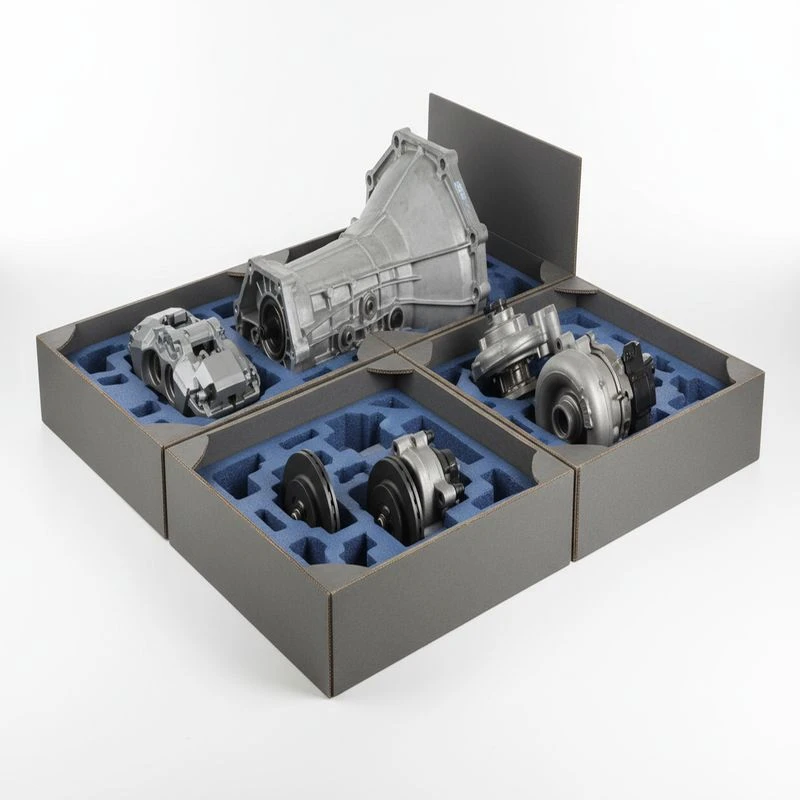
In the highly competitive and precision-driven automotive sector within the United Kingdom, the integrity and safe transit of every component are paramount. From engine blocks to delicate electronic control units, each part demands a packaging solution that does more than just contain it – it must actively protect it, optimise logistics, and uphold brand reputation. Investing in durable custom packaging for automotive parts is not merely an expense; it is a strategic imperative that yields significant returns in reduced damage, improved efficiency, and enhanced customer satisfaction. This comprehensive guide will navigate through the critical aspects of designing and implementing bespoke packaging solutions that meet the rigorous demands of the UK automotive supply chain, ensuring that your valuable components arrive at their destination exactly as intended, every single time. By embracing a proactive approach to packaging, businesses can mitigate risks, streamline operations, and reinforce their commitment to quality within a dynamic and ever-evolving market.
Auto Packaging
The journey of an automotive part, whether it’s from a tier-one supplier to an assembly plant or from a warehouse to a repair shop, is often fraught with potential hazards. Generic, off-the-shelf packaging simply cannot offer the tailored protection required for such varied and often high-value components. This is where the power of custom auto packaging comes into play, providing a bespoke shield that is designed to the exact specifications of the item it encases. Think about the intricate geometry of a camshaft, the delicate nature of a sensor array, or the substantial weight of a gearbox – each presents unique challenges that generic solutions are ill-equipped to address. Custom packaging, however, is engineered with these specific characteristics in mind, creating a perfect fit that minimises movement, absorbs shocks, and guards against environmental factors such as moisture or temperature fluctuations. This tailored approach dramatically reduces the likelihood of damage during handling, transit, and storage, which in turn saves significant costs associated with returns, replacements, and production delays.
Implementing durable custom packaging for automotive parts begins with a thorough assessment of your specific needs. This involves understanding the part’s dimensions, weight, fragility, material composition, and its intended journey through the supply chain. For example, a heavy engine component might require multi-wall corrugated cardboard or a robust wooden crate, complete with custom-cut foam inserts to prevent shifting. Conversely, a delicate electronic module might necessitate anti-static bags within a rigid plastic container, further cushioned by protective foam. The material selection is critical, balancing protection with cost-effectiveness and sustainability considerations. Suppliers of custom packaging can offer a range of materials, including various grades of corrugated cardboard, expanded polystyrene (EPS) foam, polyurethane foam, wood, plastic totes, and even vacuum-formed inserts. Practical examples abound: imagine shipping a meticulously painted body panel. A custom-designed, soft-lined crate with specific bracing points would prevent scratches and dents far more effectively than a standard box. For a batch of small, identical fasteners, custom thermoformed trays could keep them organised and prevent loss, while also speeding up the assembly line at the receiving end. The initial investment in custom design and tooling is often quickly recouped through the tangible benefits of reduced damage, improved packing efficiency, and enhanced customer confidence. However, a common pitfall is over-packaging, which can lead to unnecessary material costs and increased shipping weights. Conversely, under-packaging is a much graver mistake, almost guaranteeing damage. The solution lies in a precise, data-driven approach, often involving expert consultation from packaging engineers who can model and test different designs to find the optimal balance between protection, cost, and environmental impact.
Moreover, effective custom auto packaging is not just about protection; it’s also about streamlining operations. A well-designed custom package can be easier to pack, stack, and un-pack, leading to faster throughput in warehouses and assembly lines. Modular designs, for instance, can allow for greater density in shipping containers, maximising space and reducing freight costs. These designs can also be reusable, especially for closed-loop supply chains, offering long-term cost savings and environmental benefits. When considering the United Kingdom market, understanding local logistics infrastructure and regulatory requirements for transportation is also crucial. For instance, specific pallet sizes or handling instructions might be required for certain depots or couriers. By engaging with a packaging partner who understands these nuances, you can develop solutions that are not only protective but also compliant and operationally efficient. The overall takeaway is that custom packaging is a strategic asset, transforming a potential vulnerability into a competitive advantage by ensuring every automotive part arrives safely, efficiently, and ready for its next stage.
| Packaging Type | Typical Materials | Key Advantages for Auto Parts | Best For |
|---|---|---|---|
| Custom Corrugated Boxes | Multi-wall corrugated cardboard, heavy-duty flutes | Cost-effective, versatile, customisable dimensions, good cushioning | Medium-weight components, batches of smaller parts, spare parts |
| Protective Foam Inserts | EPS, EPE, PU foam | Excellent shock absorption, custom fit, prevents movement, anti-static options | Fragile electronics, painted surfaces, precision-machined parts |
| Wooden Crates/Pallets | Pine, plywood, OSB | High strength, stackability, weather resistance (treated), suitable for heavy loads | Engine blocks, transmissions, large body panels, overseas shipping |
| Reusable Plastic Totes | HDPE, PP | Durability, reusability, stackability, cleanroom compatible, often nestable | Internal logistics, specific assembly line components, closed-loop systems |
This table illustrates the diverse range of durable custom packaging types commonly employed for automotive parts, highlighting their construction materials, primary benefits, and ideal applications. Understanding these options is crucial for selecting the most appropriate solution to protect various components throughout the supply chain.
Protective Design
At the heart of any effective durable custom packaging solution for the United Kingdom’s automotive industry lies a meticulously engineered protective design. This isn’t merely about wrapping an item; it’s about anticipating every potential stressor an automotive part might encounter during its journey – from vibration and shock to abrasion, moisture, and even electrostatic discharge. A robust protective design goes beyond just the outer shell, incorporating multiple layers and features tailored to the specific vulnerabilities of the component. For example, cushioning elements are paramount for absorbing impacts. These can range from custom-moulded foam inserts made of expanded polyethylene (EPE) or polyurethane (PU) that perfectly cradle a sensitive electronic control unit (ECU), to complex internal structures within a corrugated box that provide spring-like resistance against external forces. The design process often involves computer-aided design (CAD) software, allowing engineers to simulate various impact scenarios and optimise material usage for maximum protection without excessive bulk.
Beyond impact absorption, bracing and void fill play a critical role in immobilising the part within its container, preventing movement that could lead to scuffs, dents, or internal damage. Custom-cut foam end caps, corrugated inserts, or even inflatable air bags can be used to hold components securely in place, especially for irregularly shaped items like exhaust manifolds or drive shafts. For automotive parts susceptible to corrosion – a common concern for metal components exposed to varying environmental conditions, particularly during international shipping or prolonged storage – anti-corrosion solutions are integrated into the design. This might involve wrapping parts in Volatile Corrosion Inhibitor (VCI) papers or films, which release chemicals that create a protective molecular layer on metal surfaces, or placing desiccant packets within the package to absorb moisture. Similarly, for sensitive electronic components, anti-static packaging materials such as shielded bags or anti-static foam are essential to prevent damage from electrostatic discharge (ESD), which can render parts inoperable before they even reach the assembly line. Practical examples include a custom-designed tray for a set of delicate injectors, each housed in its own anti-static cavity, or a large, heavy-duty wooden crate for a transmission system, reinforced with internal timber bracing and lined with a VCI film to protect against rust.
The step-by-step guidance for developing such a protective design often begins with a detailed analysis of the product’s vulnerabilities and the anticipated transit environment. This includes understanding temperature ranges, humidity levels, and typical handling procedures. Prototyping and testing are crucial stages, where initial designs are built and subjected to real-world simulations, such as drop tests, vibration tests, and compression tests (often following ISTA standards). This iterative process helps refine the design, ensuring it meets performance requirements while optimising material usage. A common pitfall in protective design is ignoring environmental factors; for instance, relying solely on mechanical cushioning without considering the impact of humidity on metal parts can lead to severe corrosion issues. Another is a “one-size-fits-all” approach to cushioning, which can either under-protect fragile items or over-protect robust ones. The solution lies in a holistic design philosophy, where every aspect of the packaging is considered in relation to the specific part and its journey. By embracing advanced materials and meticulous design processes, businesses can ensure their durable custom packaging for automotive parts provides an unparalleled level of protection, safeguarding both the components and their reputation in the demanding UK automotive market.
| Protection Feature | Material/Method | Benefit for Automotive Parts | Application Example |
|---|---|---|---|
| Shock & Vibration Absorption | Custom-cut foam (EPE, PU), air cushions, corrugated inserts | Prevents impact damage, reduces part movement during transit | Cradling engine sensors, protecting glass components |
| Anti-Corrosion | VCI films/papers, desiccant bags, barrier foils | Prevents rust and degradation of metal components, extends shelf life | Wrapping crankshafts, lining shipping containers for metal parts |
| Anti-Static (ESD) Protection | Conductive/dissipative plastics, anti-static bags, foam | Safeguards sensitive electronic components from static discharge | Protecting ECUs, wiring harnesses, instrument clusters |
| Surface Scratch & Abrasion | Soft foam liners, non-woven fabrics, custom-moulded trays | Preserves cosmetic finish, prevents surface damage | Separating painted body panels, protecting chrome trim |
This table details various critical protection features integrated into durable custom packaging for automotive parts, outlining the materials and methods used. Each feature directly addresses specific vulnerabilities of automotive components, ensuring their integrity from manufacturing to installation.
Industrial Strength
When it comes to durable custom packaging for automotive parts, especially those destined for the robust and demanding United Kingdom market, industrial strength is not an optional extra – it is a fundamental requirement. Automotive components, ranging from bulky engine blocks to hefty transmission systems and large stamped body panels, necessitate packaging that can withstand considerable weight, rough handling, and the rigours of transit without compromising the part inside. This strength is derived from a careful selection of materials and construction methodologies designed to offer superior load-bearing capacity, exceptional stacking strength, and formidable impact resistance. Heavy-duty corrugated cardboard, for instance, goes far beyond standard moving boxes. It features multiple layers of strong linerboard and fluting (e.g., triple-wall or quad-wall construction) which provides immense crush resistance, allowing containers to be stacked high in warehouses and during freight without collapsing. These materials are engineered to meet specific burst strength and edge crush test (ECT) ratings, providing quantifiable measures of their protective capabilities.
For particularly heavy or oversized automotive parts, wood crates and custom-built wooden pallets become indispensable. Constructed from durable timbers such as pine or plywood, these crates offer unparalleled structural integrity. They are often reinforced with internal bracing and external strapping, ensuring that even items weighing several hundred kilograms remain securely enclosed and protected. Plastic containers, especially those made from high-density polyethylene (HDPE) or polypropylene (PP), offer another dimension of industrial strength. These reusable totes and bins are incredibly robust, resistant to moisture, chemicals, and punctures, making them ideal for closed-loop supply chains or repeated use within manufacturing facilities. Their uniform dimensions and stackable designs also contribute to efficient space utilisation and safe handling. Imagine a scenario where a complete braking system assembly, weighing a significant amount, needs to be shipped. A multi-wall corrugated container with custom-fit internal cushioning and a reinforced pallet base would be a prime example of leveraging industrial strength to ensure safe delivery. Similarly, for shipping several delicate yet heavy alternators, custom-moulded plastic trays nested within a robust wooden crate would combine both strength and precision protection.
Implementing industrial strength in durable custom packaging for automotive parts requires adherence to industry standards and rigorous testing protocols. Organisations like the International Safe Transit Association (ISTA) provide testing procedures that simulate the conditions packages encounter during distribution, including drops, vibrations, and compression. By putting packaging designs through these tests, manufacturers can validate their strength and identify any weaknesses before deployment. A critical pitfall is underestimating the dynamic forces at play during transportation; what might seem strong enough in a static environment can fail spectacularly under the constant vibration of a lorry or the sudden jerks of a forklift. Another common mistake is using materials not graded for industrial use, leading to premature wear, tear, and ultimately, damaged goods. The solution involves consulting with packaging experts who can specify materials with the appropriate strength ratings (e.g., FEFCO standards for corrugated board) and design solutions that distribute weight effectively, reinforce stress points, and resist various forms of physical abuse. By prioritising industrial strength in packaging design, businesses can ensure their valuable automotive parts are consistently protected against the harsh realities of the supply chain, ultimately contributing to a more reliable and efficient operation within the UK automotive market.
B2B Transport
The efficiency and safety of B2B transport are intrinsically linked to the quality and design of durable custom packaging for automotive parts, particularly within the intricate supply chain of the United Kingdom market. Effective packaging does not merely protect the product; it actively facilitates smoother logistics, reduces handling complexities, and maximises the utilisation of transport space, ultimately driving down costs and improving delivery timelines. When designing packaging for B2B transport, considerations extend far beyond individual unit protection to encompass how multiple units will be consolidated, stacked, and moved through various stages of the supply chain, be it by road, rail, sea, or air freight. Palletisation is a prime example of how packaging directly impacts transport efficiency. Custom packaging should be designed to fit standard pallet dimensions (e.g., Euro pallets 1200x800mm or UK standard 1200x1000mm) without excessive overhang or wasted space, allowing for stable and secure stacking. This maximises the number of units per pallet, optimising container and lorry fill rates.
Containerisation also plays a crucial role, especially for international shipments or larger domestic volumes. Packaging must be designed to interlock or stack securely within standard shipping containers (e.g., 20ft or 40ft), preventing movement during transit that could lead to damage or shifting of cargo. Modular packaging solutions, where individual units can be combined into larger, stable blocks, are particularly advantageous here. For example, custom-designed corrugated boxes for smaller parts can be grouped into master cartons, which are then optimally arranged on a pallet. This systematic approach ensures that space is used efficiently, reducing the number of shipments required and the associated carbon footprint. Furthermore, packaging must be robust enough to withstand the stresses of different transport modes. Road transport, while flexible, can involve significant vibration and sudden movements. Sea freight exposes goods to humidity and prolonged transit times, necessitating moisture barriers and robust external protection. Air freight, while fast, can involve rapid pressure changes and precise weight limitations, requiring lighter yet equally protective materials. A practical example would be a supplier shipping brake calipers to a UK assembly plant. The custom packaging would ensure each caliper is secure within its individual box, these boxes are then grouped into a sturdy outer carton designed to precisely fit a specific layer on a Euro pallet, allowing for maximum density and stability during road transport.
Step-by-step guidance for optimising B2B transport through packaging involves close collaboration between packaging designers and logistics teams. This includes assessing the entire transport chain, identifying handling touchpoints, and understanding vehicle load capacities. Potential pitfalls include non-compliant packaging dimensions that result in wasted space or additional freight charges, or packaging that is difficult to handle with standard warehouse equipment (e.g., forklifts). Another common issue is insufficient packaging strength for stacking, leading to collapsed loads and damaged goods. Solutions involve incorporating features like reinforced corners, internal bracing, and non-slip surfaces for stable stacking. Furthermore, packaging should incorporate clear handling instructions and robust strapping points to facilitate safe loading and unloading. Ultimately, durable custom packaging for automotive parts acts as a silent partner in the B2B transport process, enabling seamless movement of goods, minimising logistics headaches, and ensuring that the vital components of the UK’s automotive industry arrive punctually and in pristine condition, ready for the next stage of their operational life.
| Transport Mode | Key Packaging Considerations | Recommended Packaging Features | Typical Automotive Part Application |
|---|---|---|---|
| Road Freight (UK/Europe) | Vibration, frequent stops/starts, diverse road conditions, palletisation | Stackable, crush-resistant boxes; stable palletisation (e.g., interlocking); robust strapping points | Daily parts delivery to assembly plants, distribution to dealerships |
| Sea Freight (International) | Humidity, long transit times, potential for container shift, heavy loads | Moisture barriers (VCI/barrier bags); robust wood crates; container-optimised dimensions; internal bracing | Large engine components, body presses, major sub-assemblies for export/import |
| Air Freight (Express/Urgent) | Weight limitations, rapid pressure changes, secure handling, speed of delivery | Lightweight yet strong materials (e.g., multi-wall corrugated with foam); efficient volume use; easy identification | Emergency parts, high-value electronics, prototypes |
This table outlines key considerations and recommended packaging features for different B2B transport modes relevant to the UK automotive market. Optimising packaging for each mode ensures maximal protection and efficiency, critical for time-sensitive and valuable automotive components.
Labelling
In the fast-paced and highly regulated environment of the United Kingdom’s automotive supply chain, effective labelling is far more than just putting a sticker on a box; it is a fundamental pillar of efficient inventory management, regulatory compliance, and seamless logistics. Durable custom packaging for automotive parts must integrate robust and accurate labelling that provides critical information at every stage, enabling quick identification, traceability, and proper handling. Think of labels as the communication backbone of your supply chain, conveying essential data from the part number and quantity to origin, destination, and special handling instructions. Without precise labelling, even the most protective custom packaging becomes a bottleneck, leading to sorting errors, delays, and potentially significant operational costs. Barcodes and QR codes are ubiquitous tools in this regard, offering machine-readable data that can be quickly scanned for inventory tracking, batch control, and automated sorting processes. These digital identifiers link physical goods to vast databases, ensuring real-time visibility and accountability throughout the entire distribution network.
Beyond basic identification, labels are crucial for conveying handling instructions that safeguard the component. Symbols indicating “fragile,” “this side up,” “keep dry,” or “do not stack” are universally recognised and guide handlers in treating the package appropriately. For automotive parts that pose specific risks, such as those containing hazardous materials (e.g., certain fluids, batteries, or airbags), comprehensive dangerous goods declarations and corresponding hazard symbols are mandatory. Compliance with international regulations like ADR (for road), IMDG (for sea), and IATA DGR (for air) is non-negotiable, and incorrect labelling can lead to fines, shipment delays, or even severe safety incidents. The durability of the labels themselves is also paramount. They must be resistant to tearing, fading, moisture, and abrasion, ensuring that vital information remains legible throughout the package’s journey, potentially over long distances and varied environmental conditions. This often requires specialised label materials, such as synthetic films, and weather-proof inks or thermal transfer printing for superior longevity. For instance, a custom-packaged crankshaft might feature a barcode for inventory, a “heavy” symbol, and a specific part number, all printed on a robust label designed to withstand the rigours of warehouse handling and extended storage. Similarly, an ECU might have an anti-static warning label alongside its unique serial number, ensuring proper ESD protocols are followed.
Step-by-step guidance for effective labelling begins with standardisation. Adopting universal standards like GS1 for barcodes ensures interoperability across different systems and partners within the UK and global supply chains. This involves assigning unique global trade item numbers (GTINs) to each product. Furthermore, an automated labelling system can significantly reduce human error and increase efficiency, ensuring consistency and speed in applying labels. A potential pitfall is using low-quality labels that degrade during transit, rendering crucial information unreadable. Another is inconsistent labelling practices across different product lines or production sites, which can lead to confusion and operational bottlenecks. The solution lies in robust quality control processes for label application, regular audits of labelling accuracy, and investment in durable, high-quality label materials and printing technology. Moreover, training for personnel involved in packaging and shipping is essential to ensure they understand the importance and correct application of various labels. By integrating sophisticated and durable labelling solutions into custom packaging for automotive parts, businesses can not only meet regulatory requirements but also dramatically enhance their operational efficiency, improve traceability, and reinforce customer trust within the demanding landscape of the UK automotive industry.
