
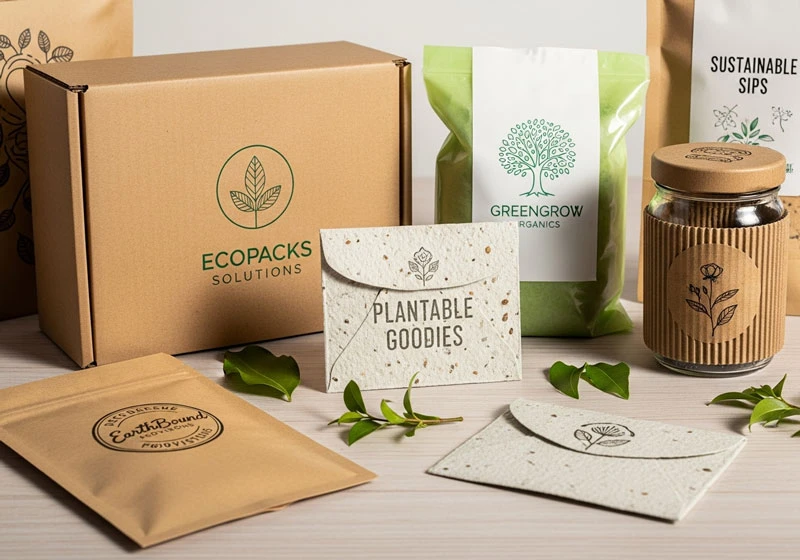
In today’s competitive United Kingdom market, for green businesses especially, your commitment to sustainability must extend beyond your products or services. It needs to be visibly woven into every aspect of your operation, starting crucially with your packaging. Embracing Eco Friendly Packaging Customisation isn’t just a trend; it’s a powerful statement of your brand’s values, a key differentiator, and increasingly, an expectation from conscious consumers. The UK populace is more environmentally aware than ever, with a growing demand for brands that genuinely walk the talk. From the materials you choose to the way your brand story is printed, every decision offers an opportunity to reinforce your green credentials and build lasting trust. Investing in tailored eco-packaging ensures your products arrive safely, represent your brand impeccably, and contribute positively to our planet. It’s about creating an unboxing experience that resonates with your customers’ values, making them feel good about their purchase and their choice to support an environmentally responsible business.
Eco Packaging
Diving into the world of eco-packaging immediately sets a green business apart, offering a tangible demonstration of your environmental commitment that resonates deeply with the UK’s increasingly eco-conscious consumer base. The takeaway here is clear: your packaging is a silent, yet powerful, advocate for your brand’s sustainable ethos. Consumers are actively seeking brands that align with their values, and environmentally sound packaging is often the first, most visible indicator of this alignment. In the UK, a recent survey revealed that a significant percentage of shoppers are willing to pay more for sustainable products, including those with eco-friendly packaging. This isn’t just about altruism; it’s about smart business, as regulatory pressures are also mounting, pushing companies towards greener practices. Anticipating and exceeding these expectations positions your brand as a leader, not just a follower.
To effectively implement eco-packaging, start by defining your specific environmental goals. Are you aiming for zero waste, full biodegradability, or maximum recycled content? This clarity will guide your material selection and design choices. Next, consider the appropriate formats for your products. For e-commerce, custom-sized mailer boxes made from recycled corrugated cardboard can drastically reduce void fill and shipping emissions. For food and beverage, compostable pouches or biodegradable containers offer innovative alternatives to traditional plastics. For health and beauty, glass jars or aluminium tins, which are infinitely recyclable, provide a premium feel while maintaining sustainability. A crucial actionable step is to conduct a lifecycle assessment for your current packaging – understanding its impact from raw material extraction to end-of-life disposal. This comprehensive view helps identify genuine areas for improvement and prevents “greenwashing,” where packaging appears eco-friendly but isn’t truly sustainable. For instance, a coffee brand might switch from single-use plastic cups to compostable cups made from plant-based materials, ensuring their entire customer experience aligns with their green mission. They would then need to clearly communicate the correct disposal methods, a common pitfall.
Navigating the transition to eco-packaging comes with potential pitfalls. One common challenge is the perception of higher costs. While initial investments in sustainable materials or production methods might seem greater, it’s vital to communicate the long-term value. This includes enhanced brand reputation, increased customer loyalty, and potential savings on waste disposal fees. Another pitfall is unintentionally “greenwashing” – making unsubstantiated or misleading claims about your packaging’s environmental benefits. The solution lies in transparency and verifiable certifications. Always back up your claims with data, and where possible, use third-party certified materials (e.g., FSC for paper products). For example, a small UK artisan soap maker decided to move from plastic bottles to solid soap bars packaged in recycled paper. They faced initial cost concerns, but by educating their customers about the environmental benefits and improved product longevity, they not only maintained sales but saw an increase in customer engagement and brand loyalty. They also provided clear instructions on how to recycle or compost their paper packaging, addressing potential confusion. The ultimate goal of Eco Friendly Packaging Customisation in this context is to create a seamless, genuinely sustainable experience that reinforces your brand’s commitment to a healthier planet, from the moment a customer receives their order.
Recyclable Materials
The selection of truly recyclable materials is a cornerstone of effective Eco Friendly Packaging Customisation, paramount for UK businesses aiming for genuine sustainability. In a country with varying local recycling infrastructures, choosing materials that are widely accepted and easily processed is not just good practice, it’s essential for ensuring your packaging actually completes its circular journey. The takeaway here is that “recyclable” isn’t a blanket term; it requires careful consideration of both the material’s properties and the local capabilities. Consumers are increasingly aware of what can and cannot be recycled in their kerbside collections, and providing them with packaging that fits seamlessly into existing systems is key to fostering responsible disposal and avoiding landfill. Understanding the nuances of materials like rPET, recycled cardboard, glass, and aluminum allows businesses to make informed choices that genuinely reduce environmental impact. It’s about empowering your customers to participate actively in your brand’s sustainability efforts by making their part – recycling – as straightforward as possible.
When approaching material selection, businesses should conduct thorough research into various options. Recycled PET (rPET), for instance, is an excellent choice for bottles and clamshells, as it reuses existing plastic and reduces the demand for virgin plastics. Recycled corrugated cardboard is a workhorse for e-commerce, offering protection, lightweight characteristics, and universal recyclability. Glass jars and bottles are infinitely recyclable and provide a premium, reusable feel for products like cosmetics, preserves, and beverages. Aluminum tins and cans are also infinitely recyclable, lightweight, and offer excellent barrier properties, making them ideal for dry goods, candles, or personal care items. An actionable step is to consult with your packaging supplier about the percentage of post-consumer recycled (PCR) content they can provide. High PCR content is a strong indicator of a material’s eco-credentials. Furthermore, always check the specific recycling guidelines of major UK local councils, as acceptance criteria can vary. For example, some councils may not accept certain types of plastic films or mixed materials. A pitfall to avoid is assuming that all bioplastics are universally compostable or recyclable; many require industrial composting facilities which are not widely available to domestic users. The solution is clear, unambiguous labelling and selecting materials that align with widely available UK recycling streams, making the consumer’s role effortless. For instance, a company selling artisanal tea might opt for compostable inner bags and recycled cardboard outer boxes, ensuring both components can be easily disposed of responsibly in the UK.
Another common pitfall is the confusion between “recyclable” and “recycled content.” While both are important, packaging with high recycled content demonstrates a commitment to the circular economy, reducing the need for new resources. Simply being “recyclable” doesn’t guarantee it will be recycled if the infrastructure isn’t there or if consumers are confused. To provide a clear picture for businesses, here is a comparison of widely used recyclable materials suitable for Eco Friendly Packaging Customisation in the UK market:
| Material Type | Common Applications | Pros for UK Market | Cons/Considerations | Recyclability in UK |
|---|---|---|---|---|
| Recycled Corrugated Cardboard | Shipping boxes, product packaging, gift boxes | Widely recycled kerbside, high PCR content available, versatile, strong, customisable | Not water-resistant without coating, can be bulky | Excellent (High acceptance) |
| Recycled PET (rPET) | Plastic bottles, food containers, blister packs | Reuses existing plastic, lightweight, durable, clear, food-safe options | Requires existing plastic waste, limited re-processing cycles for some forms | Good (Widely accepted for bottles) |
| Glass | Jars, bottles for food, cosmetics, beverages | Infinitely recyclable without quality loss, premium feel, reusable potential | Heavy (higher shipping emissions), fragile, energy-intensive to produce initially | Excellent (High acceptance) |
| Aluminum | Tins, cans, foil, closures for food, cosmetics | Infinitely recyclable without quality loss, lightweight, excellent barrier, premium feel | Energy-intensive to produce initially (though less than glass), susceptible to denting | Excellent (High acceptance) |
This table illustrates the diverse range of materials available for businesses looking to implement Eco Friendly Packaging Customisation in the UK. Each material presents a unique set of advantages and disadvantages regarding its environmental impact, cost, and consumer perception. The key is to match the material to the product’s requirements and ensure it aligns with local recycling capabilities.
Beyond these, exploring innovative solutions like biodegradable and compostable materials made from plant-based polymers (e.g., PLA, PHA) can be impactful, but with a caveat. While they offer compelling end-of-life benefits, their disposal often requires industrial composting facilities, which are not yet universally accessible across the UK. Therefore, clear customer education on proper disposal is critical for these materials to be truly effective in a circular economy. Always ensure that any “compostable” claims are backed by certifications like EN 13432, indicating suitability for industrial composting, and be honest about domestic composting limitations. By carefully considering these factors, UK businesses can confidently choose materials that not only protect their products but also genuinely contribute to a more sustainable future.
Custom Printing
Once you’ve selected your eco-friendly packaging materials, the next pivotal step in your Eco Friendly Packaging Customisation journey is transforming these sustainable substrates into powerful brand ambassadors through custom printing. The immediate takeaway is that custom printing does more than just add your logo; it elevates the entire unboxing experience, communicates vital information, and reinforces your brand’s commitment to quality and sustainability. In the UK market, where visual appeal and clear messaging are paramount, custom printed eco-packaging allows your brand to stand out on crowded shelves or in an overflowing mailbag. It’s your opportunity to tell your brand story, highlight your eco-credentials, and provide essential recycling instructions directly on the packaging, guiding consumers towards responsible disposal and completing the sustainability loop. This level of detail and care fosters a deeper connection with your customer base, demonstrating thoughtfulness in every aspect of your business.
To ensure your custom printing aligns with your sustainable goals, there are several actionable steps to take. Firstly, prioritise eco-friendly inks. Opt for soy-based, vegetable-based, or water-based inks, which are biodegradable, contain fewer volatile organic compounds (VOCs), and are less harmful to the environment than traditional petroleum-based inks. These alternatives ensure that the ink doesn’t compromise the recyclability or compostability of the packaging material itself. Secondly, consider a minimalist design approach. Less ink usage not only saves resources but also often results in a cleaner, more sophisticated aesthetic that resonates with modern design sensibilities. Think about using negative space effectively and focusing on key brand elements. Thirdly, discuss printing methods with your packaging partner. Digital printing offers flexibility for smaller runs and variable data, using less setup waste, while flexographic printing is efficient for larger volumes and can also utilise eco-friendly inks. An example would be an ethical coffee bean brand in London designing their compostable coffee pouches with minimalist custom printing, using only a single-colour soy-based ink for their logo and brewing instructions, along with a clear ‘Compost Me’ symbol. This keeps the design clean, communicates essential information, and aligns with their sustainability promise. A potential pitfall here is using excessive ink coverage or non-recyclable coatings (like high-gloss UV coatings) which can hinder the recyclability or compostability of the underlying material. Always confirm with your printer that any coatings or finishes chosen are compatible with your packaging’s intended end-of-life process. The solution is to work closely with experienced eco-packaging printers who understand these limitations and can offer sustainable alternatives without compromising aesthetic quality.
Beyond aesthetics and brand recognition, custom printing serves a crucial functional purpose: educating the consumer. Clear, concise recycling instructions are not just helpful; they are essential for ensuring your eco-packaging is disposed of correctly in the varied UK recycling landscape. This might include symbols (e.g., the Mobius loop with a number, or the ‘Recycle Now’ logo), specific text instructions (“Recycle with paper,” “Compost at home,” “Return to store”), or even QR codes linking to detailed disposal guides on your website. This avoids the pitfall of good intentions leading to incorrect disposal due to consumer confusion. Consider an artisan bakery in Manchester that uses custom printed recycled paper bags for their loaves. Their bags feature a prominent message saying, “Our bags are 100% recycled and recyclable. Please place in your paper recycling bin,” along with their brand story. This simple addition clarifies disposal and reinforces their brand’s green message. It’s a proactive step that closes the loop on your sustainable packaging efforts. Engaging with a packaging supplier who specializes in sustainable printing techniques can provide invaluable guidance, helping you choose the right inks, finishes, and printing methods that complement your materials and enhance your brand’s eco-integrity. This ensures that every element of your Eco Friendly Packaging Customisation works in harmony, from the material itself to the final printed message, creating a truly impactful and sustainable presentation for your products.
B2B Solutions
The journey of Eco Friendly Packaging Customisation extends far beyond consumer-facing products, reaching deep into the supply chain through B2B solutions. The core takeaway here is that sustainable practices in your business-to-business packaging demonstrate a holistic commitment to the environment, fostering stronger partnerships and often leading to operational efficiencies. In the UK, as businesses increasingly face scrutiny over their environmental footprint, demanding greener practices from their suppliers is becoming standard. Your B2B packaging choices, therefore, are not merely functional; they are a direct reflection of your company’s values and a critical component in your partners’ own sustainability goals. By adopting eco-friendly solutions for your bulk shipments, component parts, or internal transfers, you contribute to a broader circular economy, reduce waste, and potentially lower costs associated with materials and disposal. This proactive approach strengthens your position as a responsible and forward-thinking supplier in the competitive UK market.
Implementing effective B2B eco-packaging requires a thorough audit of your current processes. Start by identifying areas where conventional, wasteful packaging can be replaced. Are you using excessive single-use plastics for internal transfers? Can pallet wrap be made from recycled content or even be reusable? A key actionable step is to explore bulk packaging options. Instead of shipping individual units in separate boxes, consolidate them into larger, multi-use containers or pallets designed for efficient transport and minimal material use. Consider materials like recycled content stretch film for pallet wrapping, which drastically reduces virgin plastic consumption. For void fill, opt for compostable packing peanuts made from starch, shredded recycled paper, or even custom-fit internal cardboard inserts which eliminate the need for loose fill altogether. For example, a wholesale supplier of organic produce to UK restaurants might switch from plastic crates to durable, reusable, and stackable wooden or recycled plastic crates, which are collected and reused on subsequent deliveries. This not only reduces waste but can also lead to long-term cost savings by eliminating recurring material purchases. A potential pitfall is the initial investment required for more durable or custom-designed reusable packaging. However, the solution lies in a robust cost-benefit analysis, demonstrating how reduced waste disposal fees, improved brand image, and potential new B2B contracts can quickly offset these upfront expenses. Furthermore, consider the logistics of returnable packaging; having a clear system for collecting and sanitising reusable items is crucial for their long-term viability and hygiene, especially in food sectors.
Engaging with your B2B partners is also vital. Educate them on your sustainable packaging initiatives, providing clear instructions on how to handle and dispose of (or return) the packaging. This collaborative approach ensures that the eco-benefits extend throughout the entire supply chain. Another area for improvement lies in optimising box sizes. Custom-sized boxes for your specific products can significantly reduce the amount of void fill needed and allow for more efficient pallet loading, leading to fewer shipments and lower transportation emissions – a considerable win for both your business and the environment. This type of efficiency often requires bespoke manufacturing capabilities from your packaging supplier, highlighting the importance of Eco Friendly Packaging Customisation. Here is a table outlining some key B2B eco-friendly packaging solutions:
| B2B Packaging Solution | Description | Key Benefits for UK Businesses | Potential Challenges |
|---|---|---|---|
| Recycled Pallet Wrap | Stretch film made with a high percentage of post-consumer recycled (PCR) content. | Reduces virgin plastic use, often kerbside recyclable, shows commitment. | May have slightly reduced elasticity compared to virgin film (improving rapidly). |
| Reusable Totes/Crates | Durable, multi-trip containers made from recycled plastics or sustainable wood. | Significantly reduces waste, long-term cost savings, promotes circular economy. | Requires reverse logistics system, initial investment, cleaning/maintenance. |
| Custom-Sized Boxes (Recycled) | Boxes tailored to product dimensions, made from recycled corrugated cardboard. | Minimises void fill, optimises pallet space, reduces shipping emissions. | Requires precise measurement, potentially higher unit cost for small runs. |
| Compostable Void Fill | Starch-based packing peanuts, shredded paper, or moulded pulp inserts. | Biodegradable, reduces plastic waste, enhances customer perception. | Can be more expensive than polystyrene, requires clear disposal instructions. |
This table demonstrates the range of practical options available for businesses looking to enhance their Eco Friendly Packaging Customisation strategies within their B2B operations. Each solution offers distinct advantages in reducing environmental impact and improving supply chain efficiency. Integrating these B2B solutions not only aligns your entire operation with sustainable principles but also positions you as a responsible partner, capable of meeting the evolving environmental demands of the UK business landscape. By proactively addressing packaging at every stage of the product journey, from supplier to consumer, you build a more resilient, reputable, and truly green business model that will resonate positively with all stakeholders, including future investors and partners.
Brand Sustainability
Integrating Eco Friendly Packaging Customisation into your broader brand sustainability strategy is no longer optional; it’s a fundamental requirement for green businesses seeking to thrive in the UK market. The crucial takeaway is that genuine brand sustainability is a holistic endeavour, where eco-packaging isn’t an isolated effort but a deeply embedded part of your environmental and ethical framework. UK consumers are increasingly savvy and discerning, capable of detecting “greenwashing” – superficial attempts at sustainability that lack genuine commitment. A fragmented approach, where your product is eco-friendly but its packaging is not, can severely damage your brand’s credibility and erode customer trust. True brand sustainability means weaving your environmental values into your entire operation, from sourcing raw materials to production, logistics, and crucially, your customer’s unboxing experience. It creates a coherent narrative that strengthens your brand’s reputation, attracts conscious consumers, and builds long-term loyalty based on shared values.
To build a genuinely sustainable brand around your packaging efforts, start by crafting a compelling eco-story. This isn’t just about what you do, but why you do it. Communicate your commitment to sustainable packaging clearly and consistently across all your marketing channels – your website, social media, and even directly on the packaging itself. Explain the choices you’ve made (e.g., “Our packaging uses 80% recycled content to reduce landfill waste”) and the positive impact these choices have. An actionable step is to pursue relevant certifications. Labels like FSC (Forest Stewardship Council) for paper and wood products, or B Corp certification for your entire business, provide independent verification of your sustainability claims, lending immense credibility. For instance, a small UK-based candle company might ensure their packaging is made from FSC-certified recycled card and printed with soy inks, and then prominently display these certifications on their boxes. They could also detail their zero-waste goals on their website, showing how packaging plays a part. Engage your customers in your sustainability journey; invite feedback, share your progress, and educate them on how to properly dispose of your eco-packaging. This not only empowers them but also reinforces their role as partners in your brand’s mission. A potential pitfall is setting overly ambitious, unachievable goals or making vague claims. The solution is transparency: be honest about challenges, celebrate small victories, and focus on continuous improvement rather than immediate perfection. This authentic approach builds trust far more effectively than any exaggerated claim.
Furthermore, consider how your Eco Friendly Packaging Customisation contributes to a circular economy model. This involves designing packaging that is not only recyclable or compostable but also encourages reuse where possible. For example, a company selling beauty products might offer refills in minimalist, compostable pouches for their glass jars, reducing the overall material consumption. This strategy extends the life cycle of your packaging and minimizes waste, further demonstrating your commitment to environmental stewardship. Building a sustainable brand also means looking beyond just the packaging material itself. It involves evaluating your packaging supplier’s own environmental practices, their carbon footprint, and their ethical sourcing policies. Partnering with suppliers who share your commitment to sustainability amplifies your impact and strengthens your overall green narrative. Finally, don’t overlook internal sustainability practices that complement your packaging efforts. This could include using renewable energy in your operations, minimizing waste in your office or workshop, and supporting local, ethical suppliers. When your packaging aligns seamlessly with a broader, deeply integrated sustainability strategy, your brand gains unparalleled authenticity and resonance in the UK market. It shows that your commitment is not just skin deep, but genuinely woven into the fabric of your business, making you a truly green and trustworthy enterprise for the long haul.
