
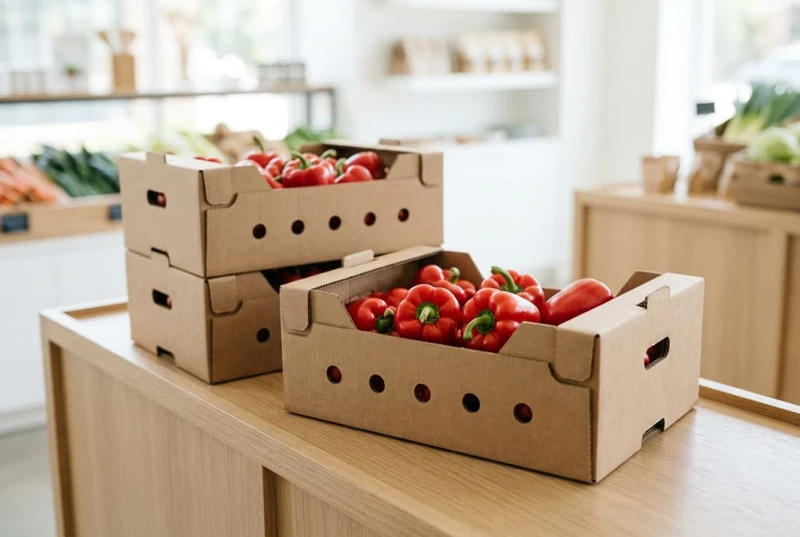
Fresh produce packaging in the United Kingdom has to do more than contain goods. It must support airflow, reduce pressure damage, fit pallet patterns, carry traceability details, and help products move cleanly from packhouse to wholesaler, retailer, and shelf display. For growers, importers, market traders, and farm shops, well-designed boxes and labels often make the difference between strong presentation and avoidable waste.
Across hubs such as New Covent Garden Market in London, Birmingham Wholesale Market, Spitalfields, Bristol, Glasgow, and major logistics corridors linked to Felixstowe, Dover, Southampton, and the M62 distribution belt, packaging performance is tested every day under stacking pressure, chilled transport, store replenishment routines, and varying humidity. A custom structure matched to crop type and route can preserve freshness, improve handling speed, and present produce more effectively at point of sale.
For businesses looking for tailored formats, custom produce box solutions can be specified around crop weight, ventilation needs, tray depth, shelf display style, and retail replenishment routines rather than relying on generic dimensions that waste space or bruise delicate goods.
Packaging considerations for fruit, vegetables, mixed produce, and farm-packed goods
Different crops behave very differently once harvested. Soft fruit, top fruit, root vegetables, salad lines, herbs, and mixed seasonal packs all place different stresses on a carton or box. In the United Kingdom market, producers often manage a wide spread of produce categories across local growing, imported lines, seasonal farm gate sales, and retail programmes. That means packaging choices should begin with the crop itself rather than with a standard stock size.
Apples, pears, and citrus need compression resistance and reliable stack strength, particularly when moving through wholesale depots and retail distribution centres. Tomatoes, peaches, apricots, plums, and avocados need cushioning through structural design and a close fit that limits rolling and impact. Leafy greens require breathable formats that reduce moisture build-up while still supporting quick shelf replenishment. Root crops such as potatoes, onions, swedes, carrots, and beetroot can tolerate stronger stacking loads, but they still benefit from box sizing that prevents shifting and corner collapse during transport.
Mixed produce and farm-packed goods create another set of requirements. A mixed veg box for local delivery may include potatoes, onions, carrots, beetroot, apples, and leafy greens in one pack. If the internal depth is wrong, heavier items settle and crush lighter items. If airflow is poor, condensation can shorten shelf life. If openings are too wide, small items can catch or spill during handling. For farm shops and subscription schemes across counties such as Kent, Herefordshire, Cornwall, Yorkshire, and Aberdeenshire, the best carton often balances visibility, ventilation, manual handling comfort, and presentable branding.
In practice, packaging decisions should consider crop respiration rate, moisture sensitivity, average fill weight, expected handling frequency, route length, chill-chain conditions, and whether the box doubles as a display unit. A berry punnet tray, for example, should not be judged by the same criteria as a brassica transit box or a mixed produce hamper sleeve.
| Produce category | Main risk | Preferred packaging feature | Ventilation need | Display suitability | Typical route |
|---|---|---|---|---|---|
| Apples and pears | Pressure bruising | Strong walls and stable stacking | Medium | High | Farm to retail depot |
| Soft fruit | Crush damage | Shallow trays and careful fit | High | Very high | Chilled retail supply |
| Tomatoes | Rolling and skin marking | Partition support or close sizing | Medium | High | Wholesaler and store |
| Leafy greens | Condensation | Breathable openings | Very high | Medium | Chilled distribution |
| Potatoes and onions | Overweight handling | Reinforced base and hand holes | Medium | Medium | Wholesale and farm shop |
| Mixed veg boxes | Internal movement | Balanced dimensions and zoning | Medium | High | Direct-to-consumer delivery |
This table shows why one box style rarely works equally well across all produce types. Matching the structure to the crop category helps reduce waste, improve pack speed, and maintain product appearance after multiple touchpoints.
Ventilation, stackability, and box sizing decisions that affect real-world performance
Ventilation openings are not merely decorative cut-outs. They influence cooling efficiency, moisture control, and even compression strength. In the United Kingdom, produce often moves through refrigerated vehicles, short-haul van deliveries, regional depots, and ambient market environments in the same supply cycle. A box that performs well in one setting can underperform badly in another if ventilation and stackability were not designed together.
For chilled products, side and end ventilation should align with airflow patterns in stacked loads. Openings that are too small restrict cooling. Openings that are too large may weaken the panel and create bulging under load. This matters especially for palletised loads moving from growers in Lincolnshire or Worcestershire to supermarket depots in the Midlands and South East. If cartons lose integrity under top load, produce damage increases quickly through pallet lean and uneven pressure transfer.
Stackability depends on board grade, corner strength, base lock performance, and how the product fills the box. Undersized fills can lead to panel collapse because the box lacks internal support. Oversized fills create lid pressure and bruising. Good sizing uses actual crop dimensions, expected moisture conditions, and pallet planning. A custom footprint can also reduce overhang on pallets, improving trailer utilisation on routes into London, Manchester, Leeds, Cardiff, and Edinburgh.
Box depth is another overlooked factor. Too deep and pickers overstack or goods settle; too shallow and products spill or require secondary wrapping. The right depth improves both presentation and transport efficiency. For retail-ready formats, front wall height should preserve product visibility without sacrificing protection during transit.
| Decision area | Poor choice | Likely consequence | Better approach | Operational benefit | Typical user |
|---|---|---|---|---|---|
| Vent hole size | Oversized openings | Lower compression strength | Balanced aperture pattern | Cooling plus stability | Importers |
| Box depth | Too deep | Settling and crush damage | Crop-matched depth | Cleaner presentation | Retail packers |
| Base strength | Weak locking | Drop-through failures | Reinforced construction | Safer manual handling | Farm shops |
| Pallet footprint | Awkward sizing | Wasted trailer space | Transport-optimised dimensions | Lower freight cost | Wholesalers |
| Top load planning | No stack test | Collapsed lower layers | Stack pattern validation | Less transit loss | Growers |
| Hand hole placement | Poor grip angle | Rougher handling | Ergonomic cut-outs | Faster stocking | Retail teams |
The practical lesson is simple: airflow, strength, and dimensions should be specified as one system. Where that happens, the packaging supports both freshness and logistics rather than forcing a trade-off between them.
The line chart reflects a realistic upward trend in demand for crop-specific and retail-ready produce packaging in the United Kingdom, supported by tighter retailer requirements, waste reduction targets, and improved standardisation across supply chains.
How handling needs change between wholesale markets, retail stores, and transport routes
Packaging that works for one sales channel may fail in another. Wholesale markets often prioritise fast unloading, repeated manual handling, visual inspection, and stacking in mixed conditions. Retail stores focus more on shelf appearance, replenishment speed, and pack consistency. Long transport routes prioritise load stability, ventilation in transit, and resistance to rough handling.
At markets such as New Covent Garden and Birmingham Wholesale Market, outer packaging is opened, shifted, restacked, and inspected frequently. Boxes therefore need reliable hand holes, strong corners, and surfaces that remain neat after repeated contact. A format that tears at the opening edge or collapses after a few lifts can quickly undermine both product protection and trader confidence.
In retail stores, especially supermarket chains and premium grocers, display-ready formats save labour and reduce shelf disruption. Store teams prefer packs that can be opened cleanly, placed directly into refrigerated fixtures or ambient displays, and replenished without decanting. A tray with a detachable front lip may support neat facing of tomatoes, avocados, apples, or clementines while still protecting stock in transit from the depot.
Transport routes introduce their own stresses. Goods moving from farms in East Anglia to regional distribution centres may face shorter journeys than imported lines coming in through Dover or Felixstowe before onward haulage to the North. Long routes amplify vibration, pallet movement, humidity variation, and cumulative top load. Packaging for these channels should be tested against route length, transfer count, and expected storage duration.
| Channel | Main handling pattern | Priority feature | Common risk | Best box style | Why it matters |
|---|---|---|---|---|---|
| Wholesale market | Frequent lifting and inspection | Grip strength | Corner fatigue | Strong open-top crate style carton | Supports rapid trading |
| Supermarket depot | Pallet transfer and scanning | Uniform footprint | Pallet overhang | Standardised transit case | Improves automation |
| Retail store | Shelf replenishment | Easy-open front | Messy display | Display-ready tray | Reduces labour time |
| Farm shop | Manual merchandising | Attractive print area | Untidy branding | Branded produce tray | Supports local storytelling |
| Home delivery | Mixed-item packing | Internal balance | Heavier items crushing lighter goods | Custom-depth produce box | Preserves mixed contents |
| Long-haul transport | Extended stacked travel | Compression strength | Panel bowing | Reinforced ventilated carton | Protects load stability |
The explanation here is that channel-specific design avoids false economies. A lower-cost generic box can become more expensive overall if it slows replenishment, increases damage claims, or causes presentation failures in-store.
The bar chart shows supermarkets and wholesale markets leading demand, but fast-growing channels such as home delivery and premium farm retail are also pushing wider use of tailored box formats and cleaner merchandising solutions.
Sticker uses for origin, variety, traceability, and merchandising support
Stickers play a larger role in produce packaging than many buyers assume. In the United Kingdom, origin information, grower identity, variety naming, barcodes, batch coding, and promotional messaging often need to coexist on small pack areas. A well-planned sticker programme supports traceability, stock rotation, customer confidence, and brand recognition.
For loose or pack-level produce, stickers can identify British origin, regional sourcing, variety distinction, organic status, or seasonal promotion. This is especially useful for apples, pears, citrus, avocados, melons, tomatoes, and premium farm shop lines where visual differentiation supports higher value positioning. In wholesale channels, traceability stickers improve lot tracking and complaint resolution. In retail environments, well-placed labels can guide consumer choice by clarifying sweetness, ripeness stage, cooking use, or storage advice.
Sticker materials and adhesives must also suit the route. Chilled storage, condensation, and rough surfaces can affect adhesion. Retail-ready trays benefit when labels remain legible after refrigerated display, while transit labels must scan reliably at depots. Businesses seeking integrated sticker supply can use custom packaging stickers for produce to support barcoding, product origin messaging, and promotional campaigns in one system.
Merchandising support is another advantage. A clean sticker design can reinforce a grower’s visual identity across different box sizes, from punnets and trays to wholesale outers. This becomes valuable for local producers selling into London delicatessens, regional farm shops in Devon or Cumbria, or premium greengrocers in Edinburgh and Bath, where provenance helps drive purchase decisions.
When sticker strategy is integrated with box design, the result is clearer communication and faster handling. Label placement can be planned around scan zones, opening points, and display faces rather than added as an afterthought.
Display-ready packaging ideas that help produce sell more cleanly at shelf level
Display-ready packaging is about more than a perforated front. It should help products arrive safely, open neatly, face forward, and remain tidy as stock reduces. In fresh produce, that combination is particularly important because shelf appearance influences customer perception of freshness and quality.
For apples, citrus, tomatoes, avocados, and stone fruit, shallow trays with removable front panels can keep produce visible while maintaining enough side support during transport. For mushrooms, tomatoes on the vine, and premium snack vegetables, tray sleeves and shelf-ready inners can support both branding and orderly facing. For herbs and leafy salads, upright support and moisture-conscious ventilation help prevent packs from collapsing into untidy displays.
Farm shops and independent retailers often benefit from box formats that move directly from back room to display table. Rustic print finishes, regional wording, and visible produce windows can work well in these settings, provided structural integrity remains strong enough for transport. Supermarkets, by contrast, usually want cleaner opening behaviour, easy shelf placement, and dimensions aligned to crate, shelf, and planogram requirements.
A good display-ready design also reduces labour. Staff should not need knives, retaping, or repacking to create a presentable shelf unit. Clean-tear openings, intuitive folds, and stable front edges reduce handling damage at the very stage where produce is closest to purchase.
| Format | Best suited produce | Key display advantage | Transport strength | Retail labour saving | Typical setting |
|---|---|---|---|---|---|
| Tear-front tray | Apples, citrus | Strong facing visibility | High | High | Supermarket |
| Low-wall produce tray | Tomatoes, stone fruit | Easy customer access | Medium | Medium | Greengrocer |
| Branded farm crate style box | Seasonal mixed produce | Local identity appeal | Medium | High | Farm shop |
| Sleeved punnet tray | Berries and snack veg | Better block branding | Medium | Medium | Premium retail |
| Deep display case | Potatoes, onions | Bulk presentation | High | Low | Discount retail |
| Counter-ready mini tray | Plums, apricots, avocados | Impulse placement | Medium | High | Convenience store |
This comparison shows that the best display solution depends on both crop type and retail channel. A format that makes replenishment easier often also reduces in-store damage and keeps produce looking fresher for longer.
Where custom sizing reduces bruising, wasted space, and transport inefficiency
Custom sizing is one of the most direct ways to improve produce performance. Oversized boxes allow movement, impact, and product settling. Undersized boxes create pressure points and difficult packing. In both cases, growers and packers lose value through bruising, unattractive displays, lower pallet efficiency, and avoidable freight cost.
Fruit with delicate skins benefits from close-fit dimensions that stop rolling and side impact. Tomatoes, peaches, nectarines, plums, and avocados are common examples. For vegetables, custom sizing can improve case count, reduce top-space waste, and align box footprint to standard pallets used across the United Kingdom. When every pallet lane matters, small dimensional improvements can increase vehicle efficiency across high-volume routes.
Custom sizing is equally important for farm-packed mixed goods. A weekly produce box sold online or through local delivery in cities such as Bristol, Leeds, Nottingham, or Brighton should be sized around the actual item mix and weight profile. Otherwise, heavy roots slide into soft salads, or empty space causes bruising when the parcel is carried through the final mile.
At operational level, right-sized packaging also speeds packing lines. Staff can fill consistently, stacks remain neater, and outer dimensions suit warehouse racking and store back rooms more reliably. This is why many United Kingdom growers are moving from one-size-fits-all transit cartons to a controlled family of standard custom sizes across product groups.
The area chart illustrates the growing move towards crop-specific sizing. This trend is driven by tighter margin control, labour efficiency, better shelf presentation, and stronger sustainability results through reduced waste and improved vehicle fill.
Transport and stocking mistakes that often damage produce before sale
A surprising amount of produce damage occurs after packing but before purchase. Many losses come not from poor crop quality but from avoidable transport and stocking errors. Generic packaging, overfilling, unstable pallet building, poor ventilation alignment, and rough shelf replenishment all contribute to waste.
One common error is mixing box sizes on pallets without planning load distribution. Smaller or weaker units become trapped under heavier cases, leading to crushed corners and pressure damage. Another is placing heavy produce above soft fruit or salad lines during multi-stop deliveries. Incorrect hand-hole design also causes staff to grip boxes awkwardly, increasing tilt and drop risk. In retail stores, tearing open packs with blades or collapsing front panels can make displays look tired before the first customer even arrives.
Temperature misuse is equally damaging. A ventilated carton cannot compensate for a broken chill chain, but correctly placed apertures can help maintain stable airflow where refrigerated handling is consistent. Conversely, wrapping or stacking boxes in a way that blocks ventilation can shorten product life despite good original design.
Stocking mistakes are often overlooked because they happen at the final stage. Yet this is where the product is most visible to shoppers. If produce is tipped into bins from unsuitable cartons, or if tray fronts collapse and fruit rolls forward, the packaging has failed to support real-world retail handling.
| Mistake | Where it happens | Effect on produce | Packaging fix | Business benefit | Priority level |
|---|---|---|---|---|---|
| Overfilling cases | Packhouse | Top pressure bruising | Correct depth and fill guide | Less reject stock | High |
| Mixed weak pallet layers | Warehouse | Collapsed stacks | Standardised footprints | Safer transport | High |
| Blocked vent paths | Cold chain transit | Faster deterioration | Aligned ventilation design | Longer shelf life | High |
| Rough shelf opening | Retail store | Torn packs and untidy display | Clean-tear retail-ready format | Better presentation | Medium |
| Oversized mixed produce box | Home delivery packing | Internal movement damage | Custom-fit dimensions | Fewer complaints | Medium |
| Poor grip access | Wholesale handling | Drops and tilting | Ergonomic hand holes | Faster unloading | Medium |
The explanation is clear: many damage issues are operational, but better package design reduces the opportunity for those mistakes to occur. A box that anticipates real handling conditions protects both product quality and labour efficiency.
How growers and packers can standardize packaging across different crop categories
Standardisation does not mean forcing every crop into the same carton. It means building a rational packaging family that shares board grades, pallet footprints, print logic, label zones, and opening systems while still allowing crop-specific depth and ventilation. This approach helps growers and packers simplify purchasing, reduce packing line confusion, and improve consistency across channels.
A good standardisation programme often starts by grouping products into categories: robust roots, medium-sensitivity fruit, delicate soft lines, chilled leaf products, and mixed delivery packs. Each group can then share certain design rules while varying dimension and ventilation ratio. For instance, apple, pear, and citrus cartons may share a footprint and stacking standard, while using different depths. Salad lines may share breathable side panel rules, while varying front opening style for retail display.
Standardisation also supports traceability and branding. When label zones, print panels, and opening points remain consistent, staff work faster and retail partners know what to expect. This matters when supplying multiple retailers or distributors across the United Kingdom, where operational clarity is valued just as much as pack appearance.
For many businesses, the most effective route is to build a coordinated specification set with one capable packaging partner. That allows board strength, dimensions, print, and sticker application to be managed together instead of through separate suppliers and inconsistent formats.
This comparison chart shows that custom sizing, ventilation design, and lead-time reliability are among the strongest priorities when growers and packers choose packaging suppliers for fresh produce operations.
United Kingdom market conditions, buying advice, and industry applications
The United Kingdom produce market combines domestic farming, imported fresh goods, wholesale trading, foodservice supply, convenience retail, supermarket programmes, and direct-to-consumer delivery. Buyers therefore need packaging that works across multiple operating models. In London and the South East, speed, presentation, and traceability often dominate. In major growing regions such as Kent, Lincolnshire, Norfolk, Herefordshire, and Perthshire, packhouse efficiency and crop fit may be the first concern. In ports and import corridors, stackability and route resilience become critical.
When buying produce packaging, businesses should assess six practical points: crop sensitivity, route length, pallet pattern, display method, required labelling, and volume flexibility. It is also sensible to ask whether the box must serve only as transit packaging or whether it must also support merchandising. A retailer-facing tray deserves more attention to opening behaviour and visual branding than a back-of-house wholesale case.
Industry applications extend far beyond supermarkets. Foodservice wholesalers need stable handling formats for kitchens and catering distributors. Farm shops need attractive, easy-to-stock presentation. Subscription box operators need mixed-produce protection and efficient final-mile dimensions. Export handlers may need stronger structures and tighter specification control for longer routes. A packaging plan that recognises these distinct uses will outperform a generic stock case in both cost control and product appearance.
Case studies and local supplier considerations
A Kent fruit grower supplying apples to regional supermarkets improved shelf appearance after moving from a generic deep transit case to a shallower retail-ready tray with a clean tear front. The change reduced visible bruising, improved fill consistency, and cut replenishment time in store. A Yorkshire vegetable box business carrying mixed seasonal packs reduced complaints after switching to a custom-depth format that separated heavier roots from lighter salad items through better dimensional planning. A wholesaler serving Birmingham and Manchester markets improved unloading speed after introducing stronger hand holes and a consistent footprint across tomato, citrus, and avocado lines.
When evaluating local or regional suppliers in the United Kingdom, buyers should look beyond unit price. Useful criteria include design responsiveness, prototyping ability, print quality, consistency across repeat runs, batch flexibility, and understanding of chilled and retail-ready applications. A supplier that can coordinate both cartons and labels often helps reduce complexity and improve speed to market.
Trade hubs such as London, Birmingham, Manchester, Bristol, Glasgow, and Southampton all have different supply chain rhythms. The best packaging partner will account for these real operating conditions rather than recommending the same format for every crop and customer type.
Our company approach for the United Kingdom market
For United Kingdom produce businesses, our role is to deliver packaging systems that combine performance, flexibility, and consistent presentation. We support growers, packers, wholesalers, retailers, and brand owners that need boxes and labels to function properly across real produce routes.
In technological capability, our workshop uses advanced production equipment to maintain accurate cutting, dependable print placement, and consistent structural output for custom cartons, paper boxes, and sticker programmes. This helps ensure ventilation patterns, hand holes, folding points, and label zones are produced reliably from sample stage through repeat production.
In manufacturing capability, we handle both smaller custom runs and larger scale production with close attention to board choice, structural integrity, and final inspection. That allows produce buyers to develop families of boxes for fruit, vegetables, mixed produce, and farm-packed lines without losing quality control as volumes rise.
In service capability, we work flexibly with client requirements, adapting box dimensions, print treatments, and sticker formats to route conditions, merchandising goals, and traceability needs. For United Kingdom customers, that means practical support whether the need is a seasonal farm shop launch, a retail-ready produce tray, or a standardised packaging set across multiple crop categories.
Looking ahead to 2026: technology, policy, and sustainability trends
By 2026, fresh produce packaging in the United Kingdom is expected to be shaped by three strong forces: tighter sustainability expectations, more data-led traceability, and continued pressure to reduce food waste. Businesses will increasingly favour right-sized structures that lower transport inefficiency and cut product losses. More retail buyers will want packaging that supports recyclability, efficient shelf replenishment, and clearer origin communication.
Technology trends are likely to include better integration between packaging specification and supply chain data, improved print precision for batch coding, and wider use of label systems that support scanning and product information. Policy pressure around packaging waste and producer responsibility will also continue to influence material selection, transport efficiency, and standardisation strategies.
Sustainability will be judged not only by material choice but by total performance. A carton that is technically recyclable but causes higher produce waste may not be the best result. In contrast, a well-designed box that reduces bruising, supports cooling, improves pallet fill, and enhances stock rotation can produce a stronger overall sustainability outcome. This is why practical packaging engineering will remain central to fresh produce success in the United Kingdom market.
Frequently asked questions
| Question | Short answer | Why it matters | Best practice | Relevant users | Priority |
|---|---|---|---|---|---|
| Do all produce types need ventilation? | No, but many need crop-specific airflow. | Cooling and moisture control vary by product. | Match vent design to respiration and route. | Growers and retailers | High |
| Is custom sizing worth the cost? | Often yes, where damage or wasted space is high. | It can cut bruising and freight inefficiency. | Test around real pack weights and pallet use. | Packers and wholesalers | High |
| Can one box style cover many crops? | Only to a limited extent. | Different produce types have different handling needs. | Create a standardised family, not one box. | Multi-crop farms | High |
| Are stickers useful beyond branding? | Yes, for traceability, scanning, and origin details. | They support compliance and merchandising. | Plan label zones during structural design. | Retail suppliers | Medium |
| What damages produce most before sale? | Poor stacking, overfilling, and rough handling. | Losses often happen after packing. | Use route-tested packaging and clear handling rules. | All supply chain users | High |
| What should UK buyers ask suppliers first? | Ask about crop fit, lead times, and repeat consistency. | These affect performance more than unit price alone. | Review samples under actual route conditions. | Procurement teams | Medium |
These questions reflect the practical decisions most buyers face. The best outcomes usually come from matching packaging design to the real crop, route, and retail environment rather than selecting on price alone.
For fruit, vegetables, mixed produce, and farm-packed goods in the United Kingdom, the right packaging structure improves ventilation, handling, stackability, traceability, and merchandising at the same time. When boxes and stickers are designed around actual supply chain conditions, produce arrives fresher, displays better, and suffers fewer losses before sale.
