
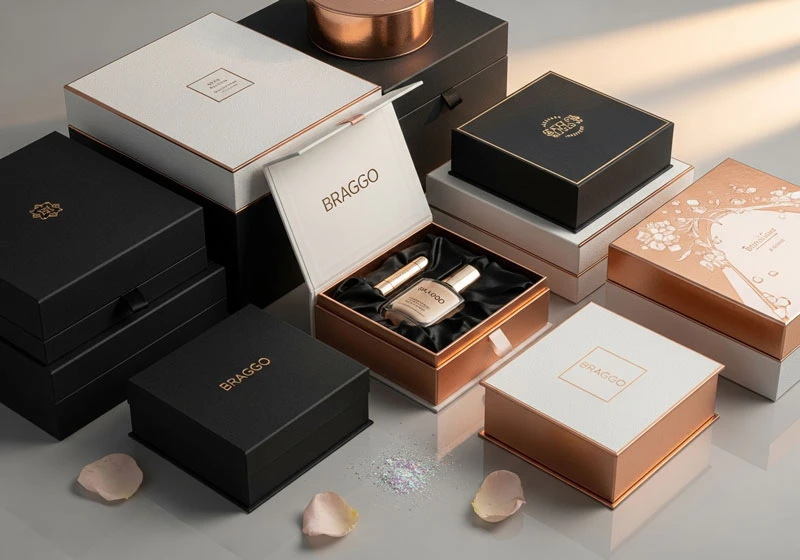
Cosmetic Packaging
In the highly competitive United Kingdom cosmetics and beauty market, your product’s packaging is far more than just a protective shell; it is often the very first interaction a consumer has with your brand. This initial touchpoint is incredibly powerful, shaping perceptions and setting expectations long before the product itself is even used. Therefore, investing in superior cosmetic packaging, particularly through the use of luxury custom boxes for cosmetics and beauty industry products, is not merely an expense but a critical strategic investment in your brand’s future. The tactile feel, visual appeal, and even the scent of the packaging can evoke emotions and create a lasting impression, transforming a simple purchase into a memorable experience.
The reasoning behind this emphasis on packaging lies in consumer psychology and market dynamics. In a crowded marketplace, consumers are bombarded with choices. Distinctive, high-quality packaging helps your product stand out on the shelf, whether physical or digital, capturing attention in a fraction of a second. It communicates your brand’s values, quality standards, and target demographic without a single word. For example, a minimalist, matte-finish box might suggest sophisticated efficacy, while a vibrant, glossy package could convey playful innovation. Beyond initial attraction, the unboxing experience has become a significant factor in consumer satisfaction and social media sharing. A well-designed custom box elevates this experience, turning the act of opening a product into a ritual that enhances perceived value and excitement.
To effectively leverage cosmetic packaging, brands should follow several actionable steps. Firstly, thoroughly understand your target audience and their expectations. What aesthetic resonates with them? Do they prioritize sustainability, or are they drawn to opulent designs? Secondly, consider the specific product being housed. A delicate glass serum bottle will require different structural support and internal inserts than a sturdy makeup palette. Thirdly, conceptualize the entire unboxing journey. How does the box open? What is revealed first? Is there a subtle scent or a hidden message? Practical examples include custom-fit foam inserts for fragile items, elegant ribbon pulls for ease of opening, or even QR codes printed inside for exclusive content. A common pitfall is overlooking durability, leading to damaged products or a compromised unboxing experience. The solution lies in rigorous testing of materials and structural design, ensuring the luxury custom boxes for cosmetics and beauty industry products withstand the rigours of shipping and handling while maintaining their pristine appearance. Another trap is ignoring sustainability, which is increasingly important to UK consumers. Brands can address this by opting for recyclable materials, biodegradable components, or designs that encourage reuse.
Luxury Boxes
Luxury custom boxes represent a significant investment, yet this investment consistently yields substantial returns in terms of perceived value, customer loyalty, and market differentiation within the dynamic beauty sector. The fundamental takeaway here is that these boxes aren’t merely containers; they are sophisticated marketing tools that elevate your brand’s status and enhance the overall customer experience. They communicate exclusivity, premium quality, and meticulous attention to detail, attributes that discerning consumers are willing to pay more for. In the UK market, where consumers are increasingly sophisticated, the presentation of a product is often as crucial as the product itself in forming initial judgments and building a loyal customer base.
The reasoning for their impact lies in the profound psychological effect of luxury. High-quality packaging triggers a sense of anticipation and desire, making the unboxing a sensory experience that delights sight, touch, and even smell. Imagine the rich feel of a textured paperboard, the subtle gleam of a foil-stamped logo, or the satisfying magnetic click of a closure; these elements collectively contribute to a feeling of indulgence and exclusivity. This sensory engagement transforms a simple transaction into an emotional connection with the brand. Furthermore, luxury custom boxes for cosmetics and beauty industry products play a pivotal role in premiumisation, allowing brands to justify higher price points and position themselves at the top end of the market. They signal that the product inside is special, valuable, and worthy of its elevated price, reinforcing the brand’s premium identity in every aspect of its presentation.
To effectively harness the power of luxury boxes, brands must focus on several key actionable steps. Begin by meticulously selecting materials; options range from robust rigid board and sustainable wood to high-grade paperboard, each offering distinct tactile and visual properties. Next, consider the finishes: matte laminations, gloss varnishes, soft-touch coatings, and intricate embossing or debossing can dramatically alter the perception of quality. Structural design is equally vital; innovative opening mechanisms, clever inserts, and multi-component designs add an element of discovery. For instance, a bespoke box with a velvet-lined interior for a high-end skincare product or a magnetic flap closure on a fragrance box immediately communicates opulence. A common pitfall is to cut corners on quality, resulting in a product that looks and feels cheap, thereby undermining the very luxury image the brand aims to project. The solution is to work with experienced manufacturers who can deliver consistent, high-quality craftsmanship. Another potential trap is an inconsistent luxury message, where the box promises grandeur but the product or brand communication falls short. Ensure every touchpoint, from website to social media, echoes the same premium narrative established by your packaging.
| Luxury Packaging Material | Key Characteristics | Best Use Case | Sustainability Considerations |
|---|---|---|---|
| Rigid Board (Chipboard) | Highly durable, premium feel, customisable with laminates/finishes. | High-end fragrances, elaborate gift sets, luxury skincare. | Often recyclable, can use recycled content; consider glues/finishes. |
| Premium Paperboard | Versatile, good for printing, lightweight, cost-effective for mid-range luxury. | Makeup palettes, serum bottles, smaller cosmetic items. | High recyclability, FSC certified options common. |
| Sustainable Wood/Bamboo | Unique natural aesthetic, extremely durable, reusable. | Limited edition luxury collections, refillable packaging, high-end tools. | Renewable resource, biodegradable; ensure ethical sourcing. |
| Metal (e.g., Aluminium) | Modern, sleek, excellent protection, very durable. | High-value makeup compacts, fragrance atomizers. | Infinitely recyclable; energy intensive production. |
This table illustrates the diverse material choices available for luxury custom boxes in the cosmetics and beauty industry, each offering distinct advantages in terms of aesthetics, durability, and cost. Understanding these options allows brands to make informed decisions that align with their product’s nature and target market. By carefully considering sustainability aspects, brands can also cater to the growing eco-conscious consumer base in the UK, integrating environmental responsibility with premium design.
Premium Branding
Your packaging serves as a critical, silent ambassador for your brand, tirelessly communicating your identity, values, and quality standards to potential customers. In the competitive landscape of the UK beauty market, where visual appeal and brand narratives significantly influence purchasing decisions, the role of luxury custom boxes for cosmetics and beauty industry products in establishing and reinforcing premium branding cannot be overstated. It’s the tangible representation of your brand promise, a physical manifestation of your story that resonates long after the initial purchase. A strong brand identity, consistently expressed through premium packaging, fosters recognition, builds trust, and cultivates a loyal customer base that champions your products.
The reasoning behind this profound impact stems from the fundamental principles of brand building. Consistency is paramount; every element of your brand, from your logo and colour palette to your tone of voice and product packaging, must align seamlessly. This creates a cohesive brand experience that consumers can easily recognise and connect with emotionally. Premium packaging facilitates this by providing a canvas for your brand’s unique design elements, ensuring that your core message is delivered effectively at the point of sale and during the unboxing experience. It differentiates your brand from competitors, making your products memorable and desirable. For example, a distinctive custom box that reflects your brand’s commitment to natural ingredients through earthy textures and subtle botanical motifs tells a compelling story without uttering a single word, forging a deeper connection with the consumer.
To leverage premium branding through packaging, several actionable steps are essential. Firstly, ensure your packaging design is an authentic extension of your brand identity. This involves aligning colours, typography, and imagery with your overall brand guide. Secondly, tell your brand’s story through design elements. This could be a unique pattern, a thoughtful quote, or a specific finish that evokes a particular emotion or heritage. Thirdly, consider the post-purchase experience; how does the packaging encourage repeat business or social sharing? Practical examples include using sophisticated finishing techniques like foil stamping for your logo, opting for bespoke die-cut windows to showcase the product elegantly, or incorporating debossing to add a tactile dimension to text or patterns. A common pitfall is generic design that fails to differentiate the brand, making it blend into the market rather than stand out. The solution lies in investing in professional design expertise and conducting thorough market research to understand what truly resonates with your target audience. Another potential trap is inconsistency across different product lines, which can dilute the overall brand message. Ensure a unified aesthetic, even if individual product packaging varies slightly to accommodate different product types.
Design Innovation
In a saturated global market like the United Kingdom’s beauty sector, design innovation in custom packaging is no longer a luxury but a necessity for brands striving to capture consumer attention and foster loyalty. The core takeaway here is that by embracing novel designs and creative solutions for your luxury custom boxes for cosmetics and beauty industry products, you can significantly differentiate your brand, enhance the user experience, and create memorable moments that resonate deeply with consumers. Innovation goes beyond aesthetics; it encompasses functionality, sustainability, and the entire interaction a consumer has with your product before they even reach the item inside.
The reasoning behind the imperative for design innovation stems from several market realities. Firstly, consumers are increasingly sophisticated and demand more than just a functional container; they expect an experience, novelty, and convenience. Generic packaging often fails to leave a lasting impression, leading to products being overlooked. Secondly, the rapid pace of trend cycles in the beauty industry means brands must constantly evolve to stay relevant. Innovative packaging can signal a forward-thinking brand, one that is attuned to modern sensibilities and technological advancements. Thirdly, the rise of e-commerce has amplified the importance of the unboxing experience, turning it into a shareable social media moment. Unique opening mechanisms, interactive elements, or unexpected design features can make your product’s unboxing a viral sensation, generating invaluable organic publicity and fostering a strong community around your brand.
To implement design innovation effectively, brands should follow a structured approach. Firstly, explore unique structural designs that go beyond standard rectangular boxes. Think about hexagonal shapes, sliding drawers, or intricate folding patterns that add an element of surprise and delight. Secondly, integrate interactive elements; this could range from augmented reality (AR) experiences triggered by a QR code on the box to packaging designed for reuse or upcycling, providing extended value. Thirdly, consider smart packaging features, such as temperature-sensitive indicators or embedded NFC tags for product authentication and enhanced consumer information. Practical examples include a skincare set housed in a modular box that can be reconfigured for display, or a makeup product with a magnetic closure that doubles as a mirror stand. A common pitfall is designing for innovation’s sake without considering practicality, cost-effectiveness, or the user experience. The solution involves balancing groundbreaking ideas with manufacturing feasibility and consumer usability, ensuring the innovation adds genuine value. Another potential trap is neglecting the material’s properties during the design phase, which can lead to structural weaknesses or an inability to achieve the desired aesthetic. Collaborate closely with packaging engineers and material specialists from the outset to avoid such issues.
| Innovative Customisation Option | Description | Benefit for Luxury Brands | Complexity Level |
|---|---|---|---|
| Interactive QR/NFC Codes | Embed codes that link to AR experiences, product info, or brand stories. | Engages consumers digitally, authenticates products, enhances storytelling. | Low-Medium |
| Unique Opening Mechanisms | Magnetic flaps, slide-out trays, ribbon pulls, interlocking designs. | Elevates unboxing experience, creates anticipation, adds perceived value. | Medium |
| Sustainable & Reusable Designs | Modular packaging, refillable components, upcycled materials, dual-purpose boxes. | Appeals to eco-conscious consumers, extends product life, reduces waste. | Medium-High |
| Embossing/Debossing with Textures | Raising or lowering designs to create tactile patterns or branding elements. | Adds premium sensory experience, sophisticated visual depth. | Medium |
This table highlights various innovative customisation options that brands can explore when designing luxury custom boxes for cosmetics and beauty industry products. By incorporating these features, brands can create packaging that not only protects the product but also actively engages consumers on multiple levels, from digital interaction to tactile exploration. Choosing the right innovation depends on the brand’s specific goals, target audience, and the desired level of product differentiation in the competitive UK market.
B2B Supply
Establishing a robust and reliable B2B supply chain for luxury custom boxes for cosmetics and beauty industry products is unequivocally paramount for any brand aiming for consistent quality, timely market entry, and scalable growth within the dynamic UK market. The core takeaway here is that your packaging supplier is not merely a vendor but a strategic partner whose capabilities directly impact your brand’s reputation and operational efficiency. A well-managed supply chain ensures that your premium packaging arrives exactly when and how you need it, preventing costly delays and maintaining the integrity of your brand’s luxury image. Without a strong B2B foundation, even the most innovative product can falter due to packaging inconsistencies or production bottlenecks.
The reasoning behind this critical emphasis on B2B supply stems from various operational and financial considerations. Firstly, production efficiency relies heavily on the smooth flow of custom packaging components. Delays in packaging can push back product launches, leading to missed market opportunities and significant revenue losses. Secondly, cost-effectiveness is achieved not by opting for the cheapest supplier, but by partnering with one who offers competitive pricing coupled with consistent quality and reliable service, thereby minimizing waste and rework. Thirdly, stringent quality control is essential; any deviation in the luxury custom boxes for cosmetics and beauty industry products can undermine the brand’s premium positioning. A reliable supplier will have robust quality assurance protocols in place. Finally, scalability is vital for growth; your B2B partner should be able to accommodate increasing order volumes as your brand expands, without compromising on quality or lead times.
To effectively manage your B2B supply chain for custom luxury packaging, several actionable steps are crucial. Firstly, partner with experienced manufacturers who specialise in luxury cosmetics packaging and have a proven track record in the UK or international market. Look for suppliers with a deep understanding of premium materials, finishing techniques, and the specific needs of the beauty sector. Secondly, establish clear and comprehensive communication channels. Detailed specifications, regular progress updates, and open dialogue can prevent misunderstandings and ensure the final product meets your exact requirements. Thirdly, thoroughly understand lead times for design, prototyping, production, and shipping, planning your product launches accordingly. Practical examples include conducting thorough due diligence on potential suppliers, including site visits, checking references, and reviewing their portfolio of work. Negotiate clear service level agreements (SLAs) that outline quality standards, delivery schedules, and contingency plans. A common pitfall is choosing a supplier based solely on price, which often leads to compromises on quality, reliability, or ethical practices. The solution is to prioritize value, considering the total cost of ownership rather than just the initial quote. Another potential trap is insufficient quality assurance protocols, where packaging defects are only discovered upon arrival, causing significant disruption. Implement pre-production samples, mid-production checks, and final inspection processes with your supplier to mitigate these risks.
| Key B2B Supplier Consideration | Why it Matters for Luxury Packaging | Actionable Steps |
|---|---|---|
| Minimum Order Quantity (MOQ) | Impacts inventory levels, initial investment, and scalability for growing brands. | Align MOQ with sales forecasts; negotiate flexible MOQs if possible for new products. |
| Lead Time | Crucial for meeting launch deadlines and maintaining stock levels. | Factor lead times into production schedules; communicate changes proactively; consider buffer time. |
| Quality Certifications | Ensures adherence to industry standards, ethical sourcing, and environmental responsibility (e.g., ISO, FSC). | Request relevant certifications; conduct audits to verify compliance and ethical practices. |
| Customisation Capabilities | Ability to deliver complex designs, unique materials, and advanced finishing techniques. | Review supplier portfolios; request samples of specific finishes/structures; discuss design limits early. |
| Communication & Support | Clear, responsive communication is vital for resolving issues and ensuring smooth operations. | Assess communication responsiveness during initial enquiries; assign a dedicated account manager. |
This table outlines critical considerations for selecting a B2B supplier for luxury custom boxes in the cosmetics and beauty industry. Each factor plays a pivotal role in ensuring that your packaging supply chain is efficient, reliable, and capable of supporting your brand’s growth and quality standards. By meticulously evaluating these aspects, brands can forge strong, long-term partnerships that are foundational to their success in the competitive UK market, ensuring that the packaging consistently reflects the premium quality of the products inside.
