
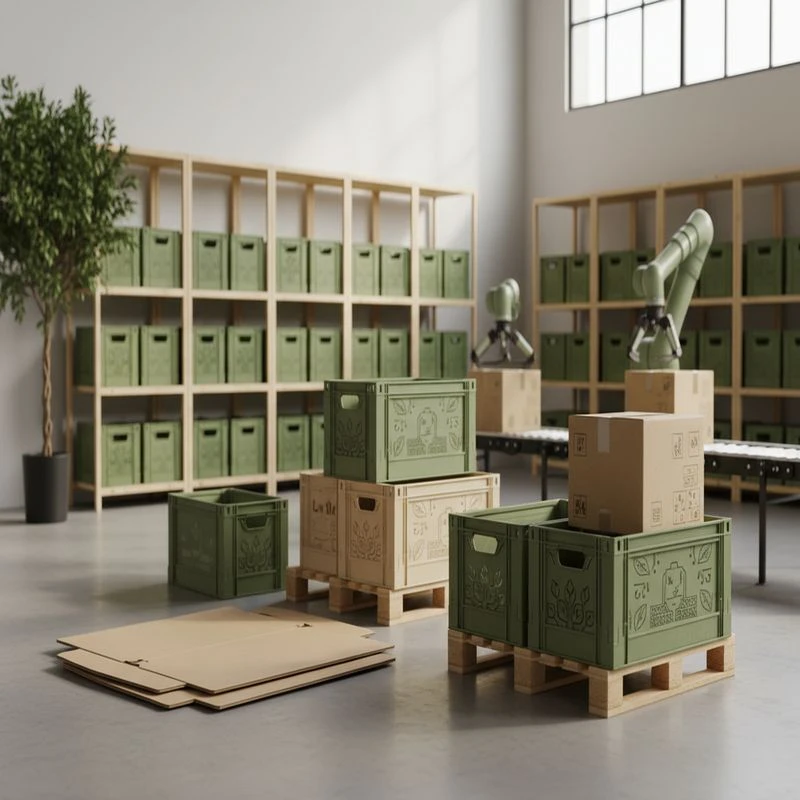
Reusable Packaging
The shift towards reusable custom packaging is not merely an option but a critical imperative for businesses operating within the United Kingdom’s evolving logistics landscape. Adopting such solutions is a powerful step towards building truly sustainable supply chains, directly contributing to waste reduction, lowering long-term operational costs, and significantly enhancing a company’s environmental credentials in a discerning market. Businesses today are under increasing pressure from consumers, regulators, and investors to demonstrate robust sustainability practices, and the packaging they choose for their products offers a highly visible and impactful area for improvement. Traditional single-use packaging, while seemingly convenient in the short term, generates colossal amounts of waste, contributes to carbon emissions throughout its lifecycle from production to disposal, and represents a recurring expense that can be mitigated through smarter choices.
Implementing a reusable packaging strategy requires a thoughtful assessment of current packaging workflows and a clear understanding of the full lifecycle of goods. A fantastic starting point involves a thorough audit of your existing packaging materials, volumes, and disposal methods, identifying key areas where single-use items can be replaced. For example, a manufacturer of automotive parts in the Midlands could replace cardboard boxes with robust, stackable plastic crates for inter-plant transfers. Similarly, a UK-based retail chain managing deliveries to its network of stores might opt for reusable tote boxes instead of shrink-wrapped pallets for their store-ready merchandise. Pilot programmes are an excellent way to test the waters, allowing companies to refine their approach, identify unforeseen challenges, and gather crucial data on cost savings and operational efficiencies before a full-scale rollout. Calculating the Return on Investment (ROI) is paramount, often revealing that despite a higher initial outlay, the long-term savings from reduced material purchases, waste management fees, and improved handling efficiencies quickly make a compelling business case.
While the benefits are clear, potential pitfalls do exist. The initial investment in durable, high-quality reusable custom packaging can be substantial, which might deter some businesses. Furthermore, the complexities of managing reverse logistics—the process of collecting, cleaning, and returning empty reusable containers—can seem daunting. Tracking hundreds or thousands of assets across a vast supply chain without an effective system can lead to losses, damages, and inefficiencies. To address these challenges, a phased implementation strategy is often most effective, allowing for gradual integration and learning. Investing in robust tracking technologies, such as RFID tags or QR codes, can provide real-time visibility into packaging locations and usage cycles, dramatically reducing loss rates and optimising return routes. Establishing clear protocols and incentives for partners in the supply chain to return packaging promptly and in good condition is also vital. For instance, a deposit-return scheme or contractual obligations can ensure that partners are equally invested in the success of the reusable packaging system. By taking these proactive steps, UK businesses can confidently navigate the transition to reusable solutions, transforming their logistics operations into a more sustainable and economically sound model.
To illustrate the compelling economics, consider the comparative lifespan and investment return of various packaging types. The initial investment for reusable custom packaging might seem higher, but its durability and repeated use cycles dramatically reduce the cost per use over time.
| Packaging Type | Initial Cost (per unit) | Expected Lifespan (cycles) | Cost Per Use (estimated) | Environmental Impact (per use) |
|---|---|---|---|---|
| Single-Use Cardboard Box | £0.80 – £2.50 | 1 | £0.80 – £2.50 | High (waste, energy, virgin materials) |
| Plastic Tote (Recycled HDPE) | £10.00 – £30.00 | 50 – 200+ | £0.05 – £0.60 | Low (reduced waste, multiple uses) |
| Collapsible Plastic Container | £25.00 – £70.00 | 100 – 300+ | £0.08 – £0.70 | Very Low (optimised transport, reuse) |
This table highlights the significant long-term cost advantages of reusable custom packaging despite a higher upfront investment. While a single-use cardboard box seems inexpensive initially, its cost is incurred with every shipment. In contrast, durable plastic totes and collapsible containers, when used for dozens or even hundreds of cycles, drastically reduce the effective cost per use, making them an economically viable and environmentally superior choice for sustained logistics operations in the UK.
Durable Materials
The very foundation of effective reusable custom packaging lies in the judicious selection of durable materials capable of withstanding the rigours of repeated use across diverse supply chain environments. For UK businesses committed to sustainable logistics, choosing the right material is not just about strength; it’s about balancing longevity, performance, weight, and eventual recyclability to maximise the return on investment and minimise environmental impact over the packaging’s entire lifecycle. Materials must be robust enough to protect goods through numerous transport cycles, withstand varying temperatures and humidity, and endure handling by machinery and personnel without degradation. The longer a piece of packaging can stay in circulation, the more sustainable and cost-effective it becomes, directly reducing the demand for new raw materials and cutting down on waste.
Businesses embarking on this journey should dedicate considerable effort to researching and understanding the properties of various material options. Engaging with specialised packaging suppliers who possess expertise in sustainable and durable solutions is a crucial step. These experts can guide choices based on specific product requirements, handling methods, and operational conditions. For instance, high-density polyethylene (HDPE) and polypropylene (PP) are widely favoured for reusable containers due to their excellent strength-to-weight ratio, chemical resistance, and ability to be easily cleaned and sterilised – critical for industries like food, pharmaceuticals, and automotive components. Corrugated plastic, another popular choice, offers a lightweight yet rigid alternative, often suitable for custom inserts or dividers, and can also be made from recycled content. Furthermore, innovations in composite materials, often incorporating recycled plastics or natural fibres, are expanding the possibilities for even more environmentally friendly and high-performance options.
Before committing to a material, rigorous testing is essential. This includes stress tests, drop tests, and environmental chamber tests to simulate real-world conditions and ensure the packaging maintains its integrity and protective qualities over its projected lifespan. A potential pitfall here is underestimating the wear and tear a reusable package will endure, leading to premature failure and negating the sustainability benefits. Another consideration is the inherent material cost, which is typically higher upfront compared to single-use alternatives. This requires a shift in procurement thinking, moving from a unit cost mentality to a total cost of ownership (TCO) model, factoring in the long-term savings. The weight of durable packaging also needs careful consideration, as heavier materials can increase transport fuel consumption. However, this can often be offset by optimising fill rates and return logistics.
Solutions to these challenges include conducting a comprehensive Life Cycle Assessment (LCA) for chosen materials, evaluating their environmental footprint from raw material extraction to end-of-life. Designing packaging to be as lightweight as possible without compromising durability is an ongoing challenge designers are addressing through structural engineering and innovative material formulations. Additionally, planning for the end-of-life of reusable custom packaging is vital; materials should be chosen that can be readily recycled into new products, fostering a truly circular economy. UK companies can explore partnerships with recycling facilities that specialise in industrial plastics, ensuring that even after hundreds of cycles, the material value is retained. By focusing on smart material selection, robust testing, and circularity, businesses can build a durable and truly sustainable foundation for their reusable packaging systems.
| Material Type | Key Properties | Typical Lifespan (Cycles) | Environmental Advantage | Suitable Applications (UK) |
|---|---|---|---|---|
| High-Density Polyethylene (HDPE) | High strength-to-weight, chemical resistant, impact resistant, wide temperature range | 100 – 300+ | Highly recyclable, often made with recycled content, long life | Automotive parts, food crates, industrial components, retail distribution |
| Polypropylene (PP) | Rigid, good fatigue resistance, low density, heat tolerant | 80 – 250+ | Recyclable, lightweight, energy efficient to produce | Electronics, medical devices, retail display packaging, bulk bins |
| Corrugated Plastic (PP or HDPE) | Lightweight, rigid, moisture resistant, customisable | 50 – 150 | Can be recycled, less material usage than solid plastics, protects well | Custom inserts, dividers, lightweight component handling, inter-site transfers |
| Recycled Content Composites | Variable strength, often combines recycled plastics with fibres, reduces virgin material use | 70 – 200+ | Significant reduction in virgin material demand, supports circular economy | Specialised industrial containers, pallets, heavy-duty totes |
This table provides a comparison of common durable materials used in reusable custom packaging, highlighting their key characteristics and suitability for various applications within the UK’s diverse industries. The selection process should consider not only the material’s protective capabilities and lifespan but also its environmental footprint, including its recyclability and potential for incorporating recycled content. Aligning material choice with specific logistical needs and sustainability goals is crucial for long-term success.
B2B Distribution
Optimising B2B distribution through the strategic implementation of reusable custom packaging presents a significant opportunity for UK businesses to enhance efficiency, reduce waste, and build stronger, more sustainable partnerships. Unlike consumer-facing logistics, B2B environments often involve closed-loop or semi-closed-loop systems where goods move between specific points – factories, warehouses, and distribution centres. This inherent structure makes B2B operations an ideal candidate for reusable packaging, allowing for controlled collection and return cycles. The challenge, however, lies in integrating these systems across multiple stakeholders and varied delivery points while maintaining operational fluidity and cost-effectiveness. A successful implementation requires a holistic view of the entire supply chain, identifying points of packaging interchange and designing systems that are robust yet flexible.
The first crucial step is to meticulously map out your entire B2B supply chain, from the initial supplier to the final recipient, detailing every touchpoint where packaging is handled. This comprehensive overview allows for the identification of optimal points for introducing reusable solutions and designing efficient reverse logistics pathways. Collaboration with supply chain partners is absolutely paramount. Without their buy-in and active participation, even the most well-designed reusable system can falter. Engaging partners early in the process, communicating the mutual benefits – reduced waste, lower costs, improved handling, enhanced sustainability credentials – is essential. Joint workshops can help in establishing clear protocols for the use, handling, collection, and return of reusable custom packaging, ensuring everyone understands their role and responsibilities. For instance, a major automotive manufacturer in the UK might work with its Tier 1 suppliers to standardise on reusable pallet collars and component-specific tote boxes, streamlining parts delivery to assembly lines and reducing single-use waste at both ends.
Practical examples of reusable packaging in B2B distribution are abundant and varied. Stackable and collapsible plastic containers are excellent for transporting a wide range of goods, from food ingredients to electronic components, as they optimise space on both outward and return journeys. Custom-designed racks or dunnage for specific, high-value components can provide superior protection and enable efficient handling in a closed-loop system. Pallet pooling services, where businesses lease reusable pallets rather than purchasing single-use ones, are another excellent example, mitigating initial investment costs and managing return logistics centrally. However, potential pitfalls include a lack of stakeholder buy-in, particularly from smaller partners who might perceive the change as an additional burden. The risk of loss or damage to reusable packaging, especially across dispersed networks, can also be a significant concern, leading to replacement costs. Furthermore, the logistical costs associated with returning empty packaging can sometimes outweigh the benefits if not managed efficiently.
To mitigate these challenges, establishing robust tracking systems is non-negotiable. RFID tags, barcode scanning, or IoT-enabled sensors can provide real-time visibility, reducing losses and enabling efficient inventory management of packaging assets. Implementing incentive programmes for partners who consistently return packaging promptly and in good condition can foster greater compliance. Critically, optimising return routes through backhauling – using vehicles returning from a delivery run to collect empty packaging – can dramatically reduce transport costs and carbon emissions. This requires sophisticated route planning and coordination, often benefiting from logistics software solutions. By embracing these strategic and technological solutions, UK businesses can successfully integrate reusable custom packaging into their B2B distribution networks, transforming their supply chain into a leaner, greener, and more resilient operation.
Eco Design
Eco-design is not merely an add-on but a fundamental philosophy that must permeate every stage of developing reusable custom packaging, ensuring that sustainability is embedded from the initial concept right through to the end-of-life management. For businesses in the UK striving for sustainable logistics, embracing eco-design principles means actively seeking to minimise environmental impact at every design decision point. This comprehensive approach considers material selection, manufacturing processes, transportation efficiency, user convenience, and eventual recyclability or reusability. A well-designed reusable pack is inherently more sustainable, consuming fewer resources over its lifespan and contributing less to waste streams, thus aligning perfectly with circular economy principles that are gaining traction across industries.
The journey of eco-design for reusable custom packaging often begins with a thorough Life Cycle Assessment (LCA). This critical tool evaluates the environmental impacts associated with all stages of a product’s life, from raw material extraction through material processing, manufacture, distribution, use, repair and maintenance, and disposal or recycling. An LCA can reveal hidden environmental hotspots, guiding designers towards more sustainable material choices and manufacturing techniques. Key design principles include designing for modularity, where components can be easily replaced or repaired, extending the overall life of the packaging. Minimising the amount of material used without compromising structural integrity or protective capabilities is another cornerstone, often achieved through smart engineering and innovative structural designs that use less plastic or other materials. Maximising space utilisation, both when the packaging is full and when empty (e.g., stackable or collapsible designs), directly translates to fewer transport journeys and reduced fuel consumption.
Practical applications of eco-design are manifold. Consider a reusable plastic tote designed with smooth, rounded edges to prevent snags and damage, extending its lifespan. Collapsible designs are particularly effective for optimising return logistics, allowing empty packaging to occupy significantly less space, thereby reducing transport costs and carbon emissions. Specifying mono-materials, or materials that are easy to separate into distinct streams at their end-of-life, drastically improves recyclability and ensures the material can re-enter the production loop. Furthermore, integrating recycled content into the new packaging not only reduces reliance on virgin resources but also supports the market for recycled materials, fostering a stronger circular economy within the UK. A common pitfall in eco-design is over-engineering, where designers might specify excessively durable materials or complex features that add unnecessary weight, cost, or make the packaging difficult to recycle. Another challenge is the balance between optimal protection for goods and minimalist design; compromising protective qualities for the sake of eco-credentials can lead to product damage, negating any sustainability benefits. High initial design and tooling costs can also be a barrier for some businesses.
To overcome these hurdles, designers should adopt a ‘design for disassembly’ approach, ensuring that different material components can be easily separated for recycling or repair. Prioritising material selection based on circularity – favouring materials that are renewable, recycled, recyclable, or biodegradable – is also crucial. An iterative design process, continuously evaluating prototypes against predefined sustainability metrics and engaging with end-users for feedback, can refine the design to meet both functional and environmental goals. UK businesses can leverage government grants or innovation funds available for sustainable manufacturing and packaging development to offset initial design costs. By making eco-design an integral part of their reusable custom packaging strategy, companies can ensure their solutions are not only robust and efficient but also genuinely contribute to a greener, more sustainable logistics future.
| Eco-Design Principle | Description | Impact on Sustainability (Reusable Packaging) | Practical Example |
|---|---|---|---|
| Material Minimisation | Using the least amount of material required without compromising performance. | Reduces resource consumption, lower manufacturing energy, lighter transport. | Designing structural ribs into plastic containers to maintain strength with thinner walls. |
| Design for Longevity & Durability | Creating packaging that can withstand many use cycles and easy repairs. | Maximises packaging lifespan, delays need for replacement, reduces waste. | Using impact-resistant polymers for totes, incorporating replaceable latches or hinges. |
| Design for Return Logistics (Collapsibility/Stackability) | Optimising packaging shape and form to minimise space during empty return. | Reduces transport costs & emissions for reverse logistics, higher efficiency. | Collapsible crates that flatten to 20% of their filled volume. |
| Mono-Material Design & Recyclability | Using a single type of material or easily separable materials to facilitate recycling. | Ensures end-of-life material can be effectively recycled back into new products. | Plastic totes made entirely of HDPE, with no metal or other plastic inserts. |
| Use of Recycled Content | Incorporating post-consumer or post-industrial recycled materials in new packaging. | Reduces demand for virgin resources, supports circular economy, lowers carbon footprint. | Manufacturing new plastic pallets from 100% recycled industrial plastics. |
This table outlines key eco-design principles and their direct impact on the sustainability of reusable custom packaging, alongside practical examples relevant to the UK market. By integrating these principles, businesses can ensure their packaging solutions are not only functional and cost-effective but also contribute meaningfully to environmental protection throughout their entire lifecycle. Effective eco-design is foundational to achieving truly sustainable logistics.
Innovation
The journey towards truly sustainable logistics in the United Kingdom, powered by reusable custom packaging, is an ongoing process heavily reliant on continuous innovation. The market is dynamic, with constant advancements in materials science, digital technologies, and operational methodologies offering unprecedented opportunities to enhance efficiency, reduce environmental impact, and unlock new levels of performance. For UK businesses, embracing innovation is not just about staying competitive; it’s about pioneering solutions that address pressing environmental concerns and future-proofing supply chains against evolving regulations and consumer expectations. Stagnation in this area means missing out on significant gains in sustainability and operational excellence that could define industry leadership.
Investment in research and development (R&D) is a cornerstone of fostering innovation in reusable custom packaging. This can involve exploring next-generation materials, such as bio-based polymers derived from renewable resources, or advanced composites that offer superior strength-to-weight ratios. Beyond materials, the integration of smart packaging solutions represents a transformative leap. Technologies like the Internet of Things (IoT) sensors embedded in reusable containers can provide real-time data on temperature, humidity, shock, and location, offering invaluable insights into product conditions and packaging performance. RFID tags and QR codes, while not new, are continually being refined and integrated with sophisticated software platforms to offer precise tracking of packaging assets, optimising return logistics and minimising losses. Partnering with academic institutions and specialised technology firms in the UK can provide access to cutting-edge research and facilitate the development of bespoke solutions tailored to specific industry needs. Pilot programmes for new technologies allow for controlled testing and refinement before wider deployment, managing risks effectively.
Consider the practical impact of these innovations. AI-powered route optimisation software can analyse countless variables to plan the most efficient delivery and collection routes for reusable custom packaging, reducing fuel consumption and operational costs. Automated cleaning and sorting systems for returned packaging can drastically cut down on labour costs and improve hygiene standards, critical for sectors like food and pharmaceuticals. Furthermore, advancements in 3D printing and additive manufacturing are enabling the rapid prototyping of custom packaging designs, accelerating the development cycle and allowing for highly specialised solutions that perfectly fit unique products. However, potential pitfalls include the significant upfront investment costs associated with cutting-edge technologies. Resistance to change within an organisation or among supply chain partners can also hinder adoption, especially when new processes are introduced. Scalability issues with nascent technologies, where pilot projects show promise but struggle to perform at a large scale, also pose a challenge.
To navigate these challenges, businesses should adopt a phased approach to innovation, integrating new technologies incrementally alongside existing systems. This allows for learning and adaptation, reducing overall risk. Collaborative industry initiatives, where multiple companies pool resources and share knowledge, can help de-risk R&D investments and accelerate the adoption of beneficial innovations. Focusing on incremental improvements alongside disruptive innovations ensures that immediate operational gains are realised while laying the groundwork for future breakthroughs. For instance, while researching advanced bio-polymers, a company might simultaneously implement an improved RFID tracking system that offers immediate returns. Ultimately, by fostering a culture of continuous learning and embracing technological advancements, UK businesses can unlock the full potential of reusable custom packaging, driving sustainable logistics forward and establishing themselves as leaders in the circular economy.
